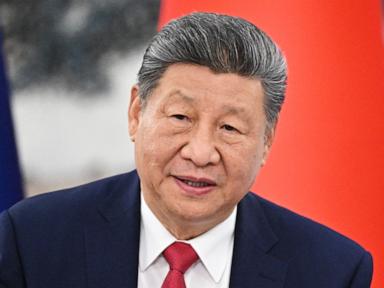
Summit photos sell subscriptions. They rarely move power.
Look at the lazy consensus around APEC summit diplomacy. A host city fills up with motorcades. Cameras catch handshakes between Xi Jinping, Donald Trump, and Vladimir Putin. Within hours, analysts write breathless pieces about Beijing projecting global influence and bending the room to its will.
That reading gets the mechanics backward.
Hosting powerful leaders at a multilateral forum does not automatically equal command over the outcome. Often, it signals the opposite: a host trying to manage friction it cannot eliminate, stabilize markets it cannot control alone, and keep rivals from turning a regional trade gathering into a referendum on its own vulnerability.
If you want to understand what happens when Xi Jinping hosts Trump and Putin at APEC, stop asking who won the photo op. Ask who holds the veto over trade flows, supply chains, and security guarantees the morning after everyone flies home.
Why Summit Theater Misleads Smart Observers
Multilateral summits reward spectacle. They punish restraint.
When a rival superpower and a sanctioned strategic partner both show up on your turf, pundits see dominance. In practice, hosting creates obligations. The host has to keep the agenda moving, avoid public embarrassment in front of smaller economies that just want market access and predictable rules, and absorb the blame if talks stall.
True influence looks quiet. It shows up in customs clearances, currency settlement choices, port concessions, and export licenses. A leader does not need a summit stage to reshape a supply chain. A leader needs a summit stage when existing arrangements are straining and no single capital can dictate terms without paying a steep price.
Consider the structural bind Beijing faces whenever Washington and Moscow occupy the same diplomatic orbit.
- With Washington: Trade friction, tariff threats, technology restrictions, and industrial subsidies force constant damage control. Even when negotiators strike a truce or lower the temperature, the underlying competition over semiconductors, critical minerals, and market access remains sharp.
- With Moscow: Close alignment provides diplomatic backing and discounted energy or commodities, yet it carries real friction with European and Asia-Pacific trading partners who watch how closely Chinese firms support Russia’s war economy and industrial base.
- With middle powers: Smaller economies attending APEC want open trade, stable shipping lanes, and insulation from superpower crossfire. They rarely want to pick a permanent side if choosing one locks them out of capital or export markets on the other.
Hosting both men under one roof puts Xi at the center of the frame. It also puts Beijing directly between two heavyweights whose interests only overlap partially. Being the middleman in a high-stakes triangle is exhausting work, not a crown.
The Real Questions People Should Be Asking
Standard coverage usually circles the same three questions: Does this show China is outmaneuvering the United States? How tight is the China-Russia partnership becoming? What does this mean for global trade?
Each question leans on a shaky premise.
Does hosting rivals prove China outmaneuvered Washington?
No. Influence is measured by whether other countries change their behavior when it costs them something.
Washington still anchors major financial plumbing, reserve currency usage, alliance networks in the Indo-Pacific, and key choke points in advanced chip design and manufacturing tools. Beijing holds massive weight in manufacturing scale, processing capacity for key minerals, and regional trade volume. Neither side has knocked the other out of the ring. Calling a high-profile meeting a decisive shift in global hierarchy confuses visibility with leverage.
Is a meeting with Putin evidence of an unbreakable bloc?
Partnerships built around shared grievances are rarely as tidy as their joint statements sound.
China and Russia share an interest in pushing back against U.S.-led pressure and building alternative payment or trade channels. That alignment is real. It is also asymmetrical. Russia needs Chinese manufactured goods, components, and market demand far more than China needs Russia to anchor its broader economic future. Meanwhile, Beijing has to weigh how far it can lean into Moscow without triggering harsher secondary measures or alienating buyers in wealthier markets.
Will APEC meetings reset global trade rules?
APEC is a consensus-driven forum built around voluntary cooperation, trade facilitation, and economic policy dialogue. It is not a binding treaty machine.
Real trade shifts happen through bilateral deals, supply chain rerouting, domestic industrial policy, and firm-level procurement decisions. A summit can lower political noise for a few weeks. It cannot repeal tariffs, erase trust deficits, or magically untangle supply chains that companies spent years diversifying.
Battle Scars From Reading Geopolitics Through Headlines
I have watched boards and executive teams blow millions of dollars because they treated diplomatic headlines like operating plans.
Years ago, a manufacturing group I advised poured capital into a single regional hub right after a wave of upbeat summit rhetoric promised smoother cross-border trade. Executives assumed warm diplomatic language meant lower political risk. Within eighteen months, shifting tariff rules, customs delays, and compliance checks chewed up their margin before the facility even hit full capacity. They confused polite diplomacy with durable policy.
The same mistake repeats every cycle in finance and strategy. People watch leaders smile for cameras and conclude that structural rivalries have thawed. Then a new export rule lands, a shipping lane tightens, or a currency friction flares up, and the people who traded on the mood get blindsided.
Imagine a scenario where two rival capitals announce a constructive meeting on the sidelines of an APEC gathering, equity markets rally on relief, and a supply chain manager pauses risk-hedging plans because the tone sounds warmer. Six months later, a fresh round of tech controls or port fees hits the exact sector they left exposed. The tone changed; the incentive structure did not.
Precision Over Panic: What "Influence" Actually Means
Loose language ruins strategic analysis. Analysts throw around terms like sphere of influence, multipolarity, and de-dollarization as if they describe finished states rather than contested processes.
Let us separate the moving parts cleanly:
- Diplomatic centrality: Being the host or central broker in a high-profile meeting. Valuable for prestige and agenda-shaping, but reversible if outcomes disappoint.
- Commercial indispensability: Being hard to replace in a supply chain or export market. Strong leverage in the short-to-medium term, though buyers keep looking for alternatives when costs or risks climb.
- Financial and institutional reach: Shaping payment rails, credit access, and rule enforcement. Slower to build, harder to dislodge, and closely tied to open capital and legal predictability.
- Security credibility: Convincing allies and neighbors that you can deter threats and protect shipping or borders. Expensive to maintain and tested under pressure, not at banquets.
When pundits say Xi projects global influence by hosting Trump and Putin, they usually lump all four categories into one bucket. That is sloppy thinking. A leader can score high on diplomatic centrality while facing stiff headwinds in financial reach or commercial trust.
Heavyweights in international political economy—scholars like Robert Keohane and Joseph Nye on interdependence and power, or observers tracking industrial policy and supply chain fragmentation—have argued for decades that power in an interconnected economy is rarely total. Even dominant states face constraints when trade, technology, and security pull in different directions. Ignoring those constraints makes commentary sound dramatic and leaves decision-makers unprepared.
Where This Contrarian View Can Go Wrong
A contrarian take is only useful if you see its blind spots.
Downplaying summit diplomacy can swing too far in the other direction. High-level meetings matter when they prevent miscalculation, open backchannels during a crisis, or give leaders a face-saving exit from escalatory spirals. If two nuclear-armed or economically massive powers avoid a misunderstanding because their leaders met in person, dismissing that as "just optics" misses real value.
There is also the risk of underestimating slow-moving shifts. Power rarely flips overnight. It erodes or accumulates in increments—through infrastructure built across a decade, trade ties deepened year after year, and habits formed when alternatives look worse. Treating every summit as hollow hype can blind you to gradual changes in who shows up, who sets the tone, and which relationships endure after the cameras leave.
What Smart Operators Should Do Instead
If you run a business, manage capital, or track policy for a living, stop grading summits like boxing matches. Grade them on execution.
- Audit exposure by chokepoint, not headline. Map where your inputs, customers, data, and financing depend on specific jurisdictions. A friendly photo does not remove a regulatory chokepoint.
- Separate rhetoric from binding commitments. Look for concrete policy changes, tariff schedules, licensing shifts, or capital flows—not communiqués and warm words.
- Build optionality before you need it. Keep supplier backups, contract flexibility, and cash buffers in place when skies look calm. Scrambling after a policy shift costs twice as much.
- Watch middle-power behavior. Pay close attention to how mid-sized economies in Asia and beyond adjust their trade and investment choices. Their quiet hedging often reveals more about real leverage than superpower posturing.
Summits are stagecraft. Supply chains are reality. Bet on the plumbing, not the cameras.