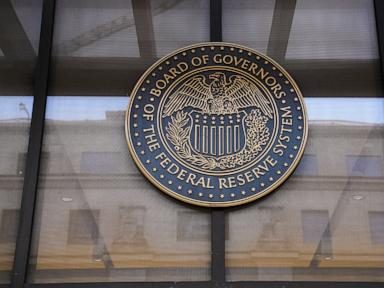
The Federal Reserve recently announced that all 32 of the nation’s largest banks successfully cleared its annual stress test. According to the central bank, these institutions maintain enough capital to withstand a severe economic downturn, including massive losses in commercial real estate and a staggering rise in unemployment. This clean bill of health is intended to reassure depositors and investors that the financial system is rock solid. The official narrative suggests that the safeguards implemented after the 2008 financial crisis are working perfectly.
But this clean sweep reveals a deeper problem. When every single student passes an exam with flying colors, you have to look closely at the test itself.
The Federal Reserve design for these annual evaluations has morphed from a rigorous diagnostic tool into a predictable regulatory ritual. By using rigid, backward-looking scenarios, the stress tests consistently prepare banks for the last crisis rather than the next one. They simulate a traditional, slow-moving recession while ignoring the modern catalysts that actually cause banks to collapse. The reality is that passing the Fed test does not mean a bank is safe. It just means the bank is skilled at compliance.
The Flaw of Predictable Disasters
Every year, the Federal Reserve constructs a hypothetical economic nightmare. The recent test modeled a global recession featuring a 40 percent drop in commercial real estate values, a 36 percent plunge in house prices, and an unemployment rate spiking to 10 percent. On paper, this sounds brutal. The Fed projected that the 32 tested banks would suffer a combined 685 billion dollars in losses under these conditions but would still hold roughly double the minimum capital required by law.
Wall Street celebrated. Executives immediately began hinting at increased dividends and stock buybacks.
This celebration is premature because the simulated crisis is fundamentally linear. The Fed assumes that economic stress builds gradually over quarters, giving institutions time to adjust their balance sheets and react. Real financial panics do not wait for quarterly reporting cycles. They happen over a weekend.
The collapse of Silicon Valley Bank and Signature Bank a few years ago proved that modern bank runs operate at digital speed. Social media panics and instant mobile banking apps can drain tens of billions of dollars from an institution in a matter of hours. The annual stress tests do not simulate a sudden, catastrophic loss of liquidity fueled by digital contagion. They treat bank health as a solvency math problem, completely overlooking the lightning-fast liquidity panics that actually kill banks in the real world.
The Blind Spot in the Balance Sheet
To understand why these tests offer false comfort, you have to look at what they choose to measure. The Fed focuses heavily on credit risk, which is the likelihood that borrowers will default on their loans. If a commercial property developer walks away from a skyscraper, how much money does the bank lose? That is a fair question, and the test handles it well.
However, the test systematically downplays interest rate risk.
When the Federal Reserve raised interest rates rapidly to combat inflation, it created a massive, systemic vulnerability. Banks were holding trillions of dollars in long-term, low-yield government bonds and mortgage-backed securities that they bought when interest rates were near zero. As rates climbed, the market value of those older bonds plummeted.
Under accounting rules, banks do not have to report these losses if they categorize the bonds as held-to-maturity. The losses exist on paper, hidden beneath the surface of the official balance sheet. If a bank is forced to sell those bonds early to raise cash during a sudden panic, those paper losses instantly become real, devastating hits to capital.
The Fed annual stress test does not adequately force banks to realize these hidden losses under acute funding pressure. It assumes the banks can simply hold the bonds forever. By ignoring the interaction between falling bond values and sudden cash withdrawals, the regulators are grading the financial system on a curve.
The Compliance Loop
Decades of observing regulatory capture show that large financial institutions eventually learn how to reverse-engineer any bureaucratic test. The stress test has become a known variable. Banks employ armies of quantitative analysts whose sole job is to optimize the balance sheet specifically for the Fed models.
This creates a dangerous herd mentality.
[Fed Announces Scenarios] ➔ [Armies of Bank Analysts Optimize Balance Sheets] ➔ [All Banks Pass Predictable Test] ➔ [Hidden Risks Accumulate Outside the Test Parameters]
When every major bank shapes its portfolio to defend against the exact same hypothetical recession, they all end up holding similar assets and hedging in similar ways. If the real world delivers a completely different kind of shock, every bank will be vulnerable at the exact same moment. The test incentivizes uniformity rather than genuine resilience.
Consider the commercial real estate market. The Fed modeled a 40 percent drop in value, which sounds extreme. Yet, in many major urban centers, empty office towers are already trading at discounts deeper than 50 percent due to permanent shifts in remote work. The reality on the ground has already bypassed the nightmare scenario. By the time a risk is codified into the official test, the market has moved on to new, unmonitored vulnerabilities.
The Capital Allocation Trap
The most damaging consequence of this regulatory theater is how it alters actual banking behavior. Because passing the test unlocks the ability to pay out billions to shareholders, bank executives prioritize test performance over local economic reality.
Capital that could be used to fund small businesses, regional infrastructure, or housing projects is instead funneled into assets that score well under the Fed formula. This creates a distortion in credit availability.
Regional and mid-sized banks, which are responsible for the vast majority of small business lending, face immense pressure to mimic the asset structures of the Wall Street giants. When they do, they pull back from the relationship-based lending that drives local economies. They become risk-averse in areas the Fed penalizes, while piling into hidden risks that the Fed ignores.
The system becomes brittle. We are left with a banking sector that looks perfectly healthy under a regulatory microscope but lacks the organic flexibility to handle unexpected shocks.
Moving Beyond the Formula
The fix is not to abandon stress testing, but to make it unpredictable. Regulators need to stop telegraphing the exact parameters of the exam months in advance.
Instead of a single, massive annual test with public scores, the Federal Reserve should implement continuous, unannounced stress simulations. These should include asymmetric shocks, sudden interest rate spikes, massive cyberattacks that take down payment clearing systems, and coordinated digital bank runs.
Furthermore, the results should focus less on public relations victories and more on structural flaws. The goal of a stress test should be to push an institution until it breaks, identifying the exact point of failure so it can be fortified. A test where everyone passes is not an engineering assessment. It is a marketing campaign.
Relying on the current framework to guarantee financial stability is a dangerous strategy. The next banking crisis will not arrive with a warning label from the Federal Reserve, and it will not look like the scenario calculated by a compliance algorithm. True financial resilience cannot be manufactured by passing a predictable test. It requires acknowledging the messy, unquantifiable risks that the regulators choose to leave in the dark.