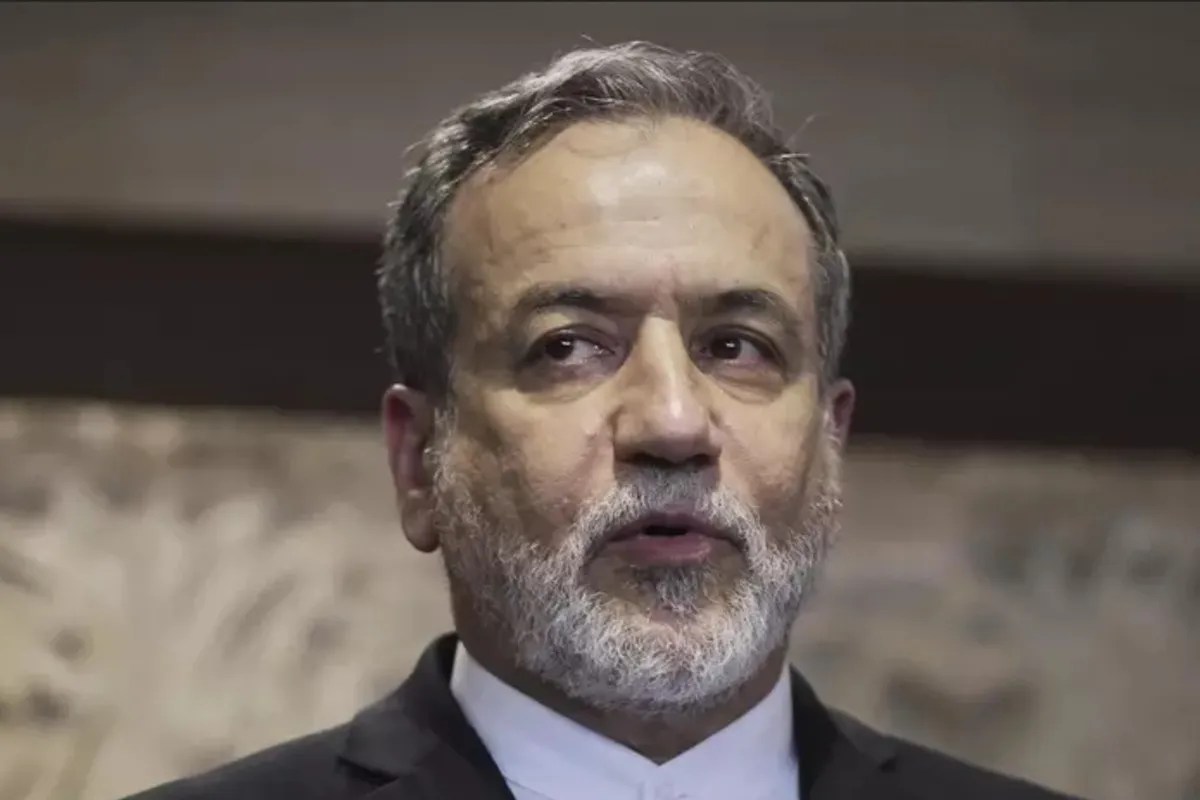
Mainstream coverage of Imran Khan’s latest letter to Pakistan’s top judges treats the document like a straightforward medical petition. Journalists summarize his complaints about Adiala Jail conditions, list the ailments affecting him and his wife Bushra Bibi, and frame the story around basic human rights and judicial mercy.
That reading misses the entire chessboard.
When a former prime minister with a massive street-level movement writes directly to the Chief Justice of the Supreme Court from a high-security cell, he is not looking for a hospital bed. He is executing a high-stakes political maneuver designed to force an institutional collision. The lazy consensus treats this as a healthcare crisis. In reality, it is a masterclass in asymmetric political warfare disguised as a wellness check.
The Anatomy of a Strategic Complaint
To understand why this letter matters, you have to look at who received it and how it was released. Standard prison grievances go to the Inspector General of Prisons, the Home Department, or a trial judge handling routine custody matters. You file a formal application through counsel, attach medical records from the jail superintendent, and wait for a bureaucratic ruling.
Khan bypassed the entire administrative chain. Addressing the Chief Justice directly transforms a local custody issue into a constitutional question.
I have spent years watching South Asian political operators turn jail cells into command centers, and the playbook never changes. When the state cuts off your access to television, newspapers, and political visitors, your physical body becomes your last remaining broadcast tower. Every ache, every delayed blood test, and every dietary restriction gets converted into political capital.
By putting the Supreme Court on formal notice regarding his and Bushra Bibi’s health, Khan achieves three immediate objectives without holding a single rally:
- Institutional Entrapment: If the judiciary ignores the letter, Khan’s party—Pakistan Tehreek-e-Insaf (PTI)—frames the courts as complicit in custodial abuse. If the judiciary intervenes and orders independent medical boards or hospital transfers, the executive branch looks weak, and Khan proves he still commands institutional reach from behind bars.
- Moral Inversion: State prosecutors spend months building dense, technical cases around cipher leaks, Toshakhana gifts, and marriage laws. A two-page letter about a prisoner’s deteriorating eyesight or a spouse’s contaminated food wipes those legal complexities off the front page. Public sympathy does not care about statutory interpretation; it cares about fairness.
- Factional Discipline: Opposition parties locked out of power inevitably fracture. Egos clash, regional leaders cut quiet deals with the establishment, and the base loses focus. A visceral, personal crisis involving the party founder and his wife forces every bickering faction leader to fall back in line immediately.
Why the "Human Rights vs. State Security" Framing Fails
Western wire services and local commentators love binary narratives. On one side, they place a persecuted populist demanding access to his personal physician. On the other, they place a heavy-handed state apparatus defending prison regulations. Both sides are selling a convenient fiction.
Let’s look at the actual legal mechanics under the Pakistan Prison Rules (specifically the rules governing Class-A or "Better Class" prisoners) and Article 9 of the Constitution of Pakistan, which guarantees the right to life—a provision the Supreme Court has repeatedly interpreted to include the right to adequate medical care in custody.
Under standard jail manuals, an undertrial or convicted prisoner does not have an automatic right to be treated exclusively by private doctors of their own choosing. The state holds custody, which means the state bears legal liability. Consequently, prison authorities rely on government medical boards—typically pulled from institutions like the Pakistan Institute of Medical Sciences (PIMS)—to create an official paper trail. If a prisoner refuses treatment from a state-appointed board and demands their own private specialist, jail administrators view it as an attempt to manufacture a crisis or leak unvetted narratives to the press.
Conversely, anyone familiar with Pakistani political history knows that "official medical boards" are rarely neutral actors. When the state wants a politician kept inside, the board declares them fit as an athlete. When the establishment wants to quietly exile a troublesome leader to London, that same medical establishment suddenly discovers a life-threatening platelet drop or an urgent cardiac anomaly.
Both sides know the rules of this game. Khan is not naively asking for a checkup; he is challenging the credibility of the state’s medical apparatus in front of the one body—the Supreme Court—that can override executive custody protocols.
The Bushra Bibi Factor
Most analysts lump Bushra Bibi’s medical complaints in with Khan’s as a secondary detail. That is a massive miscalculation. In Pakistani political culture, dragging a conservative, non-political spouse into harsh detention conditions crosses an unwritten social red line.
Traditional voters who might feel fatigued by years of economic chaos, protest lockdowns, and parliamentary boycotts react very differently when a woman from a traditional background is held in a sub-jail at Bani Gala or shifted to Adiala without independent medical oversight.
Khan’s legal team knows this. By centering Bushra Bibi’s health alongside his own, the letter shifts the public debate from partisan politics to cultural honor. Even voters who despise PTI’s economic record find it hard to defend the optics of denying a female detainee access to her family physician. The letter uses cultural norms as a battering ram against state security protocols.
What Journalists Are Getting Wrong About Judicial Intervention
A common question circulating in newsrooms right now is whether the Chief Justice will actually order Khan’s transfer to a private hospital like Shaukat Khanum.
That question is completely flawed.
The Supreme Court rarely exercises original jurisdiction under Article 184(3) to micromanage daily jail logistics unless it wants to send a broader political signal to the executive branch. Ordering a transfer to Shaukat Khanum—an institution founded and chaired by Khan himself—would be a political earthquake. It would effectively hand Khan a secure, sympathetic base of operations in Lahore where loyal staff, family members, and legal teams could rotate freely. The state will fight that outcome with every legal tool available.
Instead, watch for the middle-ground judicial maneuver. When top judges want to defuse a custodial controversy without triggering an executive crisis, they order a hybrid medical board: senior government specialists paired with one or two nominated private physicians, conducting examinations inside the jail premises or at a neutral public facility under heavy security.
If you are watching for a dramatic midnight ambulance transfer, you are watching the wrong movie. The real battle is over who controls the diagnostic paperwork.
The Downside of the Medical Escalation Strategy
Contrarian analysis requires honesty about where a strategy can backfire. Weaponizing health complaints from prison carries severe diminishing returns, and Khan’s team is walking a razor-thin line.
First, there is the credibility trap. If a prisoner repeatedly claims their life is in imminent danger, and subsequent independent exams reveal manageable, routine ailments, the public grows numb. Overplaying the medical card dulls its shock value. We saw this happen during previous political cycles in Pakistan, where dramatic claims of fatal illness vanished the moment a political settlement was reached.
Second, signaling physical vulnerability carries an unintended psychological cost for a populist movement. Strongman politics relies on an aura of invincibility. Khan built his brand on athletic resilience, defiance, and physical endurance. Leaning too heavily into narratives of frailty and suffering risks demoralizing hardcore street organizers who look to him for strength rather than sympathy.
Third, it invites the state to call the bluff. If authorities grant a fully televised, independent medical examination by respected, non-partisan specialists and publish the findings in full, any exaggeration in the initial letter becomes ammunition for government spin doctors.
How to Actually Read Political Prison Letters
Stop reading statements from high-profile political detainees as literal journalism. Whether it is Islamabad, Moscow, or Istanbul, a letter sent from a maximum-security facility to a supreme court is a precision-guided political instrument.
If you want to track where this standoff actually goes next, ignore the press conferences outside the jail gates and watch three concrete indicators:
- The Composition of the Board: Look at the exact names appointed to examine Khan and Bushra Bibi. If the panel consists strictly of federal ministry doctors, the executive branch is holding the line. If even one private specialist from Khan’s personal circle is granted formal access, the judiciary has forced a concession.
- The Classification of Custody: Watch whether the courts address the legal status of Bushra Bibi’s detention facility. Declaring a private residence a "sub-jail" was always legally fragile; a judicial pushback there matters far more than any prescription pad.
- The Silence of the Establishment: When state spokespeople rush to hold aggressive press briefings mocking a prisoner’s health claims, it means the letter hit a nerve. Confident regimes release dry, clinical medical bulletins and say nothing else.
The letter to Pakistan’s top judges was never about getting a prescription filled. It was a test of institutional nerve, forcing the judiciary to choose between rubber-stamping executive custody or opening a crack in the prison walls.
In Pakistani politics, a crack in the wall is all it takes to bring the whole building down.