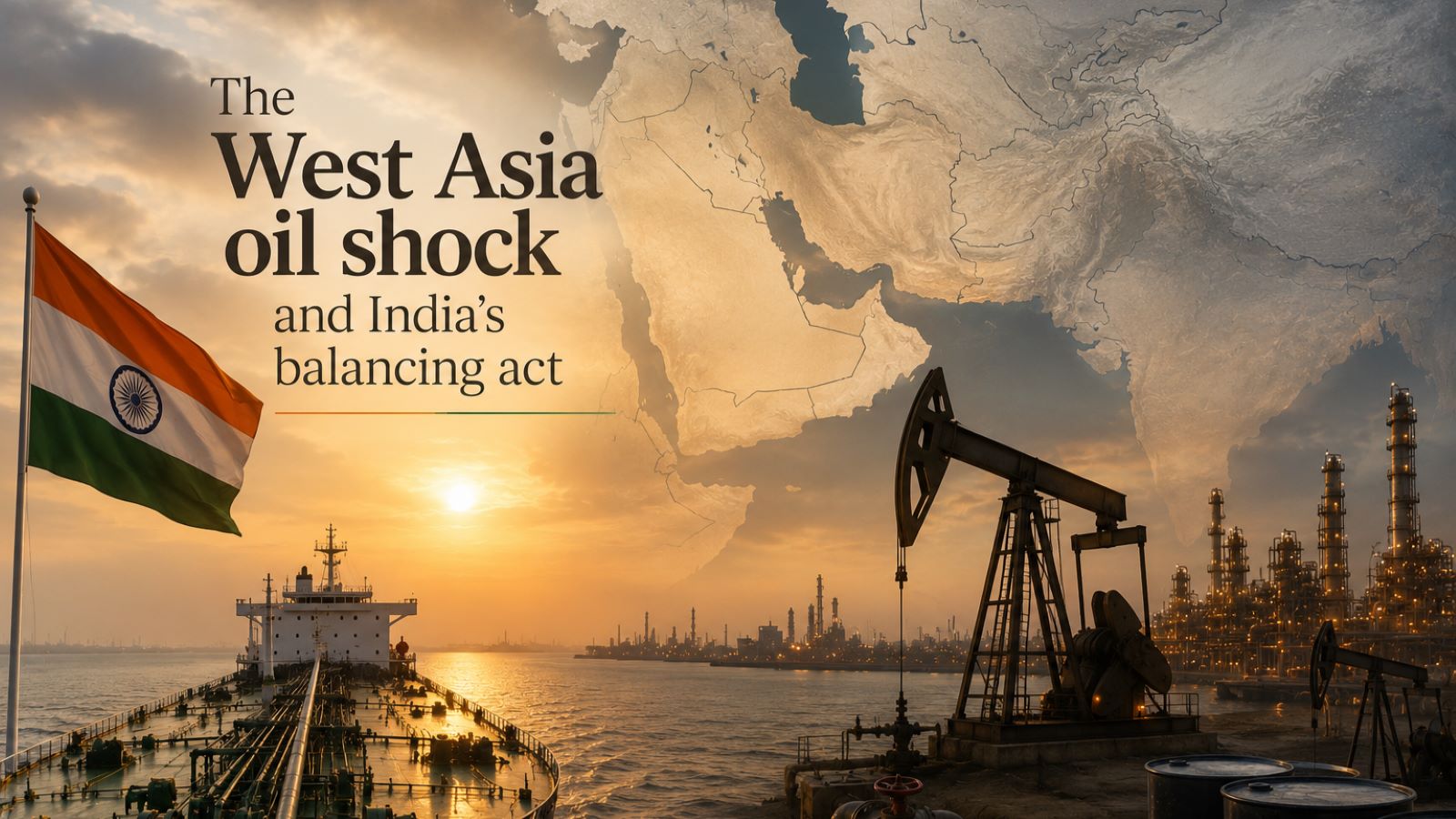
The lazy consensus across Mumbai and New Delhi boardrooms right now is dangerously simple. The headline writers look at West Asia—specifically the Gulf Cooperation Council (GCC) states—and see a massive economic recovery driven by post-oil diversification. They look at India’s massive diaspora, the bilateral trade pacts, and the remittance pipelines, and they ask: How can India ride this wave?
They are asking the wrong question.
The premise itself is flawed. West Asia isn’t experiencing a standard economic recovery that India can seamlessly plug into. It is undergoing a structural mutation. The region is building a hyper-localized, state-capitalist fortress designed to retain wealth internally, automate low-skilled labor, and extract maximum concessions from foreign partners.
If Indian policymakers and corporate leaders continue to view the Gulf through the lens of the 1990s labor-export model or the 2010s infrastructure boom, they are setting themselves up for a brutal awakening. I have spent years advising firms navigating cross-border corridors, and I have watched overconfident executives blow tens of millions of dollars assuming that historical goodwill equals future market share. It does not.
The traditional economic marriage between India and the Gulf is dead. Here is why the current optimism is a trap, and what a real strategy looks like.
The Mirage of Diversification
The core argument of the competitor press is that Gulf diversification creates a massive playground for Indian IT, engineering, and consumer brands. This completely misunderstands the mechanics of sovereign wealth in the region.
When Saudi Arabia or the UAE pours hundreds of billions into non-oil sectors like tourism, renewable energy, or logistics, they are not creating an open marketplace. They are executing state-directed, insular monopolies.
Consider the localization mandates. Saudi Arabia’s Regional Headquarters Directive explicitly forces global companies to move their middle-eastern hubs to Riyadh if they want government contracts. The UAE’s In-Country Value program actively penalizes foreign bidders who do not source a massive percentage of their supply chain locally.
India’s traditional edge has always been cost-effective external service delivery and labor supply. But the Gulf no longer wants your external services; they want your capital, your IP, and your physical relocation. If an Indian tech firm wants a piece of the Saudi modernization pie, they cannot just win a contract from Bengaluru. They have to physically move their engineers, build local data centers, and hire a strict quota of local citizens whose wages are vastly higher than their Indian counterparts.
This strips away the margin. It turns a high-margin export business into a high-risk, low-margin localized infrastructure gamble.
The Remittance Trap Nobody Talks About
For decades, the standard macroeconomic defense of India-Gulf relations has been the remittance shield. Over $80 billion flows into India annually from its overseas workers, with a massive chunk coming from the GCC. The mainstream view assumes this flow is permanent.
It is highly volatile. The Gulf states are aggressively pursuing automation and AI to systematically eliminate the mid-to-low-tier white-collar and blue-collar jobs that Indians traditionally hold.
- Administrative and Banking Roles: Being replaced by state-sponsored fintech and digital transformation platforms.
- Retail and Hospitality: Moving toward automated kiosks and localized workforces under nationalization quotas (Saudization, Emiratization).
- Construction: Shifting toward prefabricated manufacturing and automated project management.
Worse, the cash that does get sent back is under threat from strict local fiscal policies. The introduction of value-added tax (VAT), rising expat levies, and corporate taxes across the GCC means the cost of living for the Indian diaspora has skyrocketed. They are saving less, spending more locally, and sending less home.
If India relies on remittances to balance its current account deficit while the Gulf systematically engineers the structural exit of foreign labor, India is anchoring its economy to a melting iceberg.
The Trade Agreements Are a One-Way Street
Everyone cheered when India signed the Comprehensive Economic Partnership Agreement (CEPA) with the UAE. The business press called it a turning point.
Let us look at the cold data. A trade agreement with a highly concentrated, state-backed economy rarely favors an open, fragmented market like India. The UAE operates as a massive re-export hub. When you lower tariffs, you aren't just trading with the UAE; you are allowing a flood of heavily subsidized goods from third-party nations—routed through Gulf free zones—to enter the Indian market duty-free.
Indian manufacturers in sectors like plastics, metals, and chemicals are already complaining about inverted duty structures. Meanwhile, India’s primary export strength—agricultural goods and pharmaceuticals—frequently hits arbitrary non-tariff barriers disguised as health and safety regulations whenever local Gulf producers want protection.
The agreement looks beautiful on paper. In practice, it acts as a mechanism for Gulf sovereign wealth to acquire prime Indian infrastructure assets (airports, ports, renewable grids) while giving Indian firms very little reciprocal access to the tightly guarded domestic markets of the GCC.
Stop Chasing the Sovereign Wealth Fund Myth
The ultimate fantasy of the Indian financial elite is the endless pool of Gulf capital. The narrative says that billions from PIF, ADIA, and Mubadala will fund India’s green transition and digital infrastructure.
This capital is never free. It comes with geopolitical and strategic strings that most Indian firms are ill-equipped to handle.
Gulf sovereign wealth funds are not venture capitalists looking for a quick exit. They are state instruments executing national security strategies. When they buy into an Indian digital platform or a clean energy firm, they expect deep political alignment, technology transfers back to the home country, and priority access to India’s domestic consumer data.
Furthermore, they are notorious for shifting priorities overnight. A sudden correction in oil prices or a flare-up in regional geopolitics can freeze investment pipelines instantly. Relying on Gulf capital to fund critical national infrastructure is a massive concentration risk.
The Playbook for Survival
If you want to win in West Asia today, you must burn the old playbook. Stop trying to sell them what they are already trying to build themselves.
First, Indian corporations must stop treating the Gulf as an export destination and start treating it as a battleground for intellectual property. The only foreign firms making real, protected margins in Riyadh or Dubai right now are those that possess deep, un-replicable technical IP—specialized deep-tech, proprietary biotechnology, or advanced materials. If your business model can be replicated by a local firm within five years, you will be squeezed out by localization laws.
Second, the Indian government needs to pivot from broad free-trade agreements to highly specific, transactional deals. We should not be trading market access in India for vague promises of future investment. If a Gulf wealth fund wants to buy into an Indian seaport, the reciprocal demand should be guaranteed, long-term supply contracts for critical minerals or energy security at fixed, below-market rates.
Third, Indian tech and services must aggressively diversify away from the GCC. The true growth corridors for high-margin service delivery are shifting toward Southeast Asia and parts of East Africa, where the regulatory frameworks are less volatile and the state apparatus is less hostile to foreign corporate dominance.
The Gulf is not recovering to help India grow. It is recovering to ensure its own survival in a post-fossil-fuel world. It is an insular, hyper-competitive machine that devours lazy capital and expels commoditized labor. Stop romanticizing the civilizational ties and start reading the balance sheets. The party is over, and the house always wins.