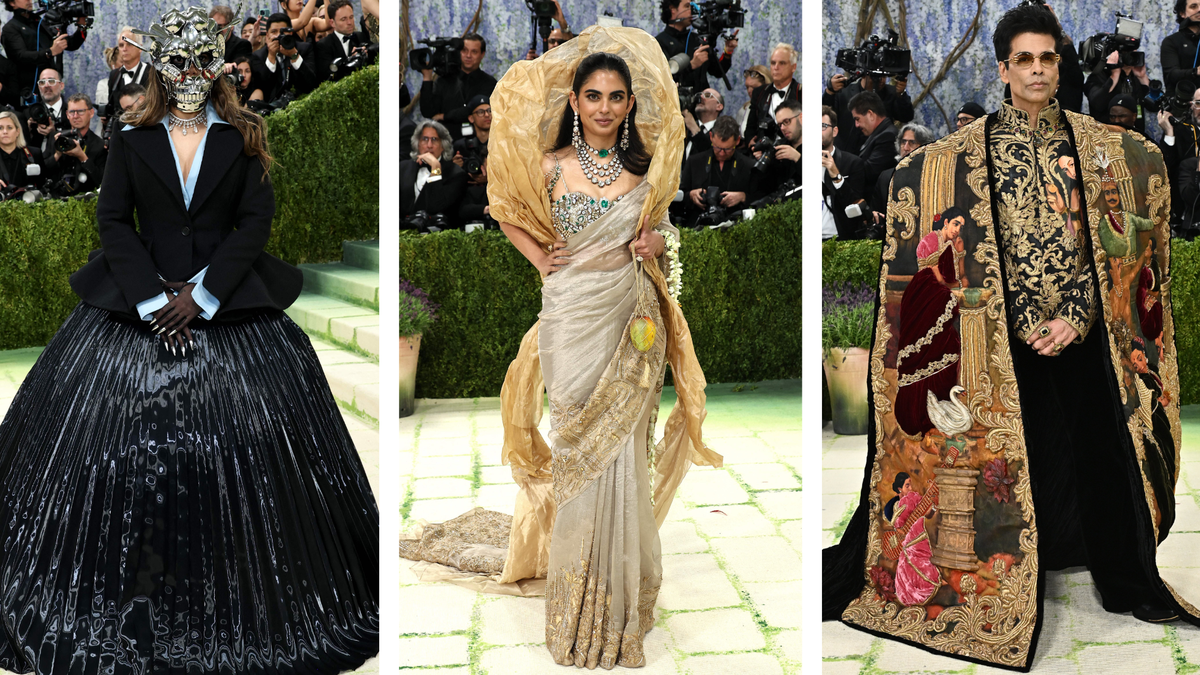
The 2026 Met Gala marked the moment the Indian subcontinent stopped being a guest at the table and started owning the room. While previous years saw a trickle of Bollywood royalty and industrialist scions, this year represented a coordinated deployment of soft power, textile dominance, and hard capital. The red carpet was not just a parade of celebrity; it was an exhibition of a supply chain that has quietly moved from the backrooms of European couture houses to the front-facing luxury market.
For decades, the luxury industry operated on a silent pact. Major French and Italian houses sourced their most intricate beadwork, zardozi embroidery, and silk weaves from workshops in Mumbai and Surat, only to stitch a "Made in Italy" label over the handiwork. In 2026, that masquerade collapsed. The presence of Indian designers and muses at the Metropolitan Museum of Art served as a definitive correction of the record.
The Steel Beneath the Silk
The night was anchored by a visual language that blended industrial might with heritage craft. When we look at the logistics of this year’s "Garden of Time" interpretation, the standout pieces utilized literal industrial steel filaments woven into traditional handloom fabrics. This wasn't a gimmick. It was a nod to the infrastructure giants now funding the global expansion of Indian fashion.
Behind the flashbulbs, the real story is the aggressive acquisition of luxury stakes. We are seeing a massive consolidation where Indian conglomerates are no longer content with franchise agreements to sell Gucci or Dior in New Delhi malls. They are buying the creative directors. They are funding the independent labels that the youth market craves. The sheer volume of high-jewelry pieces on the carpet—worth more than the GDP of some small nations—signaled that the center of gravity for the diamond and gemstone trade has shifted decisively toward the East.
The Rise of the Regional Powerhouse
While names like Sabyasachi and Manish Malhotra have become shorthand for Indian luxury, 2026 saw the emergence of regional avant-garde designers who reject the "Maharaja" aesthetic. They brought a darker, more utilitarian edge to the gala. We saw silhouettes inspired by the brutalist architecture of Chandigarh and the chaotic, wired energy of Bengaluru’s tech hubs.
The inclusion of mango motifs and agricultural symbols wasn't just a tribute to the national fruit; it was a sophisticated commentary on land, labor, and the climate crisis. By elevating the symbols of the agrarian worker to the highest echelons of high fashion, these designers forced a conversation about the people who actually produce the raw materials that the fashion world consumes.
Why the West is Scrambling
The American and European fashion establishments are currently facing a demographic cliff. Their traditional buyer base is aging out, and their growth projections in China have cooled significantly due to economic shifts and local brand loyalty. India represents the last great untapped luxury frontier.
The Met Gala is, at its heart, a fund-raising engine and a marketing circus. By pivoting toward Indian themes and talent, the Costume Institute is following the money. The "Indian wave" is a strategic necessity for the survival of the museum's fashion wing. They need the donors who are currently building tech empires in Hyderabad as much as they need the old money of Manhattan’s Upper East Side.
The Problem with Representation
Despite the triumph, there is a lingering tension. Investigative scrutiny reveals that while the faces on the carpet are more diverse, the power structures within the Met and the major fashion conglomerates remain largely unchanged. There is a risk that Indian culture is being treated as a "trend" to be mined for a season and then discarded.
We must ask whether the industry is ready for true equity or if this is merely a tactical pivot to capture a new market. Authentic representation requires more than just a sari-inspired gown on a pop star; it requires Indian executives in the boardrooms of LVMH and Kering making decisions about global supply chains and environmental standards.
The Artisanal Backlink
The most significant shift this year was the focus on the master artisan. In a departure from the "celebrity-first" narrative, several major looks were accompanied by digital dossiers detailing the specific village and the specific hands that spent three thousand hours on a single hemline.
This transparency is a direct response to the growing demand for ethical fashion. The modern luxury consumer wants to know that their five-figure garment didn't come from an anonymous sweatshop. By putting the artisan center stage, Indian designers are setting a new standard for "provenance luxury." They are betting that the future of high fashion lies in the story of the maker, not just the fame of the wearer.
The Infrastructure of Glamour
To understand the 2026 Met Gala, you have to look at the shipping manifests and the insurance premiums. The logistical feat of transporting archival jewelry and experimental steel-weave garments from the subcontinent to New York is a testament to a maturing luxury infrastructure.
- Insurance valuations for Indian-worn pieces at the gala hit record highs, surpassing traditional European heritage jewelry.
- Private aviation traffic from Mumbai to Teterboro spiked 40% in the week leading up to the event.
- Social media engagement in the South Asian diaspora outperformed every other demographic, proving that the digital ROI for this cultural shift is unmatched.
This isn't just about clothes. It is about a nation asserting its right to define what "excellence" looks like in the 21st century. The use of steel in the garments served as a perfect metaphor: it is heavy, it is durable, and it is forged in the fire of a rapidly developing economy.
Beyond the Red Carpet
The impact of this gala will be felt far beyond the steps of the Met. We are already seeing a surge in demand for Indian textiles in mainstream retail, but the real movement is in the high-end bespoke sector. The "sari-fication" of the global evening-wear market is underway.
Designers are taking the structural integrity of the sari—a garment that requires no zippers, no buttons, and fits every body type—and applying those principles to modern tailoring. It is a masterclass in sustainable design that the West is only now beginning to appreciate. The garment is a zero-waste miracle that has existed for millennia, now being repackaged as the ultimate solution for a waste-conscious elite.
The 2026 Met Gala proved that the global fashion hierarchy is no longer a pyramid with Paris at the top. It is a network, and the strongest node is currently glowing with the heat of a billion aspirations. The steel has been set. The saris have been draped. The mangoes have been picked. The world is finally paying attention to the right things.
The era of the "ethnic" footnote is over; the era of the cultural protagonist has begun.