It started with an insult. When India's Chief Justice Surya Kant reportedly dismissed frustrated, unemployed young people as "cockroaches" earlier this year, he expected them to quiet down. He was wrong.
Instead of backing off, a recent graduate named Abhijeet Dipke turned the insult into a badge of honor. He launched the Cockroach Janta Party (CJP) online in May as a satirical parody movement. Fast forward two months to July 2026, and that joke has transformed into a massive, angry protest movement occupying the streets of New Delhi. Tens of thousands of young people are marching on Parliament. Police are firing tear gas and swinging batons. And India's opposition parties, long stuck in Narendra Modi's shadow, suddenly see a political lifeline.
If you want to understand why India's youth are taking over Delhi's streets—and why Rahul Gandhi and the Congress party are rushing to stand beside them—you have to look past the funny name.
From Social Media Parody to Street Demonstrations
Young people in India face a brutal reality. Over two million students spent months cramming for the national medical entrance exams this year, competing for roughly 130,000 slots. Then, the exam papers leaked to the highest bidder. The tests were scrapped, forcing millions to start over. For many, it was the final straw. Exam leaks have been linked to more than 20 student suicides across the country in recent months.
The CJP took that heartbreak and gave it a megaphone. Their mock manifesto demanded simple things using blunt satire: stop paper leaks, address youth unemployment, and hold leaders accountable.
What began as memes on Instagram quickly exploded when renowned education activist Sonam Wangchuk joined in. Wangchuk went on a 21-day hunger strike in solidarity with the students, refusing food and water until Education Minister Dharmendra Pradhan stepped down. When police forcibly detained Wangchuk and dragged him to a hospital, the digital protest spilled into physical reality. Thousands packed into New Delhi's Jantar Mantar.
High Stakes and Police Crackdowns in New Delhi
When tens of thousands of young demonstrators attempted to march toward Parliament on July 20, authorities panicked. Delhi police deployed tear gas and heavy batons to break up the crowds.
Official reports confirm nearly 180 people were injured in the resulting clashes, including 60 protesters and 118 security personnel. Images of students bruised, crying, and pleading with officers circulated widely on social media platforms within minutes.
Public anger escalated overnight. Working professionals, parents, and older citizens joined the student sit-ins the following morning. The government tried to dismiss the leaders by calling them agitators, but the footage spoke for itself. Peaceful students demanding honest exams were being beaten on the street.
Why the Opposition Is Jumping on the Student Movement
India's opposition parties have spent a decade struggling to break Prime Minister Narendra Modi's dominance. The ruling Bharatiya Janata Party (BJP) seemed almost invincible. But young voters—who make up more than half of India's 1.42 billion population—are feeling left behind despite years of reported headline economic growth.
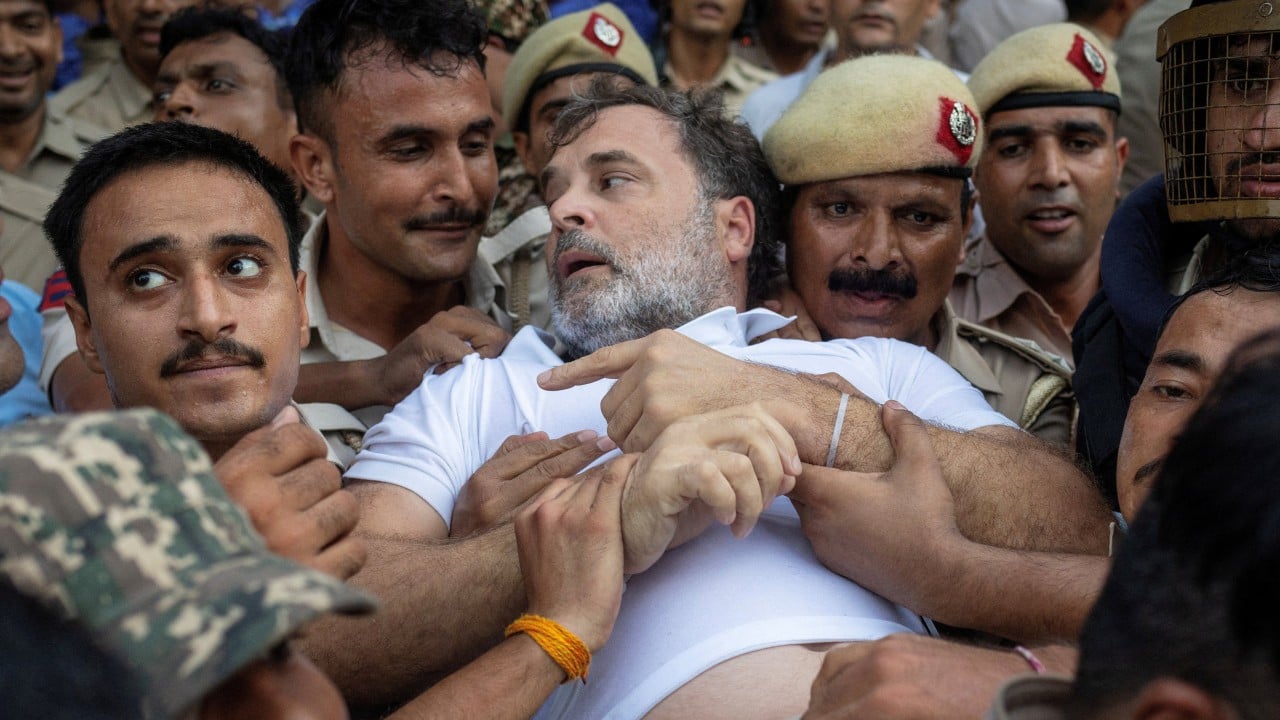
Opposition leader Rahul Gandhi saw his moment. On July 21, Gandhi and dozens of Congress party lawmakers marched directly to Jantar Mantar and staged a sit-in outside Modi's residence, demanding justice for the injured students. Police forcibly removed Gandhi, creating a dramatic media spectacle that dominated headlines nationwide.
Priyanka Gandhi Vadra publicly slammed the administration outside Parliament, asking why police were firing tear gas at children instead of fixing exam corruption.
This move gives the opposition three clear advantages:
- Direct connection to Gen Z voters who previously avoided traditional party politics.
- A clear moral narrative focused on education and jobs rather than ideological debates.
- A platform to highlight government missteps on a national scale.
However, political analysts warn that this partnership cuts both ways. While opposition backing brings organizational power, media coverage, and legal resources, it also risks politicizing a genuine student movement. If voters begin to see the CJP as merely a front for the Congress party, the movement could lose its organic spark.
What the Cockroach Symbol Really Means
Why name a political movement after a bug?
The cockroach symbol resonates because it represents pure survival. Insects survive harsh conditions, pesticides, and attempts to stamp them out. Young Indians view themselves the same way—surviving an economic system where degrees don't guarantee jobs and exam integrity is repeatedly compromised.
The movement's rapid rise shows how quickly digital outrage can turn into real-world civil action when fundamental needs are ignored. In neighboring South Asian nations like Bangladesh, Nepal, and Sri Lanka, youth-led protests have dramatically reshaped national political structures over recent years. India's leaders are now watching closely to see if Delhi will follow a similar path.
Key Demands of the Student Movement
The Cockroach Janta Party and its supporters are not asking for vague promises. They have put forward concrete, immediate demands for the central government:
- The immediate resignation of Education Minister Dharmendra Pradhan over exam integrity failures.
- A transparent, independent inquiry into recent paper leak scandals with strict criminal penalties for perpetrators.
- Official financial compensation for families of students who died by suicide due to test cancellations.
- Guaranteed anti-leak security protocols for all future national recruitment and entrance examinations.
Government ministers finally agreed to brief talks with CJP representatives late on July 20, but protest leaders walked away unsatisfied, stating they received only verbal assurances without concrete timelines.
Practical Steps to Track this Evolving Situation
If you're following Indian politics or analyzing civil movements, the coming weeks will reveal whether this protest alters long-term political trends or fizzles out under legal pressure.
- Monitor official policy announcements from the Ministry of Education regarding national exam security frameworks.
- Track independent legal challenges filed in the Supreme Court concerning paper leaks and police actions at Jantar Mantar.
- Follow statements from both CJP founder Abhijeet Dipke and opposition figures to see if formal electoral alliances emerge.
- Watch regional state elections over the next six months to evaluate if youth turnout increases in key urban centers.


