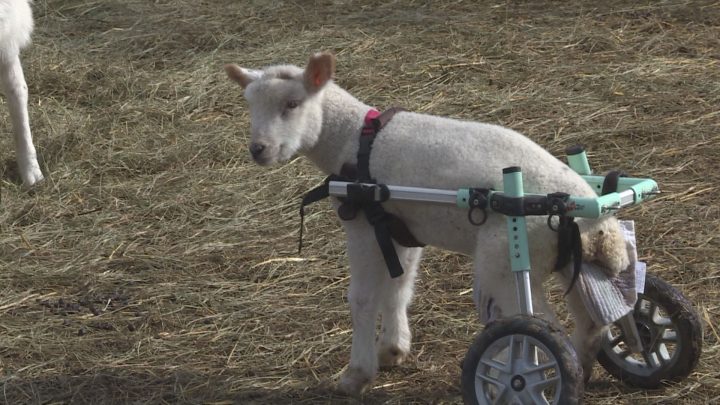
The survival of specialized animal sanctuaries like Alberta’s FARRM (Farm Animal Rescue & Rehoming Movement) depends on the successful navigation of the "infrastructure gap"—the point where biological demand outstrips fixed-asset capacity. When a sanctuary reaches peak occupancy within its current facilities, it faces a binary choice: stagnate and limit intake, or initiate a high-risk capital campaign to expand floor space. FARRM’s current push for a new barn is not merely a request for charity; it is a critical infrastructure project designed to solve a logistical bottleneck that prevents the organization from meeting its core mission of rescue and rehabilitation.
The Unit Economics of Animal Rescue
Traditional business models rely on revenue-generating units. In the sanctuary sector, every "unit" (animal) represents a recurring liability rather than an asset. The cost function of maintaining a sanctuary is defined by the sum of fixed overheads—land taxes, utility base rates, and maintenance—plus the variable costs associated with each inhabitant, such as feed, veterinary care, and labor. Recently making headlines lately: The Brennan Probe Collapse and the Myth of Independent Justice.
The current barn project at FARRM addresses the Volume-Capacity Disconnect. When a facility operates at 100% capacity, the marginal cost of accepting one additional animal is not just the cost of its feed; it is the cost of the entire new structure required to house it. This creates a step-function in the organization’s growth curve. Unlike incremental scaling, where costs rise linearly with intake, sanctuary expansion requires massive, upfront capital injections to unlock the next tier of operational capacity.
Engineering Resilience through Physical Assets
The proposed barn is a tool for biological risk management. Alberta’s climate dictates that shelter is a non-negotiable variable for survival. Without adequate square footage, a sanctuary faces three primary failure points: More information regarding the matter are covered by The New York Times.
- Epidemiological Risk: High-density housing increases the rate of pathogen transmission. A new, purpose-built structure allows for better quarantine protocols and species-specific zoning, reducing the probability of a colony-wide health crisis.
- Structural Degradation: Over-utilizing existing buildings leads to accelerated wear and tear. If a legacy barn fails before a replacement is secured, the organization faces an immediate existential threat as inhabitants lose their primary protection against the elements.
- Intake Paralysis: The inability to house new rescues leads to a loss of institutional momentum. Donors generally fund "the new" or "the urgent." A stagnant sanctuary that cannot accept new cases often sees a decline in engagement, which further restricts the cash flow needed to maintain existing animals.
The Three Pillars of Sanctuary Sustainability
To transition from a reactive rescue model to a sustainable institution, FARRM must optimize three distinct categories of its operation:
I. The Infrastructure Anchor
Physical structures are the most significant hurdle for animal welfare organizations because they are illiquid and require long-term maintenance. The new barn represents a transition from "make-do" shelters to professionalized agricultural infrastructure. This shift reduces long-term labor costs by integrating more efficient feeding and cleaning layouts, which in turn lowers the "burn rate" per animal.
II. The Donor Lifecycle
Non-profit capital campaigns like the FARRM barn project serve as a litmus test for community trust. The campaign must convert "one-time" emotional donors into "lifecycle" supporters. This is achieved by demonstrating the direct correlation between a dollar donated and a square foot of shelter provided. Transparency in the procurement of building materials and construction timelines acts as a hedge against donor fatigue.
III. Operational Elasticity
A sanctuary must remain elastic enough to handle unexpected influxes—such as large-scale seizures from neglect cases—without collapsing its budget. The new facility provides the "buffer capacity" necessary to absorb these shocks. Without this buffer, the organization is permanently one crisis away from insolvency.
Quantifying the Capital Gap
The challenge for FARRM is the discrepancy between the immediate need for a barn and the slow accumulation of philanthropic capital. Construction costs in the current economic environment are volatile. Labor shortages and the rising price of steel and timber mean that a fundraising target set six months ago may be insufficient by the time ground is broken.
This creates a Project Lag Risk. If the sanctuary raises 80% of the funds but cannot start construction due to the remaining 20%, the 80% remains idle, losing value to inflation while the animals remain in suboptimal conditions. Successful non-profit strategy requires securing flexible credit lines or "anchor donors" who can bridge this gap, ensuring that the project does not stall in the late stages of the campaign.
The Labor Variable and Volunteer Efficiency
A significant portion of a sanctuary’s "hidden" cost is the inefficiency of manual labor in outdated facilities. When a barn is not designed for easy muck-out or automated watering, the man-hours required per animal increase. This limits the total number of animals a sanctuary can support, regardless of how much land they have.
Modernizing infrastructure through this new barn project is a labor-optimization play. By reducing the physical toll on staff and volunteers, the sanctuary increases its retention rates and decreases the risk of burnout—a leading cause of sanctuary failure. Efficient design allows a single individual to manage a larger population, effectively lowering the cost of care per head and improving the ROI for every donor dollar.
Mitigating the "Forever Care" Paradox
Every animal accepted into a sanctuary represents a commitment that may last decades. This is the "Forever Care" paradox: the more successful a sanctuary is at rescue, the more it accumulates long-term liabilities that consume its budget, eventually preventing it from rescuing more animals.
FARRM’s expansion is an attempt to break this cycle by increasing the ceiling of their operational capacity. However, infrastructure alone is not a solution. It must be paired with a rigorous endowment strategy. For every dollar spent on the new barn, a corresponding percentage should ideally be allocated to a maintenance and feed endowment. This ensures that the new "asset" does not become a burden that the organization cannot afford to heat, light, and repair five years down the line.
Strategic Priority: The Path to Groundbreaking
The immediate priority for FARRM is the compression of the fundraising timeline. The longer the campaign drags on, the higher the risk of "mission drift" as the leadership focuses more on construction than on animal care.
To mitigate these risks, the organization should pursue a tiered construction approach:
- Phase 1: Foundation and Shell: Securing the basic structure to provide immediate weather protection.
- Phase 2: Internal Zoning: Installing stalls, medical bays, and specialized enclosures.
- Phase 3: Automation Integration: Adding high-efficiency systems for feeding and waste management as secondary funding targets are met.
This modularity allows the sanctuary to utilize the new space even if the total fundraising goal is not met in a single cycle. It provides "quick wins" for the community to see, which maintains the momentum required to complete the high-cost phases of the project.
The success of the FARRM barn project will be measured not by the completion of the building, but by the resulting decrease in mortality rates, the increase in annual intake capacity, and the reduction in labor-hours per animal. These are the hard metrics that transform a charitable effort into a durable institution.
Focus on securing the building envelope before the next winter cycle. The physics of animal survival in Alberta do not wait for the completion of a multi-year capital campaign; the shell must be prioritized to ensure the organization does not face an emergency evacuation scenario during the next deep freeze.