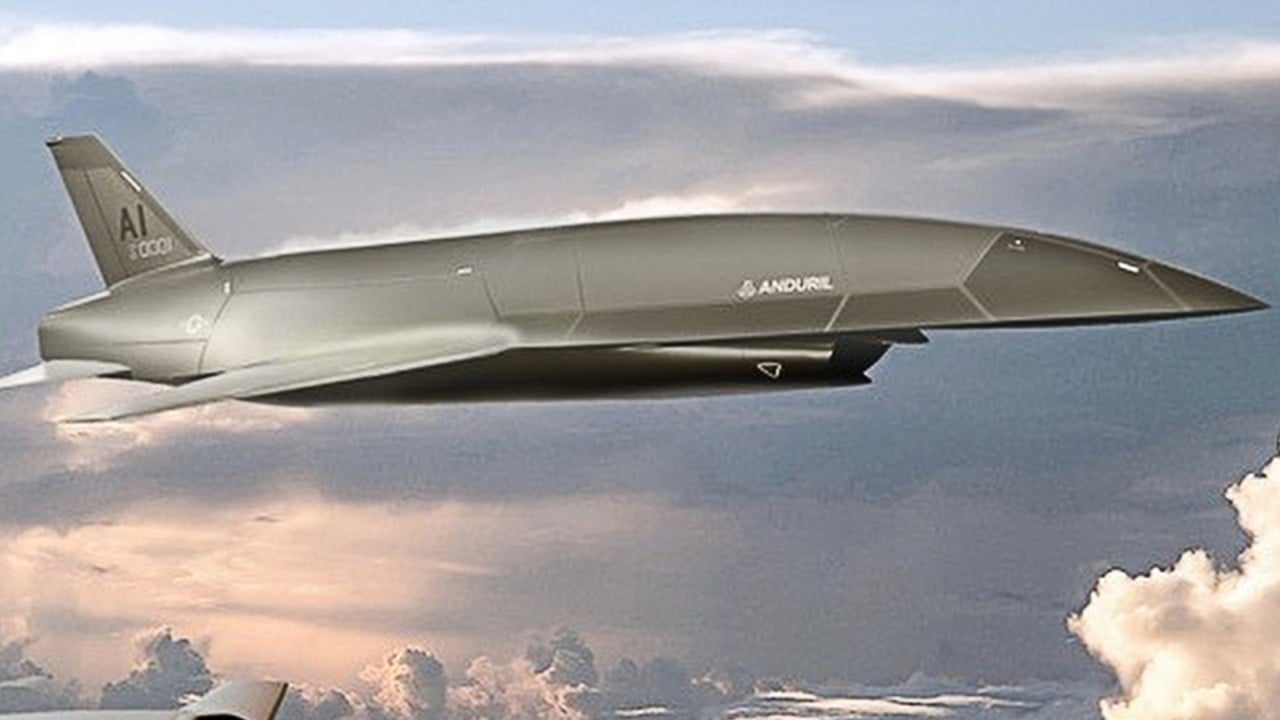
Equipping Abrams tanks with kamikaze drone launchers is not a cosmetic upgrade or a publicity stunt for defense trade shows. It is a desperate, calculated attempt to save a seventy-ton machine designed for Cold War plains from being hunted to extinction by cheap, expendable aerial munitions. When a main battle tank starts carrying loitering munitions on its turret or hull, armor officers are admitting a painful reality. Line-of-sight gunnery alone no longer buys enough stand-off distance in transparent, drone-saturated battlefields.
For decades, the M1 Abrams operated on a simple contract. Put enough composite armor in front of the crew, pair it with a stabilized 120mm smoothbore cannon and thermal optics, and let speed and firepower dictate the engagement. That contract worked brilliantly when threats came from other tanks, dug-in anti-tank guided missile teams, or artillery batteries that needed minutes to adjust fire. Today, a quadcopter or fixed-wing kamikaze drone carrying a shaped charge can spot a tank over a ridgeline, linger in orbit, and dive onto the thinly armored engine deck or turret roof within seconds. Also making waves in related news: Why Cheerleading Domestic Flying Cars Misses the Real Trap.
Putting a kamikaze drone launcher onto an Abrams tank tries to invert that kill chain. Instead of waiting passively for an operator miles away to spot a threat and send a one-way drone downrange, the tank crew gets its own organic reconnaissance and precision-strike eye. Yet bolting tubes and data links onto a heavy armored vehicle creates new vulnerabilities, supply bottlenecks, and tactical headaches that glossy press releases routinely gloss over.
Why Heavy Armor Needed a Long-Reach Eye
Tanks have always struggled with a basic geometry problem. Their thickest armor protects the frontal arc, where incoming shells and missiles are expected to arrive, while the top deck, rear grille, and sides carry far less protection to keep weight within bridge, transport, and automotive limits. For years, commanders mitigated that weakness through infantry screening, air cover, counter-battery fire, and terrain maskings. More insights into this topic are explored by Engadget.
Modern warfare eroded those buffers. Cheap commercial-grade quadcopters, fiber-optic first-person-view drones, and military loitering munitions turned every patch of open ground into a fishbowl. A tank advancing across a field can be tracked from launch to impact without a single friendly scout ever laying eyes on the spotter. Even when a tank survives a hit—or dodges an early strike—its movement is telegraphed, drawing artillery or follow-on waves.
Adding a kamikaze drone launcher to an Abrams tank addresses the blindness problem first and the lethality problem second. A loitering munition launched from the vehicle can climb above tree lines, check behind berms, and inspect tree lines ahead of the column without exposing the main gun or risking a crewed scout vehicle. If the drone spots an anti-tank team hiding in a basement or a mortar position tucked into a gully, the crew does not have to burn a high-value main-gun round or roll into a kill zone to clear it. It can guide the drone straight into the target.
That sounds neat on paper. In practice, turning a tank crew into both armor operators and drone controllers collides with cognitive bandwidth. Inside a buttoned-up Abrams tank, the commander, gunner, loader, and driver already juggle navigation, radio nets, target handoffs, thermal scans, and survival tasks under extreme stress. A drone operator needs attention, situational awareness, and clean communications links. If launching and flying a kamikaze drone pulls the commander's eyes away from close-in threats or local security, the tank gains reach at the exact moment it loses near-field vigilance.
How a Launcher Changes Tank Doctrines
Historically, armor doctrine treated the main battle tank as a direct-fire breaker of formations. You broke through with shock, mass, and precision cannon fire, supported by infantry and indirect fires. Giving Abrams tanks a kamikaze drone launcher blurs the boundary between direct fire, reconnaissance, and organic precision strike.
Consider a hypothetical example of a three-tank platoon probing a contested village approach. Without onboard loitering munitions, the lead tank either creeps forward into potential ambush angles or calls up battalion assets and waits while a remote drone unit gets tasked and routed to the sector. With a kamikaze drone launcher mounted on the Abrams tanks, a platoon element can launch a small loitering munition to clear suspected firing positions on the second floor of a building before committing the heavy metal. The drone orbits, confirms movement or thermal signatures, and strikes a light vehicle or anti-tank position without expending a scarce, expensive tank round.
Beyond Line of Sight Without Leaving Cover
The biggest operational shift is non-line-of-sight engagement at the platoon or company level. A 120mm kinetic or multi-purpose round flies flat and fast, demanding a clear sightline and a calculated firing solution. A kamikaze drone arcs up, loiters, adjusts to moving targets, and attacks steep top angles where reactive armor and composite blocks are thinnest.
For an Abrams tank operating in rolling terrain, urban rubble, or dense woods, that changes how cover is used. The tank can sit hull-down or behind a defilade while its launched drone looks around the corner. Defilade stops being purely defensive; it becomes a launchpad.
The Hidden Cost of Added Signatures
Every capability added to an armored fighting vehicle carries a signature penalty. A kamikaze drone launcher on an Abrams tank is not just a metal box bolted to the bustle rack or turret cheek. It brings electronics, antennas, batteries, cabling, and potential radio-frequency emissions.
Electronic warfare is the shadow twin of drone warfare. If a drone uses a datalink to send video back to the tank or receive terminal guidance commands, adversaries with direction-finding receivers and jammers will look for that spectrum. A tank that lights up the electromagnetic spectrum to control a kamikaze drone can advertise its presence to counter-battery radars or signals-intelligence assets. Even passive, autonomous, or fiber-optic-guided options come with trade-offs in range, weather resilience, cost, or terminal accuracy.
Engineering Trade-Offs Nobody Celebrates
Defense commentators love to treat vehicle modifications like Lego bricks. Snap a launcher onto an Abrams tank, wire up a display, and declare the platform transformed. Anyone who has spent years watching military engineering programs knows the real friction starts after the prototype rolls out of the hangar.
Weight and center of gravity matter. An Abrams tank is already pushing the upper limits of tactical mobility, bridge classifications, and strategic airlift and rail constraints. Adding launchers, canisters, and munitions adds mass—modest compared to extra armor plates, yet never free. Mounting hardware high on the turret can affect turret balance, slew dynamics, or stowage clearances during fast movement through tight spaces or brush.
Survivability is another tough question. What happens when shrapnel, small-arms fire, or a near-miss hits an exposed kamikaze drone launcher on the outside of an Abrams tank? If a warhead or battery inside a canister cooks off or detonates externally, it might not penetrate the main armor, or it might damage optics, antennas, blowout panels, or external gear right when the crew needs them most. Armored canisters and standoff mounting help, but armor adds weight and complexity.
Logistics in a Contested Rear
A kamikaze drone is single-use ordnance with sensitive components. Lithium batteries degrade in extreme cold and heat, lose charge if neglected, and pose fire hazards if damaged. Precision optics, servos, and datalinks dislike mud, vibration, dust, and rough handling during high-speed cross-country runs.
Main battle tanks already demand prodigious logistics—fuel for their turbine engines, spare tracks, ammunition, and maintenance hours. Layering kamikaze drone launcher resupply onto an Abrams tank fleet means keeping specialized canisters, spare drones, batteries, and software updates flowing all the way to forward maintenance teams. If a tank runs out of drones halfway through a multi-day push, the launcher becomes dead weight until resupply catches up.
Why This Trend Exposes Deeper Flaws in Armor
Watching Abrams tanks get kamikaze drone launchers tells a bigger story than a single hardware upgrade. It shows how quickly battlefield dominance can shift when cheap, distributed systems challenge expensive, monolithic ones.
A main battle tank still excels at things drones cannot replicate. A drone cannot physically hold ground, survive sustained small-arms and mortar fire while pushing through obstacles, deliver heavy direct-fire shock against fortified positions, or carry massive thermal and ballistic resilience over rough terrain in bad weather. Claims that drones make tanks obsolete are lazy exaggeration written by people ignoring combined arms.
Yet claims that tanks can ignore drones are just as blind. When a multi-million-dollar armored vehicle is threatened by drones costing a tiny fraction of that sum, clinging to pure legacy tactics is a recipe for attrition. Adding a kamikaze drone launcher to Abrams tanks is a pragmatic adaptation—a recognition that armor must fight across multiple domains at once, from ground cannon duels to low-altitude sky skirmishes.
Counter-Arguments Worth Taking Seriously
Not every serious analyst cheers this convergence. One sharp counter-argument is that putting kamikaze drone launchers on Abrams tanks spreads capabilities too thin across expensive platforms. Why put drone-launch hardware on every heavy tank when dedicated unmanned-system teams, infantry squads, or specialized support vehicles can launch loitering munitions from safer stand-off positions and feed targeting data over a shared tactical network?
There is real merit in that critique. If a tank is supposed to breach defenses and engage high-priority armored targets, diverting crew attention or vehicle space to tactical drones could dilute its core mission. A tank crew already has a full plate when contact starts.
Another counter-argument focuses on cost and expendability. Loitering munitions only make economic sense at scale if they are affordable enough to fire regularly without bankrupting the unit or straining stockpiles. High-end military loitering munitions can cost tens of thousands of dollars—or far more—per shot. Firing pricey drones at low-value targets is unsustainable, while relying on fragile, low-cost systems risks electronic jamming, weather limits, or misses against hardened positions.
The middle ground is clear. An Abrams tank with a kamikaze drone launcher works best when networked with wider sensors and used selectively for high-value reconnaissance, deep target confirmation, or precision strikes on threats outside direct-fire reach—not as a cure-all for every gap in combined-arms protection.
What Separates Hype From Real Battlefield Value
Defense coverage often mistakes a successful test range shot for operational readiness. Launching a kamikaze drone from a stationary Abrams tank on a clear proving ground is one thing. Doing it reliably while moving over rough ground, under GPS and communications jamming, in rain or fog, with fatigued crews and stretched supply lines, is another.
Real value depends on integration. Does the drone feed crisp, low-latency imagery straight into the crew's displays without clumsy workarounds? Can the system be reloaded quickly under cover without exposing crew members to sniper or drone fire? Are the munitions safe from accidental ignition when the tank takes hits?
Hardware alone never wins armored fights. Doctrine, training, electronic-warfare discipline, and logistics decide whether a clever modification becomes a decisive edge or an expensive distraction. Put a kamikaze drone launcher on an Abrams tank if it helps the crew see first and strike smarter from cover, and strip it back if it slows the tank down or blinds the crew to what is right in front of the muzzle.