A federal court in Pará ordered Brazil's government to guarantee transportation, food, and Indigenous-language support so Indigenous voters across the country could reach the polls for the October 2026 presidential runoff. For thousands of citizens living deep inside the Amazon basin, that order arrived at the eleventh hour to rescue a constitutional right threatened by sheer geography, bureaucratic friction, and a sharp rise in first-round abstentions.
Wire reports love clean headlines. A judge rules, the state moves, democracy marches on. Anyone who has spent years covering elections in northern Brazil knows the reality on the river is far messier.
Why Distance Turns Suffrage Into a Multi-Day Expedition
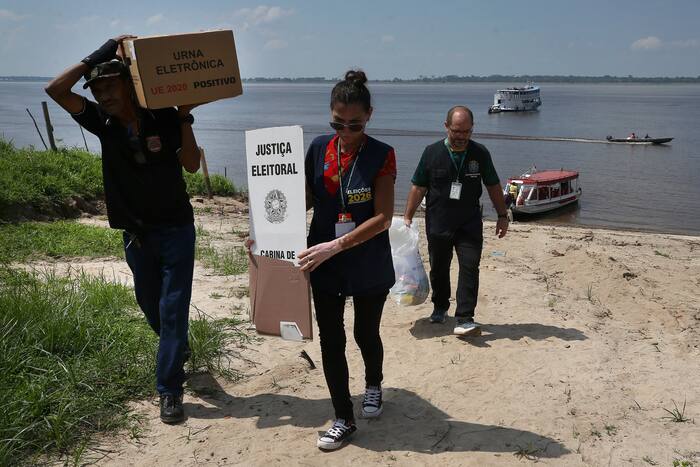
In the Javari Valley and other remote corners of the Amazon, a polling station is not a neighborhood school down the street. Some Indigenous voters live as far as 895 kilometers from their designated voting centers. Crossing that stretch of water and forest can require three to five days by boat.
Electoral officials routinely deploy military aircraft just to get electronic voting machines and poll workers into isolated hubs. Moving ballots and staff is one problem. Moving thousands of citizens across river networks when fuel is scarce, boats are few, and travel times stretch across days is another entirely.
"Geographical distance, combined with a lack of accessible transport, can make a formally recognized right practically impossible to exercise." — From the Pará federal court ruling
Even when polling stations exist in hub villages, surrounding communities still have to bridge the gap. Without coordinated river transport, meals along the way, and interpreters or signage in Indigenous languages, formal access on paper does not translate into a cast ballot.
What Went Wrong Before the Runoff
The late-October court intervention did not come out of nowhere. It followed friction between local Indigenous organizers, state electoral authorities, and federal prosecutors after the first round showed high abstention among Indigenous communities.
In Amazonas, an initial refusal on transportation left Indigenous voters anxious that they would be shut out of the runoff between President Luiz Inácio Lula da Silva and Senator Flávio Bolsonaro. Indigenous legal advocates pointed out that in prior cycles, organizers regularly worked alongside electoral authorities to piece together transport logistics. This time, complaints mounted that early coordination fell short, forcing organizations like Univaja and the Articulation of Indigenous Peoples of Brazil (APIB) to turn to the courts.
Then came the whiplash in Brasília. Electoral leadership at the Superior Electoral Court (TSE) briefly imposed strict prior-approval rules requiring detailed logs of boats or vehicles, drivers, routes, stops, and schedules—a move that drew pushback from Attorney General Paulo Gonet before rules were eased ahead of the vote.
The Friction Points on the Ground
- Fuel and boat availability: Multi-day river journeys depend on vessels, motors, and fuel supplies that cannot be conjured overnight by a judicial order.
- Last-minute compliance: Ordering transport days before a Sunday vote compresses procurement, safety checks, and community notification into a narrow window.
- Language and basic care: Long transit and crowded voting centers require food and Indigenous-language communication support, not just a ride to the dock.
- Competing oversight claims: Disputes over prior judicial authorization for transport highlighted tension between preventing election abuses and avoiding bureaucratic roadblocks that suppress turnout.
The Political Stakes Behind Every River Boat
Voter logistics in the Amazon are never purely technical. Lula and Flávio Bolsonaro offered sharply different visions for Amazon protection and Indigenous territories, turning every ballot box in the region into a high-stakes flashpoint.
Critics of state-arranged transport often worry about potential vote-buying, coercion, or partisan meddling when vehicles or boats are arranged close to election day. That concern is real in contested races. Yet swinging the pendulum toward rigid pre-approval or leaving communities without rides carries its own distortion: it selectively prices and distances remote voters out of the count.
Logistical Hurdles vs. Democratic Trade-Offs
| Challenge | Practical Reality in the Amazon | Effect on Voter Turnout |
|---|---|---|
| Extreme distances | Up to 895 km from polling hubs; multi-day boat travel | Excludes voters who lack time, fuel, or vessels |
| Late court orders | Issued days before the runoff vote | Leaves little margin for river coordination |
| Strict trip rules | Demands for prior approval of routes, drivers, and schedules | Risks stalling movement if paperwork lags |
| Language & sustenance | Need for interpreters, translated signs, and food | Shapes whether remote voters can complete the trip |
Why Last-Minute Rulings Are Not a Permanent Fix
Courts can step in when constitutional rights are on the line. They cannot pilot a boat up a winding tributary or manufacture river barges two days before polls open.
If Brazil wants consistent Indigenous participation in national elections, transport planning has to start months earlier with permanent, transparent protocols agreed upon by electoral courts, prosecutors, federal agencies, and Indigenous organizations well before the first round. Treating river logistics as an emergency courtroom battle every runoff leaves democracy hostage to the clock and the tide.