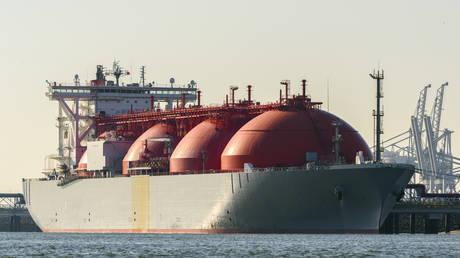
More than 150 commercial cargo vessels currently sit stranded off the coast of Argentina and along the muddy banks of the Paraná River. This massive bottleneck is not the result of a sudden natural disaster or an infrastructural collapse. It stems directly from a high-stakes legislative showdown between President Javier Milei’s administration and the country's elite guild of maritime pilots.
When the government published a sweeping deregulation decree targeting the nation's waterways, local harbor pilots responded by refusing new navigation assignments. Because these specialized professionals are legally required to guide ships through Argentina's treacherous river channels, the job action instantly paralyzed major export hubs like Greater Rosario. Global agricultural markets are now holding their breath as millions of tons of soybeans, corn, and wheat remain trapped behind a wall of bureaucratic and economic warfare.
The Anatomy of a Waterway Standoff
To understand why a decree governing river navigation can bring an entire nation's trade to a sudden halt, one must look closely at the geography of Argentine commerce. The Paraná-Paraguay Waterway serves as the primary maritime artery for South America's agricultural heartland. Enormous Panamax vessels travel hundreds of kilometers inland to load directly from crushing plants and grain silos.
Navigating these narrow, shifting channels requires intimate, localized expertise. Sandbanks move, water levels fluctuate, and a minor miscalculation can result in a grounded hull blocking an entire shipping lane. For decades, the profession of the maritime pilot functioned as an exclusive, tightly regulated guild. Pilotage was mandatory, numbers were capped, and fees were shielded from open market pressures.
Enter Federico Sturzenegger, Argentina's Minister of Deregulation and State Transformation. Armed with an aggressive mandate to dismantle state-sanctioned monopolies and reduce logistics overhead, Sturzenegger drafted a decree designed to upend the system. The new framework allows both domestic and foreign ship captains to bypass local pilots entirely if they obtain a certification proving sufficient familiarity with the local waterways. Furthermore, it removes caps on the number of certified pilots, dismantles geographic segmentation rules, and introduces maximum rate caps.
The administration framed the reform as a long-overdue modernization that slashes costs and boosts the competitiveness of foreign trade. The pilots viewed it as an existential threat to their livelihoods and a reckless gamble with navigational safety.
Behind the Independent Workaround
The ensuing clash revealed a unique structural vulnerability in how labor actions operate under the current political climate. Unlike traditional union strikes that can be reined in by government-mandated conciliation periods, maritime pilots are predominantly registered as independent professionals rather than standard corporate employees.
Because they operate as independent contractors making individual decisions on whether to accept work assignments, conventional labor ministries found their hands legally tied. The state could not simply declare a mandatory labor truce through standard channels.
Instead, the government turned to heavy-handed enforcement tactics. The Argentine Coast Guard issued formal notices ordering pilots back to work under threat of severe administrative penalties and criminal complaints carrying potential prison sentences. Simultaneously, energy sector chambers warned that the disruption was not limited to grain. Fuel distribution terminals, crude oil transfer points, and critical infrastructure projects found themselves abruptly cut off from necessary maritime support.
The standoff highlights the fundamental tension driving Argentina's current economic experiment. President Milei’s administration is attempting to shock-therapy an insular, heavily protected economy into global competitiveness. Yet every time the chainsaw hits a deeply entrenched professional guild, the friction threatens to choke off the very foreign currency inflows the country desperately needs to survive.
Ripple Effects Across Global Food Security
The international implications of this domestic dispute extend far beyond local political theater. Argentina remains a titan in global agricultural supply chains. As the world's leading exporter of processed soybean products and a primary supplier of corn and wheat, any prolonged blockage along its river terminals immediately registers on international commodity exchanges.
Grain houses and international importers face mounting demurrage costs as vessels sit idle at anchor, accumulating thousands of dollars in daily fees while waiting for a resolution. Supply contracts face imminent delays. Alternative suppliers in North America or the Black Sea region may capture short-term demand, but they cannot instantly absorb the massive volume traditionally shipped out of the Paraná terminals.
The confrontation has also exposed the deep polarization characterizing Argentina's path toward market reform. Business chambers representing agricultural exporters have implored both sides to reach a swift compromise, warning that every day of paralysis compounds the damage to the nation's commercial credibility. Meanwhile, the pilots and their maritime allies remain dug in, demanding the complete suspension or repeal of the decree before a single new assignment is accepted.
As the coast guard monitors compliance and weighs further punitive actions against non-compliant mariners, the standoff has evolved into a proxy war for the broader economic restructuring of Argentina. The central question is no longer just about who steers a ship down a muddy river channel. It is whether sweeping executive decrees can successfully bulldoze entrenched corporate and professional privileges without sinking the underlying economy in the process.