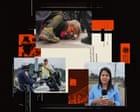
The uniform protects. Until it consumes. When former New South Wales police officer Beau Lamarre-Condon slipped on an Uber Eats insulated backpack and strapped a delivery helmet over his head, he was not acting as a purveyor of convenience. He was executing a chillingly calculated pre-meditation phase, using the near-invisible architecture of the gig economy as camouflage to infiltrate the Paddington terrace of his ex-partner, television presenter Jesse Baird.
The details emerging from the NSW Supreme Court trial lay bare a terrifying descent from romantic obsession to calculated bloodshed. Baird and his partner, Luke Davies, were shot dead on February 19, 2024. Lamarre-Condon has pleaded not guilty to two counts of murder, offering an extraordinary defense of manslaughter and accidental discharge during a tussle over a knife and a firearm. Yet the crown case paints a far darker portrait of an active-duty officer leveraging his internal knowledge of police procedure, surveillance blind spots, and forensic countermeasures to hunt down a man who desperately wanted him out of his life. You might also find this similar story insightful: What the Discovery of a 572 Person Mass Grave Actually Tells Us.
The Mechanics of the Deception
Gig-economy workers are the ghosts of the modern metropolis. They blur into the background of apartment hallways, suburban streets, and security cameras because society has been conditioned to look right through them. Lamarre-Condon recognized this social invisibility and weaponized it.
According to evidence presented during the high-security trial before Justice Natalie Adams, the 31-year-old former senior constable did not simply knock on the door. He researched how to conceal gunfire audio, hired a vehicle under a family member's name, and purchased large surfboard bags designed to transport human remains. The delivery disguise served a singular purpose: to bypass suspicion as he stalked the perimeter of Baird's home. As extensively documented in recent articles by Al Jazeera, the implications are widespread.
Cross-examination by the prosecution zeroed in on the absurdities of Lamarre-Condon's testimony. Under questioning, the accused claimed he kept his helmet visor down and wore the heavy backpack inside the house merely to retrieve expensive shirts and a Cartier ring. It is an explanation that collapses under the weight of basic logic. A serving police officer does not dress as a food delivery courier to pick up personal laundry unless avoidance of identification—and premeditated ambush—is the primary objective.
The Collapse of the Blue Wall and Institutional Blind Spots
The case transcends a standard domestic homicide. It strikes at the heart of public trust in law enforcement. Lamarre-Condon was armed with a service-issued Glock, a weapon he was trained to use with lethal precision, and which he allegedly turned upon Baird and subsequently Davies—who walked into the room and was shot through a door to eliminate a witness.
For decades, police departments have struggled to filter out individuals prone to coercive control, hyper-fixation, and violent escalation. When an officer utilizes the state-sanctioned tools of investigation—tracking movements, understanding forensic trails, and anticipating police response times—against a civilian, the safety mechanisms of the justice system experience a catastrophic failure. Lamarre-Condon's subsequent actions, including dumping the bodies in surfboard bags at a rural monastery near Bungendore and attempting to enlist friends to help cover his tracks, revealed a man operating with a chilling, albeit ultimately flawed, blueprint of evasion.
Beyond the Courtroom Drama
As the trial grinds through its intensive schedule, the wider societal reckoning remains unresolved. The murders of Jesse Baird and Luke Davies galvanized communities across Australia, sparking urgent conversations about domestic violence within LGBTQ+ relationships, the systemic handling of stalking behaviors, and the red flags that go unnoticed within police ranks.
Lamarre-Condon’s defense attempts to frame the tragedy as a chaotic, panicked escalation of events rather than a cold-blooded execution. But the imagery of a uniformed guardian trading his badge for a food delivery backpack tells a different story. It is the story of a man who believed his training would allow him to commit the ultimate crime and walk away unseen.
The verdict will arrive in due course, but the shadows cast over institutional accountability and personal safety will linger long after the courtroom doors close.