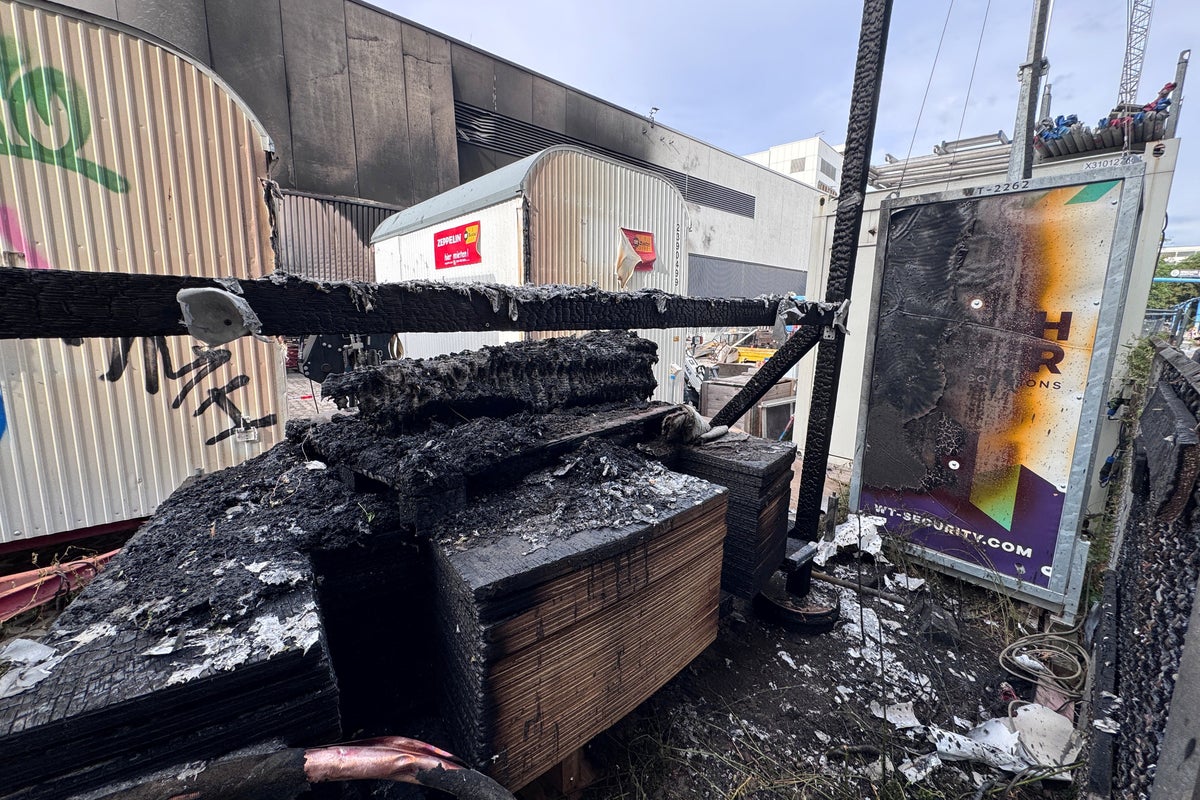
Berlin woke up to an uncomfortable reality when investigators swarmed a charred substation in the city's south. A fire at a critical power station triggered sweeping outages, throwing emergency services into chaos and forcing hospitals onto backup generators. Police launched an immediate probe, treating the incident not as a tragic accident, but as a calculated attack. This aggressive assault fits into a worsening pattern of mysterious disruptions targeting Germany's critical infrastructure.
For years, security analysts warned that modern industrial societies rely on fragile energy arteries. Those warnings are no longer theoretical. The Berlin fire highlights a dark new chapter in European security. Someone is testing the resilience of the grid. Don't forget to check out our recent coverage on this related article.
The Anatomy of a Vulnerability
Modern power grids are masterpieces of engineering, yet they suffer from a fatal structural flaw. They are built for efficiency, not warfare. A sprawling metropolis like Berlin depends on a vast web of transmission lines, transformers, and distribution hubs spread across hundreds of square kilometers. Securing every single node is physically impossible.
Attackers know this mathematical reality. They do not need to bring down an entire national grid on day one. They only need to find the weakest links. If you want more about the context of this, NBC News offers an excellent summary.
- Substations often sit in remote or poorly lit industrial zones.
- Physical perimeters usually consist of basic chain-link fences rather than hardened security walls.
- Remote monitoring systems depend on standard telecommunication networks that remain vulnerable to electronic interference or physical tampering.
When investigators examine the charred remains of the Berlin facility, they look for accelerants, tampered control panels, and signs of forced entry. But the physical damage is only half the story. The psychological impact matters just as much. Disrupting power to hundreds of thousands of residents shakes public confidence in the state's basic competence.
A History of Asymmetric Warfare on Critical Assets
This incident does not happen in a vacuum. Over the past several years, European infrastructure has experienced a steady drumbeat of strange, unexplained anomalies. Communications cables have been mysteriously severed in the Baltic Sea. Rail networks have suffered coordinated sabotage. Substations across multiple countries have reported break-ins and mysterious fires.
Intelligence agencies point toward gray-zone tactics. These methods operate just below the threshold of open military conflict. State actors and well-funded proxy groups use sabotage to sow discord, test emergency responses, and drain state resources without triggering a formal military retaliation clause.
Consider the logistical nightmare a grid failure creates. Traffic lights go dark. Water treatment plants switch to emergency power. Financial transactions stutter. The ripple effects multiply within minutes.
Substation Breach -> Regional Blackout -> Emergency Response Strained -> Public Panic
The cost-to-benefit ratio heavily favors the saboteur. Spending a few thousand dollars on basic incendiary devices or physical tools can inflict millions of dollars in economic damage and tie up thousands of police officers. Meanwhile, defenders must spend billions upgrading physical security, installing advanced surveillance, and hardening infrastructure against threats they cannot always predict.
The Hard Truth About Grid Modernization
Politicians love to talk about green energy transitions and smart grids. These upgrades are vital for climate goals, but they introduce an entirely new attack surface. As grids incorporate more decentralized renewable sources, wind farms, and solar arrays, they require digital management systems.
More digital connections mean more potential entry points for malicious actors.
Smart grids rely heavily on Internet of Things devices and automated software to balance supply and demand in real-time. If a hacker breaches the control software, they can manipulate power flows remotely. If an operative physically breaches a substation, they can bypass digital safeguards entirely.
Protecting this hybrid physical-digital infrastructure requires an uncomfortable pivot. Security experts argue that grid operators must start treating their facilities like military installations rather than utility plants. That means armed guards, biometric access controls, deep trenching around critical transformers, and redundant backup systems that can isolate compromised sectors instantly.
Yet, utility companies operate on profit margins and regulatory budgets. Hardening every substation in Germany would cost astronomical sums, costs that would ultimately land on the taxpayer and the consumer.
What Comes Next for European Security
The investigation into the Berlin fire will eventually yield answers, or it will join the growing file of unsolved infrastructure incidents. Either way, the message has been delivered. Europe's power grid remains dangerously exposed to determined saboteurs who understand how to exploit the seams between civil policing, intelligence operations, and national defense.
As geopolitical tensions remain high, critical infrastructure will stay on the front line of invisible conflicts. The smoke over Berlin has cleared, but the vulnerability remains. Until governments commit the necessary capital and strategic focus to transform civilian utilities into defended assets, these fires will keep burning in the dark.