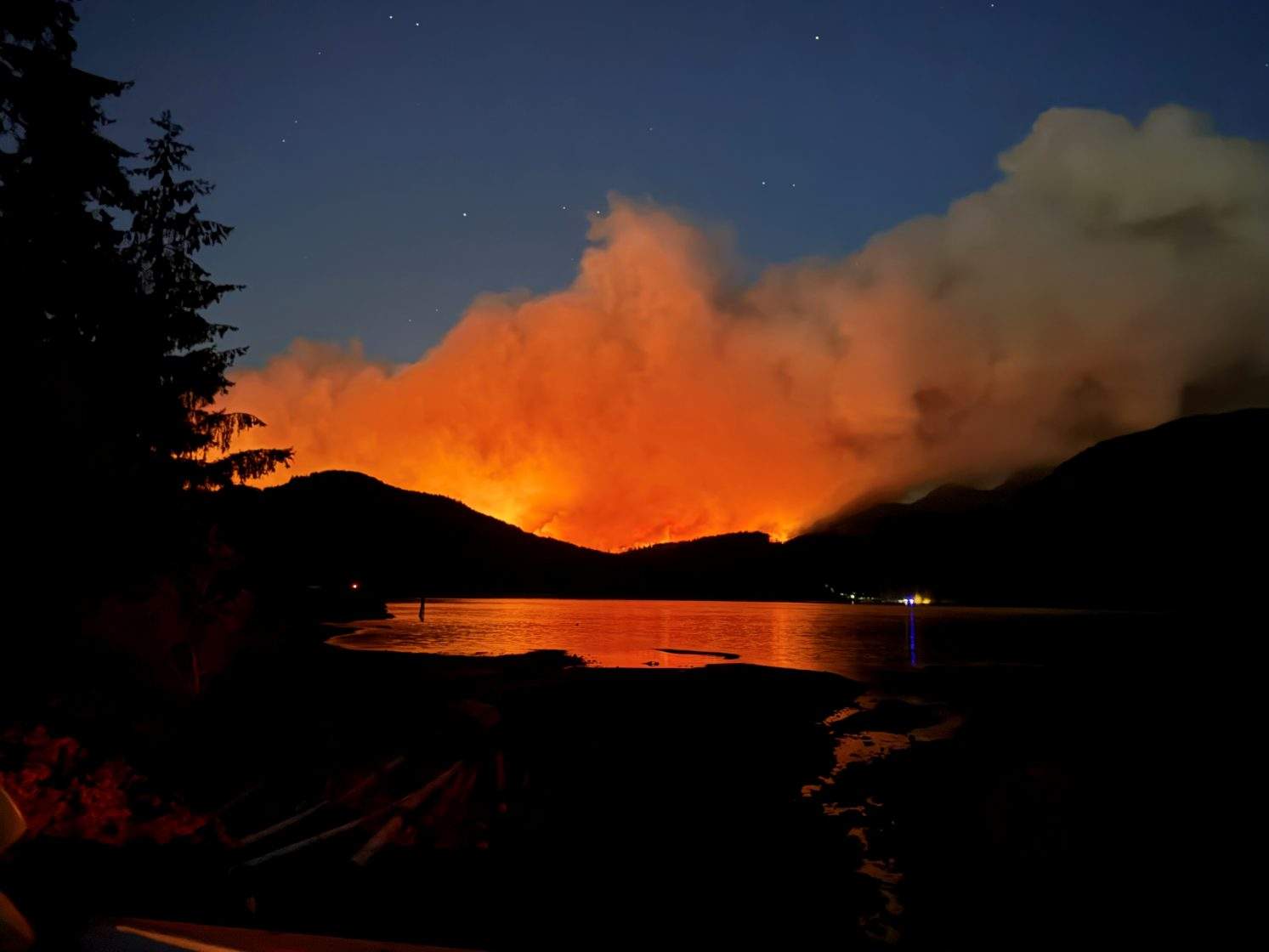
British Columbia faces the highest and most sustained wildfire risk in Canada for the 2026 season. While a deceptively quiet spring saw national charred acreage drop to just 5% of the ten-year average, federal modeling from Natural Resources Canada indicates this calm is temporary. A potent combination of multi-year deep-soil drought, record-breaking winter warmth, and an unprecedented lack of valley-bottom snowpack has turned the province into a ticking clock. When temperatures soar in July, the latent fuel structure will challenge firefighting infrastructure in ways that surface-level weather reports fail to capture.
The Illusion of a Slow Start
Public perception of wildfire danger is notoriously short-sighted. Because rain fell across parts of the province in March and the early weeks of spring lacked the choking smoke of recent years, a false sense of security has taken root.
It is a dangerous misunderstanding.
Federal officials confirmed that only about 18,000 hectares had burned nationwide by late May, compared to a ten-year average of over 500,000 hectares for the same period. This statistical lull creates political breathing room, but it does nothing to alter the fundamental physics of the forest floor. The underlying vulnerability of British Columbia’s timber is not determined by May showers, but by long-term moisture deficits that have been compounding for half a decade.
The Chemistry of the Drought Code
To understand why the 2026 risk is so sustained, one must look below the surface. The BC Wildfire Service relies heavily on the Drought Code, a numeric rating that measures the moisture content of deep organic layers and large logs.
- Surface Moisture: Alleviated quickly by spring rain, controlling flash fuels like grass and pine needles.
- Deep Duff Layers: Require prolonged, multi-month saturation to recover. When these deep layers remain dry, fires burn deeper into the ground, resist suppression, and reignite weeks after a rain event.
A damp spring might delay the start of the visible fire season, but once the top layer of soil dries out under the July sun, the fires do not just spread; they consume the very ground they walk on.
Why 2026 is Uniquely Dangerous
The 2025 season was the second-worst on record, chewing through nearly 90,000 square kilometers across Canada. What makes 2026 terrifying to structural analysts is not that it will necessarily break that acreage record, but that the geography of the vulnerability has shifted into areas that are harder to defend.
The Warmest Winter in a Century
During January and February of 2026, several interior locations in British Columbia experienced the warmest winter recorded since the late 1800s. Without sustained, freezing temperatures, the winter snowpack failed to form at lower elevations.
2026 Snowpack Anomaly: High winter freezing levels = Record low snow at valley bottoms.
Result: Early-season grass fires in Interior valleys merging directly into summer forest threats.
This lack of valley snow eliminates the natural moisture buffer that typically delays forest ignition until mid-summer. Instead, the western Cariboo, the Chilcotin, and the Kamloops Fire Centre entered the spring with structural deficits that no single rain event can fix.
The Northeast Multi-Year Trap
Further north, the region surrounding Fort St. John and Fort Nelson presents a different structural failure. While these areas received near-average rainfall during parts of last summer, it was a drop in an empty bucket. The region is locked in a multi-year drought cycle. When a landscape suffers consecutive years of moisture starvation, the root systems of mature trees die, creating vast stands of standing dead fuel that ignite with minimal thermal energy.
The Federal Aviation Band-Aid
In response to the building threat, Ottawa announced a $317-million allocation to establish a national aerial firefighting surge capacity managed by the Canadian Interagency Forest Fire Centre. For the first time, the federal government owns or directly leases an emergency fleet—including four air tankers, a spotter plane, and five heavy-lift helicopters—to loan to desperate provinces.
While politically expedient, this strategy treats the symptom rather than the cause.
"Airplanes don't put out fires; boots on the ground do. Airplanes just slow the fire down long enough for crews to get there."
This maxim, shared by veteran foresters for generations, highlights the limits of mechanical intervention. When Natural Resources Canada warns of a "sustained" risk, they mean a fire season that does not ease up after a few weeks. Air crews wear out. Flight-hour limits are reached. If the ground conditions remain critical through August, a fleet of ten additional federal aircraft becomes a drop in a bucket against hundreds of localized ignitions.
The Staffing Paradox
While the province claims its suppression ranks are at 100% capacity—filling all 200 provincial vacancies for the season—the metric hides a deeper industry shift. The total number of personnel may match paper requirements, but the median experience level of initial attack crews has dropped significantly across Western Canada over the last decade.
Suppression agencies increasingly rely on seasonal recruits passing through short-term training camps. Fighting a deep-seated, high-Drought-Code fire requires an understanding of terrain, fuel types, and micro-climates that cannot be memorized in a classroom. When structural risk remains elevated for months at a time, operational exhaustion leads to tactical errors.
The true test of the 2026 season will not occur during the first lightning storm of July. It will happen in late August, when those filled vacancies are exhausted, the federal planes are grounded for maintenance, and the deep organic soil of the sub-boreal forests continues to smolder under a persistent atmospheric block. The forecast has laid bare the vulnerabilities; the province is now running out of time to prepare for the reality.