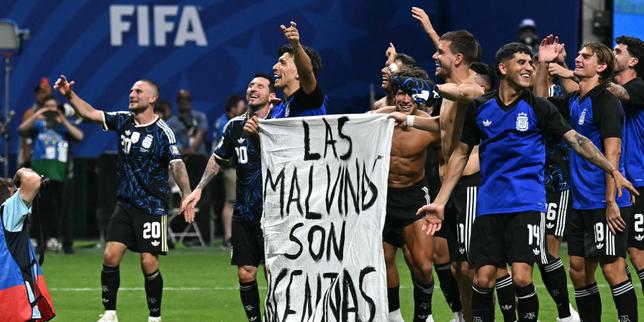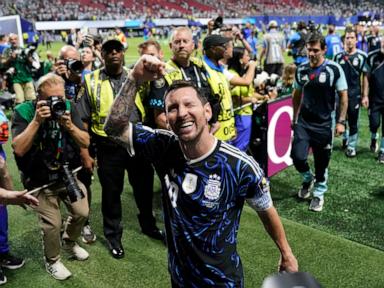
On Sunday at MetLife Stadium, Argentina and Spain will face off in the 2026 World Cup final, a heavyweight clash that represents far more than a simple battle for a gold trophy. This fixture is the ultimate collision of eras, pitting Lionel Messi’s relentless, narrative-defying veteran squad against Luis de la Fuente’s hyper-efficient, youth-charged Spanish machine. For the millions watching, it is the dream final. For the managers, it is a tactical chess match of terrifying proportions where a single mistake will be punished instantly.
To understand how we arrived at this moment, one must look past the glittering headlines and dissect the raw mechanics of both teams. Expanding on this idea, you can find more in: Why This World Cup Final is Unlike Anything We Have Ever Seen.
The Tactical Battlefront in New Jersey
This final will not be decided by individual magic alone. It will be won in the half-spaces and the transition zones, where both managers have spent the tournament quietly installing tactical tripwires for their opponents.
Spain plays with a modern, vertical iteration of their classic possession game. Under Luis de la Fuente, the obsession with sterile passing for the sake of possession has been discarded. Instead, Spain uses possession as a weapon to stretch the opposition laterally before delivering a lethal vertical pass. The wings are lethal. Lamine Yamal and Nico Williams do not merely hug the touchline; they isolate fullbacks, drag center-backs out of position, and create chaotic overloads that force opposing midfields to slide over and leave the center vulnerable. Analysts at ESPN have shared their thoughts on this matter.
Argentina, under Lionel Scaloni, operates with a completely different philosophy. They are comfortable without the ball. Scaloni has built a chameleon-like team that thrives on suffering. They drop into a compact mid-block, choking the space between their defensive and midfield lines, and wait for the precise moment to strike. When they win the ball, the transition is lightning fast. They do not build slowly; they exploit the immediate disorganization of their opponent.
The primary challenge for Argentina will be containing Spain's aggressive counter-press. If Alexis Mac Allister and Enzo Fernández are suffocated in their own half, Argentina will find themselves pinned back, unable to feed their forward line.
The Passing of the Torch or the Ultimate Coronation
The poetic resonance of this matchup is almost too perfect for the scriptwriters. On one side stands Lionel Messi, playing in what is almost certainly his final international match on the grandest stage. On the other stands Lamine Yamal, the teenager who has taken the footballing world by storm, drawing inevitable, heavy comparisons to the Argentine legend himself.
It is a narrative trap. Messi is no longer the player who can dribble past five defenders from the halfway line. He is a facilitator, a ghost who wanders the pitch, scanning for structural weaknesses before exploiting them with a single, devastating pass. His output is calculated, economized to preserve energy for the moments that truly matter.
Conversely, Yamal is pure energy and directness. He plays with the fearless arrogance of youth, taking on defenders with a drop of the shoulder and an explosive burst of pace.
But football is a cruel game that cares little for poetry. Spain's defensive unit, marshaled by Aymeric Laporte and Robin Le Normand, will not offer Messi any sentimental space. They will crowd him, kick him, and deny him the central channels. Argentina’s backline, led by the combative Cristian Romero, will treat Yamal with the same lack of reverence. Romero’s aggressive, front-footed defending will be tested to its absolute limit against Yamal’s agility. One mistimed tackle from the Argentine center-back could result in an early bath or a penalty, altering the entire trajectory of the match.
The Physical and Mental Toll of a North American Summer
We must discuss the grueling logistics of this tournament. Playing a World Cup across three massive nations in the heat of July has pushed these athletes to their absolute physical limits.
World Cup Tournament Metrics
==================================================
Team       Average Distance Covered (Per Match)
--------------------------------------------------
Spain      118.4 kilometers
Argentina  112.2 kilometers
==================================================
Spain’s high-octane pressing style requires immense physical exertion. They cover vast distances, hunting in packs to win the ball back within seconds of losing it. By contrast, Argentina plays a more economical style, conserving energy in a low block before exploding into counter-attacks.
This difference in energy expenditure could be the deciding factor in the final thirty minutes of the match. If the game goes to extra time, Spain’s youthful squad may have the physical edge, while Argentina’s veteran core could find their legs failing them under the humid New Jersey sky. Scaloni's use of his bench will need to be flawless. He cannot afford to leave tired legs on the pitch against a Spanish team that smells blood the moment an opponent's press drops by even five percent.
Midfield Warfare Where the Final Will Be Won
The true heart of this match lies in the center circle. Rodri is the best defensive midfielder in the world, a player who dictates the tempo of the game with metronomic precision. He is the safety valve for Spain, the structural pillar that allows their creative players to push forward without fear of exposing the defense.
Argentina’s strategy must revolve around disrupting Rodri.
If Rodrigo De Paul is tasked with shadowing Rodri, it will turn the midfield into a war of attrition. De Paul is the engine of the Argentine team, a player whose primary role is to disrupt, destroy, and protect Messi from defensive duties. If De Paul can successfully rattle Rodri, break his rhythm, and force him into turning over possession, Spain’s entire attacking structure will stutter.
But if Rodri is allowed to turn, lift his head, and find Dani Olmo or Pedri in the pockets of space between Argentina's midfield and defense, it will be a long, painful afternoon for the Albiceleste. Spain's ability to find these interior passes is unmatched, and once they penetrate the defensive line, their wingers will make quick work of Argentina's fullbacks.
The Weight of History and the Ghost of Success
For Spain, victory on Sunday would cement a new golden generation, proving that their possession-based philosophy has successfully adapted to the physical demands of modern, transition-heavy football. It would validate Luis de la Fuente’s quiet revolution, moving the national team out of the shadow of the historic 2008-2012 era.
For Argentina, it is about immortality. Winning consecutive World Cups, sandwiched around two Copa América titles, would place this squad among the greatest international dynasties in the history of the sport. It would provide the ultimate ending to the Messi era, a final, emphatic exclamation point on a career that has defied gravity for two decades.
The stage is set. The tactical blueprints are drawn. The talking is over, and only ninety minutes of brutal, high-stakes football remain to decide who rules the world.