The death toll has climbed to 1,050, and the scale of destruction across Nepal is staggering. When catastrophic flash floods triggered by extreme weather slammed the Himalayan nation, entire communities were left buried under mud, debris, and ruined infrastructure. Right now, international rescue crews are racing against time. They are dealing with some of the most difficult geography on earth. Deep inside choked hydropower tunnels, specialized teams are digging through mud-swamped corridors where every foot forward is a hazard.
Foreign governments and local military units have scrambled thousands of personnel to the disaster zones. Among the affected are citizens from various neighboring countries who were working or traveling through the region when the torrents hit. According to the Ministry of External Affairs, 163 Indian nationals have been successfully rescued so far, thanks to coordinated efforts between Indian specialized units and the Nepal Army. But pulling people out alive is only half the battle. The underground operations present unique, terrifying obstacles that ordinary disaster response training simply does not cover. Meanwhile, you can read related developments here: The Lady Captain Who Stared Down the Flood.
Navigating the Hydropower Tunnels
The situation inside damaged infrastructure like the Chilime and Langtang hydropower projects highlights the sheer grit required for modern disaster recovery. A 24-member Indian tunnel rescue team has been deployed directly into these subterranean hazard zones. Working alongside the Nepal Army, these teams face nightmare conditions. Access is severely restricted. The floors inside the tunnels are choked with swamp-like, marshy mud that swallows equipment and slows movement to a crawl.
It is dark, claustrophobic, and structurally unstable. Debris blocks primary escape routes, forcing rescuers to tunnel manually through packed silt. Similar international deployments, including Chinese teams at the Upper Trishuli 3A project and specialists from the Republic of Korea, are working around the clock at other critical sites. They are dealing with conditions where heavy machinery cannot operate safely, leaving rescuers to rely on manual excavation and sheer endurance. To see the full picture, we recommend the recent article by The New York Times.
The Overwhelmed Infrastructure and Morgue Crisis
Beyond the dramatic underground extractions, the humanitarian fallout on the surface is heartbreaking. The sheer volume of casualties has overwhelmed local systems. Nepal's nationwide morgue capacity sits at roughly 350 bodies. With the death toll surging past the one-thousand mark, hospitals and makeshift medical camps are running out of space to store the deceased safely.
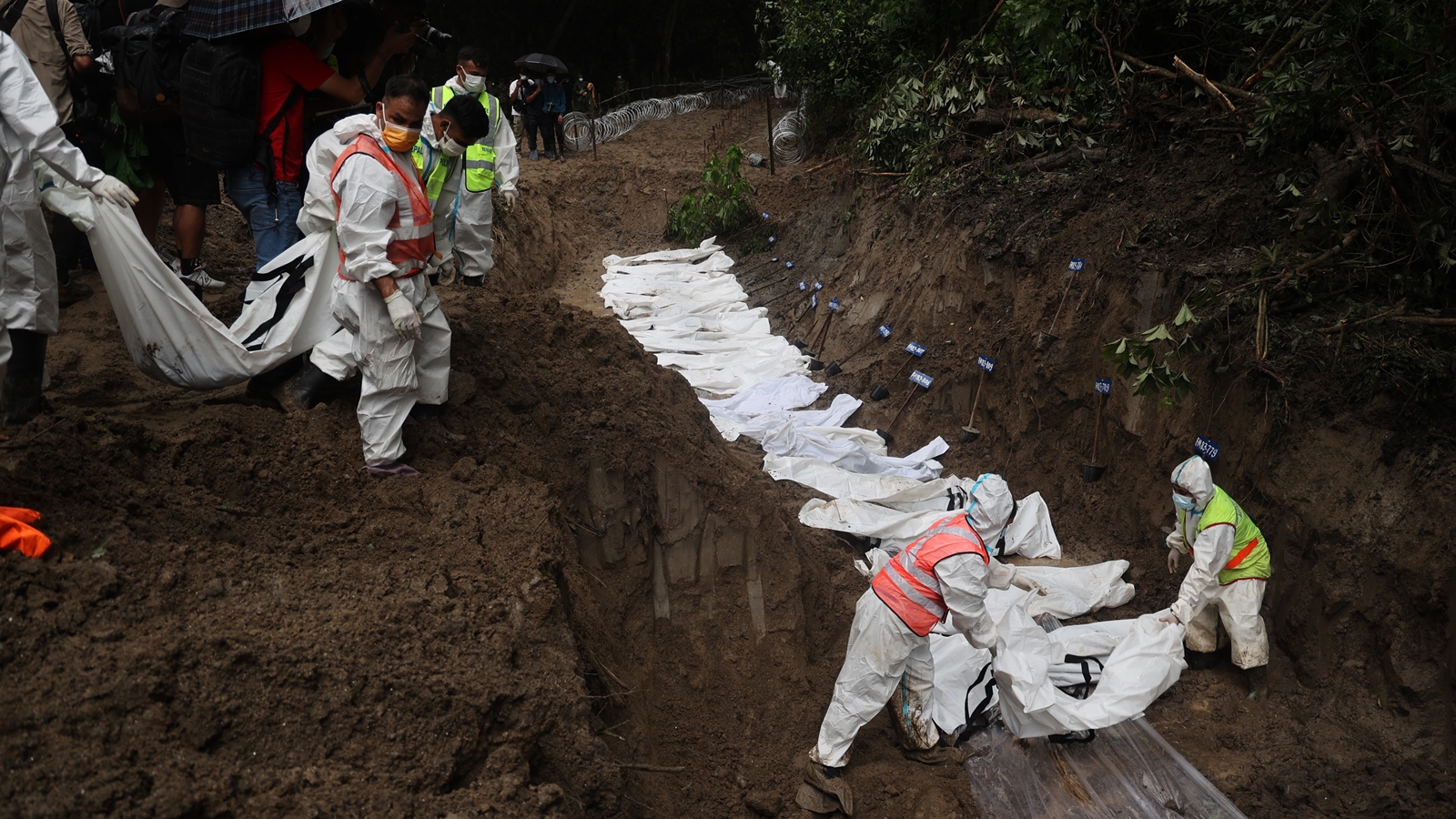
Local authorities and international forensic units are facing an administrative and logistical nightmare. Bodies recovered downstream from regions like Rasuwa and Nuwakot require immediate identification processing. To manage the crisis while respecting sanitary protocols, authorities have had to resort to temporary field burials with precise identification markers and DNA samples preserved for future cross-matching with grieving families. It is a grim reality that highlights how unprepared regional infrastructure can be when a mega-disaster strikes on this scale.
Massive Air and Ground Evacuations
While underground tunnels capture headlines, the macro-level rescue operation is a massive logistical puzzle. More than 21,000 security personnel from the Nepal Army, Nepal Police, and Armed Police Force have been deployed across the country. Over 11,800 people have been pulled to safety overall, thanks in large part to relentless aerial operations.
Helicopters have logged hundreds of flights into cut-off mountain valleys, dodging unpredictable weather patterns and unstable landing zones. Evacuating stranded tourists, foreign nationals, and locals requires split-second pilot decisions in narrow canyons where wind shears change by the minute.
If you are tracking family members or looking to support relief operations, rely strictly on official updates from the National Disaster Risk Reduction and Management Authority (NDRRMA) or respective foreign ministries. Standard travel through these northern corridors remains heavily restricted. Check local advisories before making any transit plans, and give emergency responders the clearance they need to finish clearing the blocked routes.