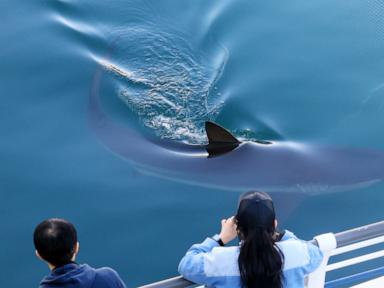
Officials in Busan scrambled for new tactics in late October 2026 after a roughly 9.8-foot gray shark, identified as a dusky shark and nicknamed Bukangi, slipped back into a narrow North Port Waterfront Park canal just hours after crews thought they had guided it out to open sea. The incident exposed a collision between urban waterfront engineering, shifting ocean temperatures, and municipal spectacle that turned a stranded predator into a 1.7-million-visitor attraction.
After more than a month circling the artificial waterway, the animal had already survived multiple failed herding efforts—boats spraying water, nets strung across tight channels—only to return through gaps or slip past barriers once operations paused. For a closer look into this area, we recommend: this related article.
I have covered coastal infrastructure failures and wildlife rescues for decades. When a municipal government starts handing out promotional titles to a trapped apex predator while struggling with basic marine logistics, the story is never just about a single fish. It is about what happens when concrete city planning meets warming seas and public appetite for viral drama.
Why Herding a Large Shark Out of a Canal Is So Hard
Herding a large shark out of a man-made canal sounds straightforward on a whiteboard. In practice, it is an exercise in frustration. For additional details on this development, detailed analysis can also be found at Associated Press.
Sharks are not trained livestock. They do not read human intent when a small boat revs its engine or aims a stream of water at their flank. During the late September and early October operations in Busan, crews used boats spraying water and deployed nets across the waterway, yet the shark simply avoided the vessels or swam over the barriers.
Even when workers installed guiding nets linked to floating pontoons and tried to funnel the animal outward late on October 21, the shark dived beneath a net and came right back overnight.
Artificial canals create traps by design. Straight walls, abrupt depth changes, harbor noise, and confined turning radii confuse wild marine animals that navigate using subtle electromagnetic cues, current gradients, and open-ocean horizons. Once a large shark settles into a semi-enclosed pocket of water for weeks, that unfamiliar basin becomes the only territory its nervous system currently recognizes.
A rescue operation fails the moment officials treat a canal like a hallway with one exit instead of a maze where a ten-foot shark can double back in the dark.
Consider a hypothetical example of how small operational compromises compound. Suppose a municipal crew leaves a lower gap beneath a floating net because the seabed is uneven, or pulls a perimeter barrier back early to reopen local boat traffic. A single pass at low tide or under cover of darkness puts the animal right back inside the basin, resetting weeks of public expectations in minutes.
Warming Waters and More Sharks Near Shore
This standoff did not happen in a vacuum. Sightings of large sharks along South Korea's east coast jumped sharply in the first half of 2026, with analysis from the National Institute of Fisheries Science recording 46 sightings compared with 12 during the same period a year earlier.
Environmental groups have linked the shark's presence in the canal to warming seas, pointing out that rising water temperatures push warm-water prey northward with larger sharks following behind. By mid-to-late October, morning water temperatures around Busan hovered near 20 degrees Celsius (68 degrees Fahrenheit), raising serious questions among experts about how long the animal could stay put without feeding properly or migrating as seasonal temperatures shifted.
More frequent coastal encounters are a predictable consequence of ocean warming. When baitfish move closer to human shorelines, harbors, and breakwaters, larger predators follow food rather than headlines.
That reality creates a quiet hazard for port cities. An enclosed canal is not a natural nursery or a safe sanctuary. It is a bottleneck where a large animal can become stressed, disoriented, or malnourished while dozens of boats and hundreds of spectators crowd the rim.
When a Stranded Predator Becomes a City Mascot
What separated Busan's crisis from a routine marine response was how quickly municipal branding merged with public emotion. As crowds gathered along the waterfront—reaching roughly 600,000 visitors early on and climbing past 1.7 million over the course of the ordeal—the shark became a local sensation.
City officials leaned into the attention, naming the animal an honorary publicity ambassador with the title "Shafluencer" after an online poll and treating it as a civic mascot. Residents of all ages came to watch it surface, talk about feeling attached to it, and hope it would make it back to the open sea.
Public affection is genuine, and nobody wants to see a wild animal suffer. Still, turning a trapped shark into a municipal attraction carries real risks.
- Crowds complicate rescue windows: Heavy foot traffic, livestreamers, and media attention pressure officials to stage visible operations even when calm, low-disturbance conditions might work better.
- Mascot framing blurs ecological reality: Calling a wild dusky shark a "Shafluencer" makes great social media copy, yet it can obscure the fact that an apex predator lingering in a city canal is out of its element and potentially losing condition.
- Quick wins create false relief: Announcing a successful release before confirming the animal has cleared the harbor mouth sets up whiplash when the shark reappears hours later.
There is a gray area here that critics and boosters both tend to miss. Officials did not invent the public's fascination; people naturally gravitate toward dramatic wildlife right outside their windows. At the same time, celebrating too early—or treating a stranded animal like a tourism asset—makes the inevitable setbacks look like incompetence.
Practical Lessons for Coastal Cities
The Busan episode offers clear takeaways for any port authority or coastal city dealing with large marine animals in artificial waterways. None of these measures are flashy, and none guarantee an instant rescue, but they address the actual failure points.
| Operational Area | Common Mistake | Better Practice |
|---|---|---|
| Barrier Placement | Stringing temporary nets across wide or uneven sections where sharks can dive under or jump over | Anchor weighted bottom lines and inspect depth profiles before herding begins |
| Release Verification | Declaring success as soon as the animal exits the canal mouth | Monitor exit corridors over extended periods, including overnight tides, before standing down |
| Crowd Management | Allowing dense spectator and boat activity right beside active herding zones | Enforce strict perimeter buffers to reduce acoustic and visual stress on the animal |
| Public Messaging | Over-promising swift removal or leaning heavily into mascot branding | Give candid updates on water conditions, animal behavior, and why returns happen |
Marine biologists and port engineers also need standing playbooks before the next stray enters a harbor basin. Waiting until a shark has circled a canal for three or four weeks—while seasonal water temperatures change and public pressure mounts—forces crews into improvised tactics under a harsh spotlight.
Ultimately, a canal built for ships and waterfront strolls was never designed for a ten-foot shark trying to find its way home. Coastal cities that pair clear-eyed marine science with disciplined perimeter control will handle the next unexpected visitor far better than those chasing applause at the water's edge.
Why Bukangi the shark is stuck in a canal in South Korea
This short video highlights the public attention around Bukangi in Busan and outlines why early rescue efforts struggled to guide the shark back to open water.



