The Mediterranean enclave of Ceuta is a pressure cooker built on history, geography, and political friction. When King Felipe VI and Queen Letizia arrived in the Spanish North African territory, they stepped onto soil deeply fractured by a staggering migration surge. Months after tens of thousands of migrants rushed the border fences, leaving over a hundred dead and thousands stranded inside a city of just 84,000 residents, the royal presence was designed to project unity. Instead, it illuminated a much deeper domestic and diplomatic fault line that national politicians are eager to exploit.
To understand why this visit matters, one must look beyond the pageantry of flag-waving crowds and church bells. Ceuta and its sister exclave, Melilla, are unique physical anomalies. They provide direct land borders between the European Union and the African continent. That distinct geography turns them into perpetual pressure valves for migratory movements, making them acutely vulnerable to geopolitical shifts in Rabat and Madrid.
The July border rush brought this vulnerability into sharp focus. An estimated 80,000 people crossed into the tiny territory in a matter of days. While a significant portion eventually departed or returned, estimates indicate that thousands remained behind, overwhelming local infrastructure and testing the social fabric of a community known historically for delicate multi-faith coexistence among Christian, Muslim, Hindu, and Jewish populations.
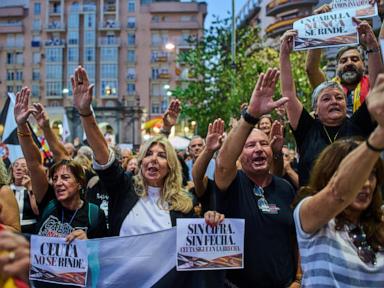
Streets in neighborhoods like El Principe have become flashpoints of frustration. Local residents, exhausted by months of strain, temporary camps, and strained municipal resources, voice competing grievances. Some demand immediate expulsions and accuse authorities of losing control. Others feel alienated by a national security response that treats the territory as a distant geopolitical chess piece rather than a home for Spanish citizens who deserve protection and stability.
Compounding the local friction are disturbing reports from human rights organizations. Allegations of misconduct and brutality by security forces during and after the border surge have triggered official investigations, casting a dark shadow over the state's handling of the emergency. When the monarchy arrived to boost morale, it landed in a territory where trust in institutional machinery had already eroded.
The timing of the royal tour also carries undeniable electoral weight. With general elections looming on the political horizon, conservative opposition factions have seized upon the migration crisis to bludgeon the progressive central government. They argue that Madrid has failed to defend national borders adequately and has coddled foreign actors at the expense of domestic security. Immigration has transformed from a regional humanitarian issue into a potent ideological weapon, weaponized to sway voters far outside the borders of the enclave.
Then there is the shadow cast across the Mediterranean. Morocco claims sovereignty over both Ceuta and Melilla, viewing their continued status as an anachronistic remnant of colonial history. Royal visits to the territories are rare—the last comprehensive tour by a Spanish monarch occurred nearly two decades prior, in 2007—precisely because they trigger fierce diplomatic pushback from Rabat. By walking the streets of Ceuta and paying respects at a cemetery where unidentified migrants are buried, King Felipe executed a delicate diplomatic dance. He offered a public call for good faith and mutual respect in bilateral relations while simultaneously planting the flag of sovereignty firmly in European ground.
Whether Rabat views the royal gesture as a provocation or a routine assertion of statecraft remains to be seen. What is certain is that migration management across the Strait of Gibraltar relies heavily on the cooperation of Moroccan authorities. When that cooperation stumbles, or when diplomatic channels freeze, the consequences land immediately on the asphalt of Ceuta.
The royal couple left behind cheering crowds and handed-over keys to the city, but the underlying crisis remains entirely intact. The structural dependence on external border enforcement, the political polarization in Madrid, and the internal strain on a multicultural population are not issues that can be solved by a royal procession.
The border fences stand reinforced, but the human and political fallout of July continues to reverberate through every layer of society
Friction at the border: Watch how the migration crisis unfolded in Ceuta
This video provides an on-the-ground look at the makeshift camps, local protests, and the intense social pressures that shaped the backdrop for the royal visit.