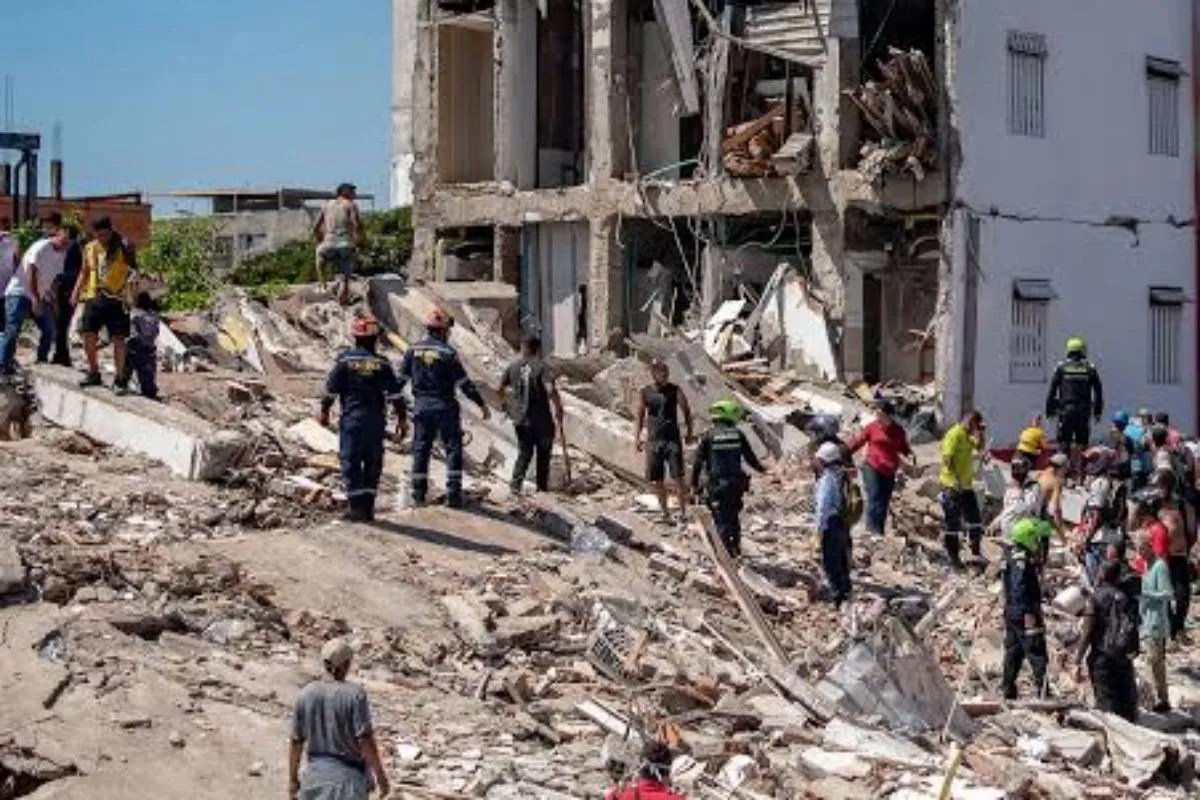
The magnitude 7.4 earthquake that struck western Colombia with its epicenter near San José del Palmar in Chocó has left at least 281 people dead, nearly 4,000 injured, and 379 individuals unaccounted for. As search and rescue teams sift through thousands of collapsed homes and shattered community centers across 15 departments, the immediate emergency response gives way to a more uncomfortable reality. This disaster is not merely an act of geological violence. It is the predictable outcome of decades of systemic vulnerability, unheeded engineering warnings, and a structural deficit in regional planning that treats seismic preparedness as an afterthought.
The Anatomy of an Intermediate Depth Disaster
Seismic events are rarely uniform. When the earth ruptured at a depth of over 100 kilometers, seismologists immediately recognized the signature of an intermediate-depth earthquake. Unlike shallow quakes that release their destructive energy in sharp, localized jolts, deeper subduction-zone movements ripple outward over immense geographic footprints.
This characteristic explains why tremors shook high-rises in Bogotá while simultaneously devastating municipalities hundreds of kilometers away in Valle del Cauca, Risaralda, and Antioquia. The shockwaves traveled through the Andean crust, losing some of their high-frequency punch but retaining enough energy to compromise structures built on unstable mountain slopes and saturated river valleys.
Tens of thousands of families now face homelessness because the physical shock found the weakest links in the national housing grid. Over 10,000 homes were completely wiped out, while upwards of 65,000 others sustained structural compromise. Schools, hospitals, and vital transit corridors buckle under the weight of recurring tremors.
When Structural Codes Collide with Economic Reality
Building codes on paper rarely match the reality of informal construction. Across the Andean region, rapid urban migration over the past half-century forced millions into self-constructed neighborhoods on steep gradients or reclaimed floodplains. These communities often lack professional engineering oversight, relying instead on unreinforced masonry and substandard concrete mixes.
When the ground liquefied or shook violently under the MMI intensity scales recorded during the event, these informal settlements bore the brunt of the mortality rate. It is a grim mathematical certainty of modern disasters. Earthquakes do not kill people; fragile walls do.
Public infrastructure fared little better. The paralysis of multiple regional airports, alongside dozens of collapsed vehicular and pedestrian bridges, instantly fractured the logistics network required to move heavy rescue machinery into isolated pockets of Chocó and Antioquia. When primary supply arteries are severed within the first hour of a catastrophe, golden-hour rescue protocols fail before they can begin.
The Institutional Blind Spot of Disaster Management
Emergency response agencies like the National Unit for Disaster Risk Management (UNGRD) mobilize vast amounts of manpower once the dust settles. Yet, state apparatuses across Latin America remain chronically reactive. Budgets heavily favor post-disaster humanitarian aid over pre-disaster seismic retrofitting.
Retrofitting an aging school or reinforcing an unreinforced masonry hospital is expensive, politically invisible work. Politicians rarely win elections by spending capital on steel braces hidden behind concrete walls. Consequently, public infrastructure remains vulnerable cycle after cycle, leaving local governments perpetually unprepared to absorb shocks of this magnitude.
Consider the distribution of medical casualties. With nearly 4,000 injuries straining regional clinics, hospitals that were supposed to serve as safe havens found themselves damaged or structurally compromised. When a health center loses its operational capacity during a tremor, the baseline mortality rate climbs simply because triage must occur on the pavement outside.
Moving Beyond the Aftershocks
As aftershocks continue to rattle the fault lines and the window for finding survivors under the rubble shrinks, public grief will inevitably transition to political reckoning. The sheer volume of destroyed educational centers and compromised aqueducts means recovery will stretch across years, not months.
Rebuilding cannot mean recreating the past. If the housing stock is restored using the exact same informal methodologies on the exact same hazardous slopes, the next seismic wave will exact an identical toll. True resilience requires confronting the uncomfortable economics of urban planning, enforcing rigorous structural standards in secondary cities, and treating infrastructure reinforcement as a matter of national security rather than a municipal luxury.
The earth beneath the Andes will continue to shift. How the state responds before the next rupture defines the difference between a natural hazard and a preventable catastrophe.