The decision to push back a high-stakes hearing regarding Federal Reserve Governor Lisa Cook to December 14 is far more than a routine scheduling adjustment. Behind the bureaucratic maneuvering lies a fierce institutional battle over central bank independence, political leverage, and the future direction of American monetary policy. When a legislative or executive panel delays a proceeding involving a sitting member of the Federal Reserve Board of Governors, it rarely stems from a simple calendar conflict. Instead, such postponements typically signal intense behind-the-scenes negotiations, shifting political coalitions, or a strategic effort to buy time while opposition researchers and legal teams scramble to build—or dismantle—a case.
To understand the weight of a December 14 hearing date, you first have to understand the mechanics of the Federal Reserve Board. Unlike cabinet secretaries who serve at the pleasure of the President, members of the Federal Reserve Board of Governors are insulated by design. Congress structured the Federal Reserve Act of 1913—and updated it in the Banking Act of 1935—to ensure that those setting interest rates and regulating the nation's largest banks could make painful, unpopular economic decisions without fearing immediate dismissal from the White House or Capitol Hill. Governors are appointed to staggered 14-year terms and can only be removed by the President "for cause," a legal threshold historically interpreted to mean serious misconduct, neglect of duty, or malfeasance in office, rather than policy disagreements.
Lisa Cook’s tenure on the Board has been scrutinized since her initial nomination. As the first Black woman to serve as a Federal Reserve Governor, her appointment was hailed by supporters as a long-overdue broadening of perspectives at an institution historically dominated by white male economists from a narrow band of academic backgrounds. Her academic credentials—spanning Marshall Scholarship studies at Oxford, a doctorate in economics from the University of California, Berkeley, and tenured professorships at Michigan State University—anchored her qualifications in innovation economics, macroeconomics, and financial history. Yet from the outset, her confirmation process was unusually contentious, breaking along strict partisan lines and requiring a tie-breaking vote in the Senate.
That political friction never fully dissipated. It simply went dormant, waiting for a procedural opening to resurface.
The Mechanics of a Strategic Delay
In Washington, timing is an offensive weapon. Pushing a hearing to December 14 places the proceeding squarely into the late-year legislative crunch, a period when lawmakers are distracted by government funding deadlines, holiday recesses, and end-of-year wrap-ups. Moving a contentious hearing into mid-December achieves two distinct objectives depending on who controls the gavel.
First, it compresses media attention. A hearing held in the middle of October or November commands days of uninterrupted financial press coverage, editorial board scrutiny, and market analysis. By mid-December, newsrooms are thinning out, and public attention is fractured. If the goal of the panel is to conduct an aggressive inquiry without triggering immediate panic in the bond markets, burying the event on the December calendar is an effective tactic.
Second, a delay provides critical runway for document discovery and witness preparation. Hearings involving central bank officials are rarely improvised theater; they are tightly scripted interrogations backed by thousands of pages of financial disclosures, academic records, and internal communications. When a panel abruptly shifts a date, it often indicates that new records have recently surfaced—or that the panel is still fighting to obtain them.
Consider a hypothetical example of how this plays out in practice. Imagine a committee requests five years of external speaking disclosures or research grant filings from a regulatory official. If the official's legal counsel turns over 4,000 pages of unindexed PDFs forty-eight hours before the scheduled hearing, the panel faces a choice: proceed blindly and risk looking unprepared on national television, or delay the hearing by several weeks to allow staff investigators to comb through the data. In almost every instance, committee chairs choose the delay. They would rather absorb the minor bad press of a scheduling shift than allow a witness to walk out unscathed because investigators missed a buried footnote.
The Institutional Stakes for the Federal Reserve
The friction surrounding Lisa Cook is a proxy war for a much larger question: how independent should the Federal Reserve actually be?
For decades, a bipartisan consensus held that central bank independence was the bedrock of low inflation and stable financial markets. The logic was straightforward. Politicians naturally favor low interest rates because cheap money juices economic growth, boosts employment, and lifts stock prices right before elections. Left unchecked, political interference leads to chronic inflation, currency devaluation, and boom-and-bust cycles. By handing the keys of monetary policy to an independent technocratic board, elected officials tied their own hands to protect long-term economic stability.
That consensus has frayed badly over the past decade. Critics from both ends of the political spectrum now argue that the Federal Reserve has strayed far beyond its dual mandate of maximum employment and price stability.
- From the political right, critics contend that the Fed has increasingly waded into politicized territory, including climate risk assessments for major banks, diversity metrics, and broader social policy discussions that belong exclusively to elected lawmakers. Under this view, holding aggressive oversight hearings is not an attack on central bank independence; it is a necessary constitutional check on an unaccountable fourth branch of government.
- From the political left, critics argue that the Fed's rate-hiking cycles disproportionately punish working-class families and minority communities to tame inflation caused by supply-chain shocks and corporate pricing power. They view conservative scrutiny of governors like Cook as an attempt to intimidate policymakers who prioritize full employment alongside inflation control.
When a sitting governor is hauled before a panel—or when their standing is challenged through formal review processes—the ripple effects extend far beyond one individual's career. Every other member of the Federal Open Market Committee watches closely. They take note of which questions draw blood, which policy positions invite congressional retaliation, and how fiercely the Fed Chair defends the institution's turf.
What Investigators Look For When Targeting a Fed Governor
Because a Federal Reserve Governor cannot be easily fired over interest rate votes, opponents looking to weaken or unseat a sitting member must look elsewhere. In modern Washington, political battles over economic policy are routinely fought through the language of ethics, compliance, and academic rigor.
When a panel prepares a hearing on a central bank official, staff investigators typically focus on three specific vulnerabilities:
Financial Disclosures and Ethics Compliance
Federal Reserve officials are subject to some of the strictest financial disclosure and trading rules in the federal government, particularly following the 2021 trading scandal that forced the resignations of two regional Fed presidents. Investigators scrutinize every asset held in blind trusts, every delayed filing on Form 278e, and any overlap between a governor's previous private-sector consulting and their current regulatory oversight. Even an inadvertent clerical error on a disclosure form can be weaponized during a televised hearing to paint a policymaker as careless with the public trust.
Academic Integrity and Past Scholarship
For governors drawn from academia, their entire published body of work becomes fair game. Opposition researchers run decades-old journal articles, co-authored working papers, and dissertation chapters through modern plagiarism detection software and statistical replication tests. If a data table from a 2008 paper contains an unexplained discrepancy, or if citation practices fail to meet contemporary standards, critics use those findings to question the governor's analytical competence.
Regulatory Overreach and Dissent
The Federal Reserve Board does not merely set interest rates; it writes the capital rules that dictate how much money JPMorgan Chase, Bank of America, and Citigroup must hold in reserve. It approves or denies bank mergers. It runs annual stress tests. A governor who votes consistently for stricter bank capital requirements makes powerful enemies on Wall Street. Those financial institutions rarely attack a governor directly; instead, they fund think tanks and brief sympathetic lawmakers on how the governor's regulatory votes might restrict credit for small businesses and homebuyers.
The Role of the White House and the Limits of Executive Power
The phrasing surrounding a "White House panel" or executive-branch review mechanism highlights a critical structural tension in American governance. Technically, the White House does not supervise the Federal Reserve. The Fed is an independent agency created by and accountable to Congress. However, the executive branch wields immense indirect influence over the Board through the power of appointment, the Department of Justice's legal interpretations, and the bully pulpit.
If an executive-aligned panel or ethics review board is scrutinizing a sitting governor, it tests the boundaries of the "for cause" removal protection established nearly a century ago. Legal scholars have long debated what would happen if a President attempted to remove a Federal Reserve Governor—or if an executive body tried to force a resignation through sustained procedural pressure.
The precedent most often cited is Humphrey’s Executor v. United States, the landmark 1935 Supreme Court ruling that affirmed Congress's authority to create independent commissions whose members cannot be removed by the President solely over policy differences. Yet recent Supreme Court decisions have chipped away at the insulation protecting the heads of other independent agencies, such as the Consumer Financial Protection Bureau and the Federal Housing Finance Agency. While the courts have so far treated the Federal Reserve as a unique historical exception due to its central banking functions, the legal armor surrounding the Board is thinner than it was twenty years ago.
A delayed hearing on December 14 sits directly on this fault line. If the proceeding is merely an oversight review, it represents standard political friction. If it is a prelude to an unprecedented effort to challenge a governor's tenure, it could trigger a constitutional crisis that would immediately spook global debt markets.
How Financial Markets Price Political Interference
Wall Street traders rarely care about the personalities involved in Washington hearings, but they care deeply about institutional predictability. The entire global financial system relies on the assumption that the U.S. Treasury market is the safest, most liquid asset class in the world, backed by a central bank that will defend the purchasing power of the dollar regardless of which party holds the White House.
When political pressure on the Federal Reserve intensifies, markets react in subtle, measurable ways before any formal policy change occurs:
- The Term Premium Widens: Investors holding 10-year and 30-year Treasury bonds demand extra yield—known as the term premium—to compensate for the risk that future inflation might erode their returns. If bond traders suspect that Fed governors are being bullied into keeping interest rates artificially low, long-term yields rise even if the Fed cuts short-term rates.
- Currency Volatility Increases: The U.S. dollar’s status as the world’s primary reserve currency depends on institutional stability. History offers stark warnings—from Turkey to Argentina—of what happens to a national currency when political leaders subordinate their central bank to short-term political goals. While the United States is nowhere near that threshold, even modest erosion in perceived Fed independence introduces friction into foreign exchange markets.
- Forward Guidance Loses Credibility: Modern central banking relies heavily on communication. When Fed governors speak publicly, markets adjust their expectations based on those words. If a governor is bogged down in defensive hearings and ethics inquiries, their ability to project authority and shape market expectations is severely diminished.
The Unspoken Dynamic Inside the Marriner S. Eccles Building
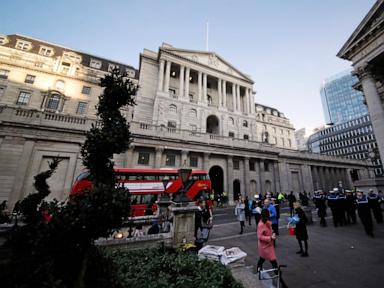
Inside the Federal Reserve's marble headquarters on Constitution Avenue, institutional solidarity is a survival mechanism. Regardless of whether individual governors agree on the exact trajectory of interest rates or the precise calibration of bank capital rules, they share a collective interest in protecting the Board from external political raids.
When one governor is targeted, the Chair and the senior staff typically close ranks. They provide legal support, coordinate public messaging, and ensure that the targeted member is not isolated during routine Board functions. However, that support has unspoken limits. If a controversy begins to damage the broader credibility of the institution—or if it threatens to derail the Chair's legislative priorities on Capitol Hill—internal pressure for a quiet resolution mounts rapidly.
In Washington, a delay to December 14 is rarely the end of the story; it is the intermission during which the real negotiations happen behind closed doors, far away from the cameras and the public record.