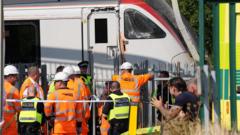
The Daily Struggle on the Tracks
Commuters traveling from Essex into London face severe disruptions following a major train derailment that has paralyzed vital railway corridors. Thousands of passengers experienced severe delays, cancellations, and overcrowded platforms as rail operators scrambled to manage the fallout. This incident exposes deep-seated vulnerabilities in commuter rail infrastructure that stretch far beyond a single day of bad weather or mechanical failure.
The immediate bottleneck centers around aging switches, heavily utilized tracks, and networks strained past their design limits. When a single incident blocks a primary artery connecting Essex hubs like Chelmsford, Colchester, or Southend to Liverpool Street, the entire transit ecosystem stalls. Passengers are left stranded on crowded platforms with sparse communication from operators. The ripple effects extend into underground networks, bus services, and local roads as alternative routes instantly reach maximum capacity.
Infrastructure Under Pressure
Decades of deferred maintenance and underinvestment leave the regional rail network dangerously close to breaking point every single day. Modern passenger volumes dwarf the capacity envisioned when many of these Victorian-era rail lines were originally laid down. Operators constantly balance the competing demands of freight priority, commuter schedules, and mandatory engineering windows.
Steel expands in extreme heat and snaps in severe cold. Signal equipment rusts silently in damp coastal air. When maintenance budgets face cuts, minor component failures go unnoticed until they snowball into catastrophic operational halts. Network administrators rely heavily on patchwork fixes rather than comprehensive overhauls. This strategy works fine during quiet periods, but it collapses under the weight of peak commuter hours.
+-------------------------------------------------------+
|                 The Failure Cascade                   |
+-------------------------------------------------------+
|  1. Isolated Track Component Failure                  |
|          ↓                                            |
|  2. Emergency Line Closure                            |
|          ↓                                            |
|  3. Immediate Platform Overcrowding                   |
|          ↓                                            |
|  4. System-Wide Timetable Collapse                    |
+-------------------------------------------------------+
The Cost of Chronic Delay
Time holds measurable financial and personal value. Every missed meeting, late arrival at a childcare pickup, and delayed shift start drains productivity across the capital's economy. Regular ticket holders pay thousands of pounds annually for services that treat reliability as a luxury rather than a baseline expectation. Compensation schemes offer small refunds after tedious application processes, but monetary rebates do nothing to restore lost hours.
Frustration boils over into station concourses with alarming regularity. Security staff bear the brunt of commuter anger while transit executives release generic statements apologizing for the inconvenience. Public trust erodes a little bit more with each canceled departure board update.
Communication Breakdowns and Passenger Chaos
Information vacuums cause more panic than the physical delays themselves. Automated station announcements often contradict real-time app notifications, leaving travelers guessing which platform might actually host a moving train. Smartphone apps crash under sudden surges of traffic as thousands of anxious passengers simultaneously try to check alternative routes.
Staff stationed at physical barriers frequently lack up-to-date intelligence because dispatch centers struggle to relay rapidly changing operational statuses. Clear, transparent communication requires an investment in modern data infrastructure that rail operators consistently push down their priority lists. Without reliable information, passengers cannot make informed decisions about whether to wait, seek alternative transport, or return home.
The Regional Economic Impact
Essex serves as a massive dormitory county for the London workforce. Thousands of families rely on predictable transit corridors to sustain their livelihoods outside the expensive capital housing market. When these corridors fail, regional businesses suffer alongside individual workers. Local commerce near commuter hubs takes a direct hit when foot traffic dries up due to stationary trains.
Employers increasingly view the unreliability of regional transport as a hiring risk. Candidates think twice about accepting positions in London if their daily commute involves a roulette wheel of signal failures and derailments. The economic vitality of the entire commuter belt depends directly on steel tracks that urgently require modernization.
Accountability and the Road Ahead
Transport authorities point fingers at weather anomalies, aging rolling stock, and third-party infrastructure owners while avoiding fundamental structural reforms. Accountability gets lost in a complex web of privatized franchises, government regulators, and subcontracted maintenance crews. Real improvement requires unified leadership with the authority to mandate system-wide upgrades and enforce strict performance metrics.
Passengers deserve a transit network that functions as a reliable public utility rather than an unpredictable daily gamble. Until operators commit substantial capital to replacing obsolete infrastructure and overhauling communication protocols, the next major travel crisis remains just around the corner.