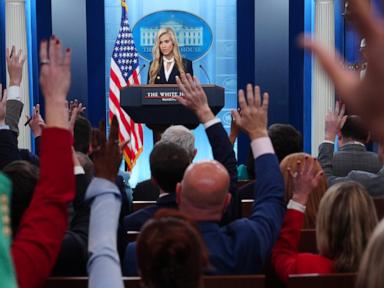
Katie Zacharia lasted five days as White House press secretary, making her the shortest-serving officeholder in American history. Her appointment in October 2026 exposed a brutal reality of modern political communications. Stepping up to the podium in the James S. Brady Press Briefing Room is no longer a polite introduction to the Washington press corps; it is a high-velocity stress test where a single unverified credential, a rushed 15-minute briefing, or a misjudged tone can trigger an immediate exit. Anyone watching Zacharia’s brief run saw both the fragility of a hurried rollout and the enduring allure of a pulpit that still commands global attention.
After three decades covering West Wing communications, I have watched dozens of press secretaries walk into that room with notebooks full of talking points and illusions of control. Some survive years of grinding daily scrutiny because they understand the institution’s unwritten rules. Others burn out before their office nameplate is even settled. Zacharia’s tenure from October 12 to October 16, 2026, wasn’t just a personal stumble. It was a diagnostic x-ray of how a press operation breaks down when loyalty substitutes for institutional readiness.
Why a Five-Day Tenure Happens in Modern Washington
Five days sounds like a typo until you look at the mechanics of a high-pressure White House. The press secretary role sits at the intersection of policy precision, rapid-response legal awareness, internal staff management, and live television performance. If one of those pillars wobbles on day one, the entire structure shudders.
Zacharia arrived in the press office after a stint as a communications advisor to the Trump Media and Technology Group starting in June 2026, following an earlier, brief turn as deputy assistant secretary for public affairs at the Department of Homeland Security. Prior to that, her background included undergraduate internship experience during George W. Bush’s second term, a law degree from Pepperdine University earned in 2011, and years spent raising four children. On paper, a communications strategist with legal training and campaign-adjacent messaging experience might look plausible to an executive seeking a familiar voice.
In practice, the Brady Briefing Room punishes guesswork. When Zacharia took questions on October 13, the session ran roughly 15 minutes. That brevity mattered less than what happened inside and immediately after those minutes. Reporters do not treat a debut briefing as a soft launch anymore. Every word is cross-checked in real time against federal records, past public statements, and bar registries.
A press secretary who treats the podium like a campaign rally or a cable hit usually discovers too late that the briefing room is an interrogation chamber with cameras.
Even before the week ended, scrutiny around Zacharia’s legal credentials escalated quickly. Reports highlighted that although she earned a Juris Doctor from Pepperdine in 2011, she had not passed the California bar exam in 2011—prompting questions about how she had presented herself as an attorney and leading the Campaign for Accountability to file a complaint with the State Bar of California on October 14. For a White House press official, credential friction is toxic. Once reporters begin questioning a spokesperson’s basic accuracy on a personal bio, every subsequent statistic on drug prices, border enforcement, or economic claims faces an uphill battle.
The Myth of the Polished Debut
Observers often talk about a press secretary’s "debut" as if it is a theatrical opening night where a strong curtain call buys weeks of goodwill. That idea belongs to an older media era. Today, the debut is a forensic audit.
When a new press secretary steps to the lectern, dozens of correspondents are already looking for three things:
- Command of the brief: Does the spokesperson know the exact status of current policy, or are they reciting broad slogans that collapse under a second follow-up question?
- Institutional credibility: Does the spokesperson speak with the authority of someone briefed by the National Security Council, the Office of Management and Budget, and senior counsel, or merely as a messenger reading a sheet?
- Composure under cross-examination: How does the spokesperson handle hostile framing without turning a routine policy exchange into a personal grievance?
Zacharia’s briefing drew sharp criticism across the media spectrum, including from figures like CNN’s Kaitlan Collins and late-night host Jimmy Kimmel, as well as commentary in The Atlantic. More tellingly, reporting indicated that Zacharia herself was stunned by the intensity of the pushback, telling Trump and others that the week had proven far rougher than she anticipated. That reaction points to a classic failure of expectation-setting. When an administration recruits someone without deep, sustained White House press-room experience and throws them straight into live combat with minimal institutional insulation, shock is an occupational hazard.
To see how quickly a miscalibration compounds, consider a hypothetical example involving a brand-new deputy press secretary asked about a contested regulatory rule. If the spokesperson answers with a sweeping political line instead of citing the agency’s statutory authority and timeline, reporters immediately press on the gap. If the spokesperson then lashes out at the questioner’s motives rather than supplying the missing facts, the story shifts from the policy itself to the spokesperson’s lack of preparation. Within hours, the press corps stops asking about the rule and starts asking whether the spokesperson is out of their depth.
The Pitfalls Embedded in the Job Itself
It is easy to blame a five-day collapse entirely on the individual at the podium. Sometimes that blame is earned. Yet the press secretary’s chair contains structural traps that have tripped up seasoned communicators across both parties.
First, the spokesperson rarely controls the news. A press secretary does not set foreign policy, negotiate legislation, or stop a president from posting or speaking off-script five minutes before a briefing begins. Yet the press secretary is routinely judged as if they authored the administration’s entire strategy. When the boss contradicts a talking point in real time, the press secretary is left holding an empty bag in front of a room full of cameras.
Second, the job demands split-second translation between political loyalty and factual precision. In a polarized environment, political loyalty is often the primary ticket of admission. Loyalists know the movement’s language, share its grievances, and defend its leaders without flinching. However, the press room operates on verifiable records, statutory text, and prior statements. A communicator who equates factual correction with disloyalty quickly loses the ability to give straight answers even on routine administrative matters.
Third, personal history and prior rhetoric follow you into the briefing room. Every past interview, social media post, advocacy board role, and biographical detail becomes fair game the moment the appointment is announced. Zacharia’s prior public commentary—including her board role with the anti-abortion group White Rose Resistance and past false claims comparing the abortion pill mifepristone to chemicals used in Nazi extermination camps—was inevitably scrutinized alongside her background. In Washington, vetting is no longer a quiet HR exercise behind closed doors; it happens in public, on cable news and in investigative newsletters, while the appointee is still trying to learn where the coffee machine is.
| Factor | Advantage in the Role | Pitfall in the Role |
|---|---|---|
| Insider Loyalty | Direct trust with the president and inner circle | Risk of prioritizing narrative over verifiable detail |
| Prior Media & Advocacy Record | Clear ideological voice and public familiarity | Past controversial claims or bio gaps draw instant scrutiny |
| Briefing Room Speed | Quick retorts that dominate short clips | Rushed or thin answers invite relentless follow-ups |
| Institutional Backing | Authority to speak for agencies and cabinet leads | Vulnerability when policy leads leave the podium in the dark |
The Possibilities That Keep People Applying
If the pitfalls are so obvious, why do ambitious communicators keep lining up for a job that has chewed up veterans and rookies alike? Because the possibilities remain unmatched in American public life.
For a few minutes on any given afternoon, the White House press secretary speaks from a platform that no corporate PR chief, cable pundit, or political consultant can replicate. Every major news organization in the world has eyes on that podium. A sharp, authoritative press secretary can frame a legislative push for millions of viewers, project calm during a market dip or diplomatic crisis, and shape how a day’s headlines read before evening broadcasts air.
There is also real influence behind the scenes—at least when the office is taken seriously by the West Wing. A respected press secretary sits in senior meetings, hears where policy debates are actually heading, and helps decision-makers anticipate how a rollout will land with the public. Even after leaving the post, the title carries permanent currency in media, law, consulting, and politics. After her ouster on October 16, Zacharia moved quickly to push back in a New York Post op-ed accusing the press corps of "Trump Derangement Syndrome" and reaffirming her loyalty to Trump, and she later appeared on the BBC’s Newsnight to argue about the 2026 midterms and an Alaska Senate ballot dispute involving two candidates named Dan Sullivan. Even a five-day stint ensures a person remains a recognizable figure in political combat long after leaving the building.
The podium can make a communicator’s career in a single afternoon, or unmake it in five days—often using the exact same spotlight.
What Serious Operators Do Differently
There is no magic formula that makes the White House press secretary job safe. Anyone who tells you otherwise is selling an illusion. Still, the communicators who endure—and the ones who flame out—tend to make distinct choices in their first week.
The strongest press secretaries treat preparation as a non-negotiable discipline rather than an insult to their instincts. They drill with policy aides on numbers, legal caveats, and worst-case questions before walking out. They admit when they do not have a figure yet rather than bluffing through a guess that will be disproved before the briefing ends.
They also understand pacing and posture. A 15-minute briefing isn’t inherently fatal if the answers are crisp, accurate, and authoritative. What hurts is looking rattled when reporters push back, or turning every procedural question into a battle over personal motives. Veteran press hands know that reporters are going to test boundaries; getting defensive rarely changes the coverage, while calm precision often deprives critics of a bigger story.
Finally, lasting press secretaries build internal guardrails. They push for clear lines of communication with senior advisors, legal counsel, and cabinet press shops so they aren’t blindsided by announcements or biographical landmines. When an administration treats the press office as an afterthought—or treats a five-day experiment as disposable—the resulting turbulence rarely stays confined to the briefing room. It spills straight into the rest of the West Wing, reminding every president and every hopeful spokesperson that the most visible job in Washington is also the least forgiving.



