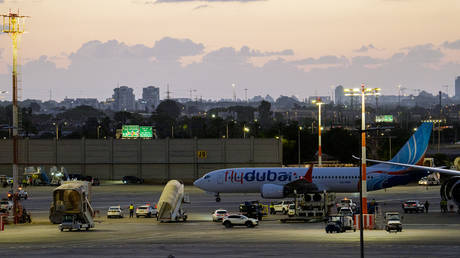
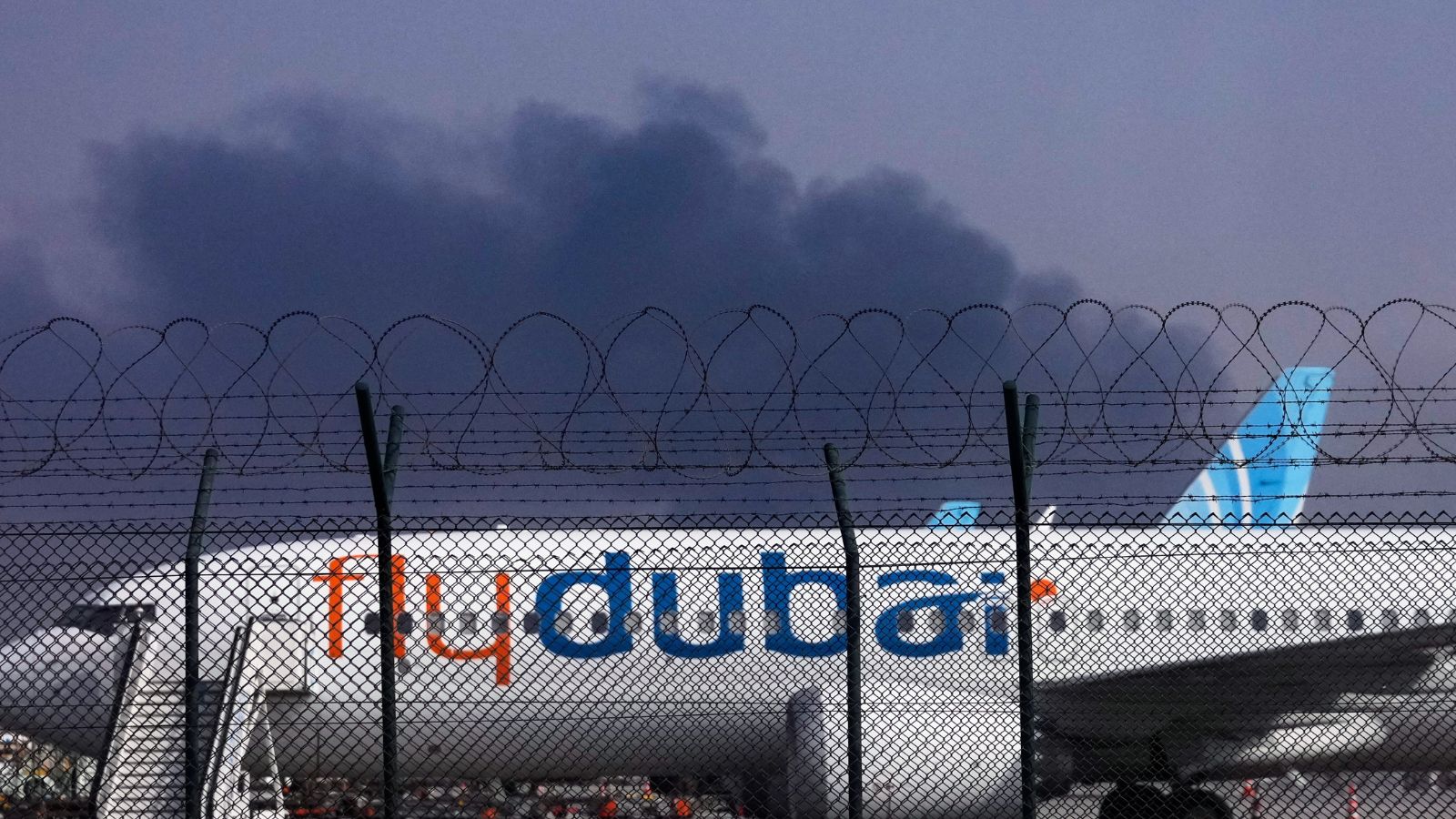
Commercial aviation operates on an unyielding premise of absolute trust behind a reinforced steel door. When Flydubai Flight 1073 departed Dubai International Airport for Tel Aviv, that foundational assumption disintegrated at 34,000 feet. A violent mid-air cockpit altercation turned a routine three-hour regional hop into a terrifying sequence of suspected unlawful interference, a severe structural nosedive over the Saudi-Jordanian border, and an emergency landing in Tabuk.
The incident involving the Boeing 737 MAX 8 exposed vulnerabilities that automated safety systems and reinforced flight deck protocols were never designed to handle: an insider threat originating from the left and right seats.
The Anatomy of a High-Altitude Breach
Flight 1073 pushed back from the gate at 7:05 a.m. local time on September 30, carrying 180 souls toward Ben Gurion Airport. Roughly two hours into the journey, as the aircraft cruised smoothly, the flight deck transformed into a battleground.
According to investigative findings and passenger accounts, first officer Hamam al-Hammami launched a sudden physical assault on Captain Smit Machchhar, utilizing a cockpit crash axe to inflict serious wounds. The attacker then forced the aircraft into an extreme descent, dropping from 34,000 feet to approximately 17,000 feet in less than sixty seconds.
During this violent plunge, the aircraft touched speeds approaching 600 miles per hour, generating gravitational forces and overspeed conditions that caused the plane's rudder to structurally detach. Transponder signals shifted rapidly from general emergency squawk code 7700 to the harrowing code 7500, denoting unlawful interference or hijacking.
In the cabin, passengers experienced sheer terror as the floor dropped out from under them. Wounded and bleeding, Captain Machchhar managed to open the armored flight deck door, allowing passengers and off-duty deadheading pilots traveling on the aircraft to rush forward.
A desperate physical struggle ensued inside the narrow confines of the flight deck. Passengers, including former military personnel, helped restrain the first officer using headphone wires and cable ties. Meanwhile, deadheading Flydubai flight deck crew members took over the controls, pulling the aircraft out of its fatal trajectory and executing an emergency diversion to Prince Sultan bin Abdulaziz International Airport in Tabuk, Saudi Arabia.
Diplomatic and Security Aftershocks
The geopolitical ripple effects were immediate. Because the flight was bound for Israel, and given the international identities of the flight deck crew and passengers, the event triggered multi-national security investigations spanning the UAE, Saudi Arabia, Israel, and India.
Intelligence agencies quickly moved to dissect the background of the first officer. Investigators uncovered digital footprints suggesting extremist ideological material on social media channels linked to al-Hammami. Israeli officials openly characterized the event as a targeted jihadist terror attack and attempted suicide hijacking aimed at crashing the commercial airliner into populated areas near Tel Aviv.
For the aviation sector, the implications are chilling. Modern cockpit security protocols were codified in the wake of September 11, 2001, built entirely around the concept of keeping malicious actors out of the flight deck via heavy doors, heavy-duty locking mechanisms, and video surveillance systems. They did not anticipate a scenario where the threat is already seated at the controls, possessing the security clearance, biometric access, and technical knowledge required to bypass physical barriers from the inside.
The Operational Fallout for Middle Eastern Skies
In the wake of the landing in Tabuk, Flydubai grounded its routes to Israel, and partner carriers such as Emirates immediately suspended codeshare operations on the corridor. Weeks after the event, commercial aviation disputes have kept direct routes between Dubai and Tel Aviv locked in limbo, with extensions pushing flight suspensions deep into the winter calendar. Passengers affected by the ordeal are exploring massive liability lawsuits against carriers, citing severe psychological trauma and profound structural gaps in pre-employment psychological vetting.
Airlines across the globe now face uncomfortable questions regarding pilot mental health monitoring. Traditional screening relies heavily on self-reporting and periodic basic psychological evaluations. Critics argue these methods are woefully inadequate for detecting radicalization, sudden psychological breaks, or targeted insider threats.
The heroics of Captain Machchhar, the deadheading flight crew, and the passengers who stormed the cockpit prevented an unmitigated disaster. Yet, reliance on passenger intervention is not an aviation safety strategy. As state prosecutors in Dubai and intelligence services across three continents continue piecing together how a commercial flight deck became a combat zone, the industry is forced to confront the reality that its most fortified perimeter has a fatal blind spot.