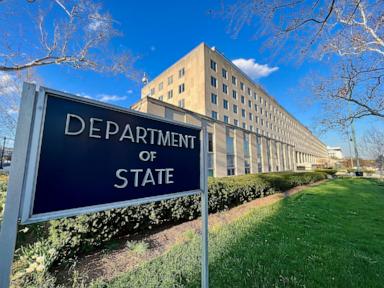
"Heightened vigilance" is diplomatic shorthand for a crisis that has already outgrown the embassy cables. Across the Persian Gulf, American citizens, expatriates, and corporate travelers are receiving a familiar warning from Washington as hostilities involving Iran, regional partners, and Houthi forces flare once again. Yet treating a U.S. security alert as routine background noise misses what is actually shifting on the ground—and in the skies—across Bahrain, Kuwait, and Saudi Arabia.
The core reality is straightforward. Washington is urging Americans across the Middle East to exercise heightened vigilance because Iranian attacks targeting U.S. military assets and facilities in Kuwait and Bahrain have resumed alongside intensified Houthi missile and drone assaults against Saudi Arabia. For anyone living, working, or transiting through the region, the immediate danger is no longer just abstract geopolitical friction. It is sudden airspace closures, airport disruptions, intercepted aerial threats, and the risk of rapid escalation after months of fragile, stalled diplomacy.
Why Routine Embassy Warnings Miss the Real Shift
Standard live-blog coverage tends to flatten these advisories into a checklist of canned advice: enroll in STEP, watch the news, keep a low profile, and check with your airline. That advice is not wrong. It is simply incomplete.
After decades covering security crises across the Gulf, one pattern stands out with uncomfortable clarity. Diplomatic alerts lag behind tactical momentum. By the time a U.S. mission publishes an updated warning urging caution around regional travel and facilities associated with the United States, the operational tempo has usually already changed.
Consider the arc of the current conflict. Hostilities escalated sharply following U.S.-Israeli military strikes on Iran in late February 2026, triggering retaliatory Iranian strikes against Israel and U.S. military installations in neighboring Arab states. A June memorandum of understanding briefly raised hopes of containment, only to stall over disputes involving freedom of navigation through the Strait of Hormuz, leaving intermittent clashes to simmer into the autumn.
When drones and missiles return after a lull, the psychological and logistical math changes overnight. Even when air defenses intercept incoming threats—as Bahraini forces and U.S. Central Command have reported during recent exchanges—every interception underscores that the buffer between military confrontation and civilian disruption is thin.
The Gulf Chokepoints Where Civilians Feel the Heat
A common mistake made by observers far from the region is assuming that threats aimed at military installations or strategic infrastructure leave ordinary travelers untouched. In the Gulf, military geography and civilian mobility are tightly braided.
Aviation and Airspace Fragility
Modern Gulf economies rely on high-frequency aviation hubs that move tens of thousands of passengers daily. When missile or drone activity spikes, civil aviation is often the first sector to absorb the shock.
Recent advisories have pointed directly to flight cancellations, airspace closures, and airport disruptions across the region. In Saudi Arabia, following missile and unmanned aerial vehicle attacks affecting airports, the State Department ordered the departure of non-emergency U.S. government personnel and their family members effective October 23, 2026, while restricting official U.S. personnel from using Saudi airports without special Chief of Mission authorization. Even where commercial hubs continue operating—such as partial or adjusted operations across Riyadh, Qassim, Jeddah, and Dammam—schedules can fracture with little notice.
For a private traveler, that means a missed connection is not a mere inconvenience. It can strand someone in a transit city just as local authorities tighten airspace or reroute regional flights.
Military Footprints and Neighboring States
Bahrain and Kuwait illustrate how closely allied states are drawn into the orbit of U.S.-Iranian friction. Bahrain hosts the U.S. Navy's Fifth Fleet, making its security environment inextricably linked to maritime and aerial tensions in the Gulf. Recent reports have highlighted attempted Iranian aerial strikes and claims involving U.S. radar and military installations, alongside defensive actions such as U.S. strikes on a missile facility on Qeshm Island.
Kuwait has faced its own warning cycle amid hostile drone activity and concerns over attacks targeting U.S. assets. Meanwhile, Saudi Arabia continues to contend with Houthi drone and missile attacks that have caused civilian casualties and infrastructure strain.
In a multi-front regional flare-up, civilian risk rarely comes from a single dramatic event alone. It accumulates through cascading disruptions: closed skies, contested shipping lanes, heightened security checkpoints, and sudden policy shifts by host governments.
Counter-Arguments and the Gray Zones of Threat Reporting
To read security alerts with discipline, it helps to push back against two opposite extremes: fatalism on one side and complacency on the other.
Complacency argues that because air defenses intercept many launches, or because CENTCOM states no American military personnel were injured in a given wave of strikes, everyday life for expats and visitors remains business as usual. That argument confuses interception rates with zero risk. Falling debris, shifting flight corridors, miscalculation by local air defenses, and rapid escalation by regional actors all carry real hazards even when primary military targets miss or are stopped.
Fatalism, by contrast, treats every embassy notice as a sign that total regional collapse is imminent. Embassy alerts are drafted by risk-averse legal and consular teams designed to cover worst-case contingencies and protect the U.S. government from hindsight criticism. A warning that hostilities have the potential to escalate rapidly is an assessment of volatility, not a guarantee of a specific outcome.
There is also an information fog around every exchange. Tehran, Washington, and regional capitals frequently offer conflicting accounts of damage, intercepts, and targets—such as competing claims around strikes in Bahrain or the extent of damage on Qeshm Island. Rumors spread quickly online during aerial incidents, forcing officials to issue public clarifications to separate verified developments from social media noise.
What Smart Preparation Actually Looks Like on the Ground
Generic travel advice fails when people treat it as something to read once and forget. Practical preparation in a volatile Gulf environment is operational, boring, and specific.
- Build a real exit and rerouting plan. Do not rely on a single nonstop ticket or assume a major hub will stay open uninterrupted. Know alternative overland or regional routing options where legally and safely permissible, and keep digital and physical copies of passports, visas, and insurance contacts accessible.
- Decouple communications from a single network. Keep phones charged, maintain local and international data options if possible, and pre-program local emergency numbers alongside consular contact details. During high-tension moments, cell networks can congest or experience localized disruptions.
- Respect physical shelter basics during aerial alerts. Guidance to stay clear of glass doors, windows, and fallen debris during an aerial threat exists because blast overpressure and shrapnel—not direct hits—injure many people near urban incidents.
- Audit exposure around high-profile sites. Avoid protests, large crowds, heavy police cordons, and unnecessary lingering near sensitive facilities or locations publicly tied to U.S. interests when alerts spike.
Consider a hypothetical example to see how these pieces fit together. Suppose an American project manager is scheduled to fly out of a Gulf hub on a forty-eight-hour turnaround for a client meeting. If a fresh wave of drone alerts hits overnight and regional airspace briefly restricts departures, the traveler who booked a tight connection with no flexible rebooking option faces hours of uncertainty at a crowded terminal. The traveler who already confirmed flexible ticketing, stayed near a reliable hotel rather than rushing to the airport hours early without airline confirmation, and tracked official consular and airport notices directly is in a far stronger position to adapt calmly.
No single security alert tells the whole story of a conflict that stretches from maritime chokepoints in the Strait of Hormuz to contested skies across the Arabian Peninsula. Treat "heightened vigilance" not as a headline to skim, but as a prompt to verify your own logistics before circumstances force your hand.


