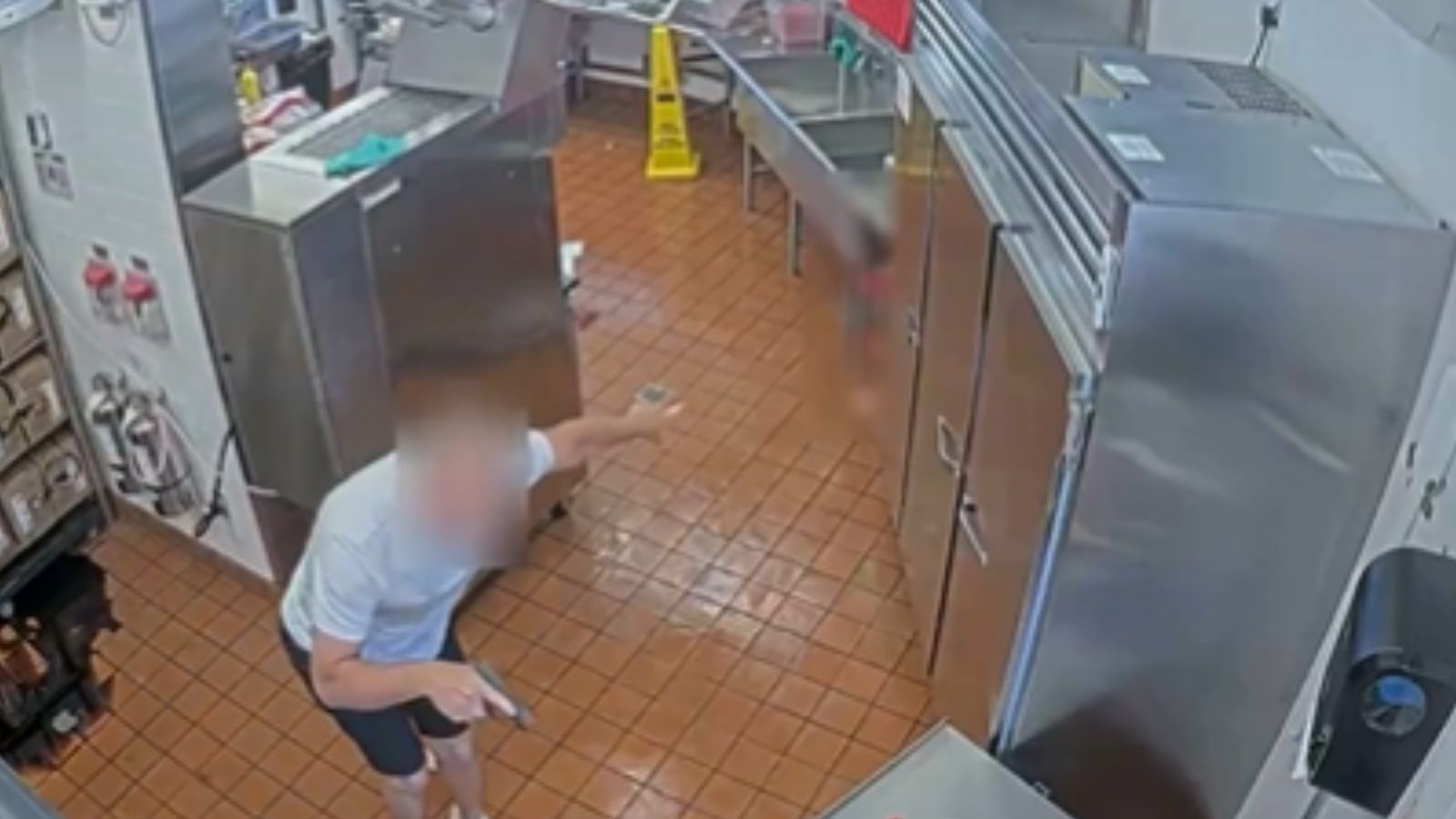
The narrative surrounding the mass shooting at an In-N-Out Burger in Twin Falls, Idaho, quickly calcified into a familiar script. A gunman opens fire with a rifle, chaos erupts, and an armed civilian steps into the frame to save the day. Newly released police footage details the terrifying reality of that Saturday afternoon when 24-year-old Chad Williams killed three people and wounded seven others before dying by suicide. Yet, reducing this tragedy to a simplistic binary of good versus evil obscures the grinding mechanics of active shooter response, the chaotic reality of civilian intervention, and the institutional vulnerabilities that leave everyday spaces exposed to catastrophic violence.
When the first shots cracked through the newly opened restaurant on that routine afternoon, the veneer of mundane suburban safety shattered instantly. Local law enforcement officials, led by Twin Falls Police Chief Matthew Hicks, released comprehensive video evidence detailing the sequence of events. The footage outlines a chaotic timeline where Williams targeted the drive-thru window multiple times, striking victims inside the building, across adjacent roadways, and near an electric vehicle charging station. In total, ten individuals were struck by gunfire. Amidst the smoke and panic, multiple armed citizens—including Jordan Salinas, who engaged the shooter with a suppressed handgun, alongside an off-duty state trooper and a former police officer—attempted to stem the bloodshed. Read more on a related issue: this related article.
Public fascination immediately latched onto the archetype of the armed bystander. Social media networks flooded with praise, designating individuals as unambiguous heroes who altered the casualty count through direct confrontation. But a veteran assessment of the incident requires stripping away the digital mythology to examine what actually happened on the pavement. Active shooter dynamics are notoriously fluid and violent. When bullets begin traveling in both directions, the theatre of engagement shifts from a controlled shooting range scenario to a multi-directional firefight involving terrified fleeing crowds, obscured lines of sight, and the immense danger of friendly fire or misidentification by arriving police units.
Salinas later recounted that his response was driven by deliberate firearm training undertaken after a previous mass shooting in Boise. He utilized a structured mental framework to observe, orient, decide, and act. This level of preparedness is statistically rare among the general populace. Relying on armed citizens to provide a functional layer of public safety assumes a baseline of tactical competence, psychological composure under lethal duress, and situational awareness that cannot be generalized to an untrained public. When civilian intervention works, it is an extraordinary exception born of individual grit and fortuitous positioning, not a reliable public policy or institutional security strategy. Additional analysis by NPR delves into comparable perspectives on this issue.
The institutional response and corporate architecture surrounding high-traffic commercial spaces also demand rigorous scrutiny. Quick-service restaurant layouts are designed for high-volume customer throughput, speed of service, and open visibility. They are fundamentally porous structures. Glass facades, wide-open dining rooms, and exterior drive-thru windows offer zero ballistic protection against rifle fire. While corporate leadership, including In-N-Out president Lynsi Snyder, issued statements mourning the loss of life, structural questions remain about how corporate entities assess risk for locations situated in growing regional hubs. Security hardening in commercial architecture typically lags far behind the evolving tactics of active assailants equipped with semi-automatic rifles.
Furthermore, the investigative vacuum surrounding the gunman's motive leaves a lingering institutional anxiety. Police confirmed that Williams had no immediately obvious grievance with the establishment or its staff, deepening the unsettling reality of random mass violence. In an era where perpetrators frequently utilize public spaces as stages for nihilistic destruction, traditional law enforcement models face an inherent limitation. Response times, no matter how professionally executed by Twin Falls police departments, are structurally reactive. By the time officers arrive on scene, cross the perimeter, and clear a dynamic environment, the deadliest phase of an active shooter incident is almost always complete.
The aftermath in Twin Falls exposes the raw friction between public trauma and political simplification. Pundits and advocacy groups immediately weaponized the footage to advance pre-existing positions on firearms policy and self-defense laws. Proponents of widespread carry laws pointed to the return fire as proof that armed resistance shortens attacks. Conversely, safety analysts emphasize that introducing more firearms into an active shooting zone exponentially complicates the tactical environment for responding patrol officers who must sort combatants from victims in real time. Both narratives flatten a deeply messy tragedy into an ideological talking point, ignoring the structural failures that allowed a heavily armed individual to initiate a massacre on a Saturday afternoon.
Ultimately, the release of the police video serves as a stark reminder of our collective vulnerability. Real courage was undeniably displayed on that pavement—not only by those who returned fire, but by ordinary employees who ushered patrons to safety, off-duty professionals who intervened despite grave personal risk, and bystanders who applied pressure to catastrophic wounds while waiting for sirens to approach. Yet, celebrating individual acts of survival should never be mistaken for a substitute for systemic prevention. Until society confronts the underlying vectors of mass violence and hardens public infrastructure against catastrophic assault, these fleeting moments of civilian heroism will remain our fragile last line of defense.