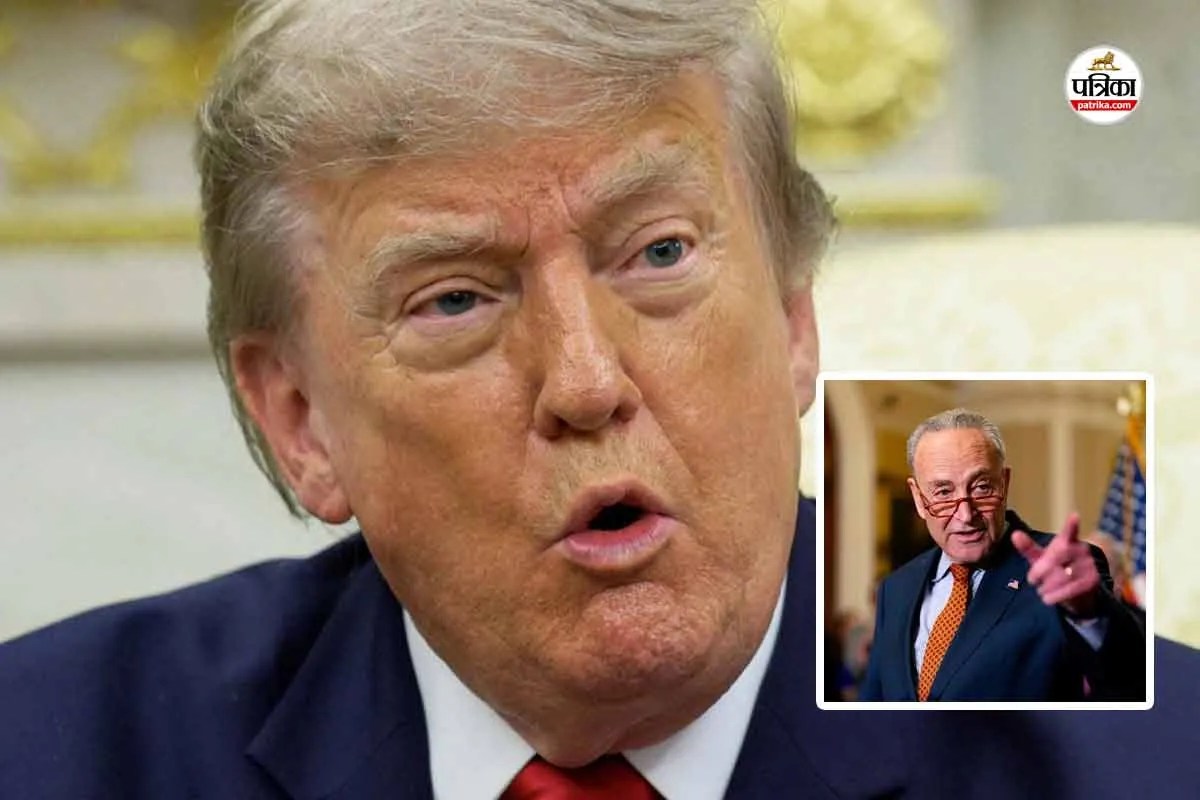
The escalating U.S.-led military campaign against Iran has reached a critical bottleneck, exposing a stark lack of long-term planning within the executive branch. What was initially messaged as a swift four-to-five-week operation to restore regional deterrence has dragged past its fourth month. As naval skirmishes intensify and global energy corridors face unprecedented blockades, Washington finds itself trapped in a tactical cycle with no clear exit strategy. The sudden collapse of a leaked 14-point memorandum of understanding between Washington and Tehran has sent both parties back to the battlefield, highlighting the absence of an overarching geopolitical roadmap.
Capitol Hill has transformed into a legislative war zone. Senate Democrats took the extraordinary step of blocking a $1.15 trillion annual defense policy bill. This procedural freeze on the National Defense Authorization Act (NDAA) represents a direct, furious pushback against a war launched without explicit congressional authorization or a coherent post-conflict stabilization plan. In related developments, read about: The Myth of Pakistan’s Water Scarcity and the Real Reason Balochistan is Parched.
The Illusion of a Short War
The conflict began on February 28 with heavy joint U.S. and Israeli airstrikes targeting Iranian military assets and infrastructure. The initial administration forecast promised a rapid operational victory, projecting a scenario where maximum military pressure would break Tehran’s operational will.
Observable reality has defied those assumptions. Instead of seeking a conventional military engagement, Tehran pivoted to asymmetric economic and maritime coercion. The Guardian has provided coverage on this critical issue in great detail.
By shifting attacks on merchant shipping to the Oman coast rather than its own heavily monitored shoreline, Iran bypassed traditional naval defense perches. The subsequent closure of the Strait of Hormuz—a chokepoint responsible for a fifth of global oil supplies—shattered the assumption that American air superiority alone could guarantee global economic stability.
Washington responded by reinstating a comprehensive naval blockade on Iranian ports. The administration briefly proposed a controversial 20 percent security fee on commercial vessels transiting the strait to offset operations. Though quickly rescinded after intense backlash from international partners and domestic agricultural sectors fearing a sudden spike in fertilizer and consumer goods costs, the trial balloon revealed a chaotic trial-and-error approach to maritime security.
Congressional Revolt and the NDAA Standoff
The legislative rebellion in the Senate underscores a widening constitutional divide over war powers. For over six decades, the NDAA has passed with consistent bipartisan alignment. The current freeze marks a significant breakdown in that tradition.
Opponents of the current operational trajectory point out that the executive branch has relied on aggressive legal gymnastics. A White House letter dated July 10 claimed a fresh 60-day window for military actions without congressional approval, bypassing a war powers resolution intended to force a ceasefire.
NDAA Procedural Vote Summary (July 2026)
Required for Advancement: 60 Votes
Result: Failed (Strict Party-Line Block)
Core Disputed Funds: $1.5 Trillion Total Pentagon Request (including emergency supplements)
The domestic political friction expands beyond constitutional law into fiscal reality. With federal deficits remaining a primary concern for the electorate, the administration’s push to raise overall military spending to $1.5 trillion while domestic programs face stagnation has inflamed public skepticism. Polling indicates that over 60 percent of the public believes the administration failed to define clear, achievable end-states before initiating hostilities.
The Collapse of Two-Track Diplomacy
The tactical deadlock is worsened by highly erratic diplomatic messaging. In mid-June, details leaked regarding a tentative 14-point memorandum of understanding signed in Switzerland. The terms promised substantial financial sanctions relief and the release of frozen foreign bank assets to Tehran in exchange for vague, unverifiable halts to uranium enrichment and a commitment to keep shipping lanes open.
The proposal triggered fierce resistance across the political spectrum.
- Conservative Lawmakers condemned the framework as an unnecessary lifeline to a battered regime, arguing it gave up vital economic leverage for minimal concessions.
- Foreign Relations Democrats pointed out the irony of the deal, noting that the administration was offering broader sanctions relief for significantly fewer verification mechanisms than those established under the 2015 JCPOA framework.
- Regional Partners, particularly Israel, feared the sudden influx of oil revenue would reinforce hostile regional networks, further destabilizing Lebanon and the broader Levant.
The immediate collapse of the agreement left Washington with no diplomatic fallback option. When Iran resumed low-intensity drone and mine attacks against merchant vessels in July, the administration simply reverted to airstrikes and port blockades. This repetitive approach treats a highly complex geopolitical crisis as a standard transaction, assuming that incremental economic pain will eventually force absolute surrender.
Iran Asymmetric Survival Strategy
Washington's planning deficit stems from a fundamental misunderstanding of its opponent's theory of victory. U.S. planners built an operational framework centered on destroying visible military infrastructure, severing supply lines, and forcing a conventional capitulation.
Tehran’s objective is far narrower: basic regime survival through attrition.
The Iranian leadership views the conflict through the lens of political patience. They recognize that a protracted war of attrition works to their advantage as long as it drives up global energy prices, fuels domestic political division within the West, and strains American naval commitments. By utilizing mobile anti-ship missiles, low-cost loitering munitions, and proxy forces, Iran imposes continuous, incremental costs on high-value U.S. naval assets without exposing its core leadership to direct destruction.
The failure of Project Freedom—an initial U.S. initiative designed to escort commercial oil tankers through the region—serves as a clear case study. The program stalled when key regional states, including Saudi Arabia, refused to grant expanded basing rights for the operation. Maximalist rhetoric from Washington regarding the "obliteration" of the regime alienated regional partners who would bear the brunt of any direct Iranian retaliation, fracturing the international coalition before it could form.
A continuous naval blockade requires vast logistical support, rotating carrier strike groups, and a level of international consensus that currently does not exist. Without a structural shift that matches clear diplomatic objectives with realistic military limitations, Washington remains vulnerable to a prolonged, costly deployment that yields no definitive political solution. The legislative freeze on Capitol Hill is not merely political posturing; it is the predictable systemic reaction to a war launched on an unmapped battlefield.
:max_bytes(150000):strip_icc():focal(749x0:751x2)/auschwitz-2-691cb034ee9e43cfa45a0969012c6337.jpg)