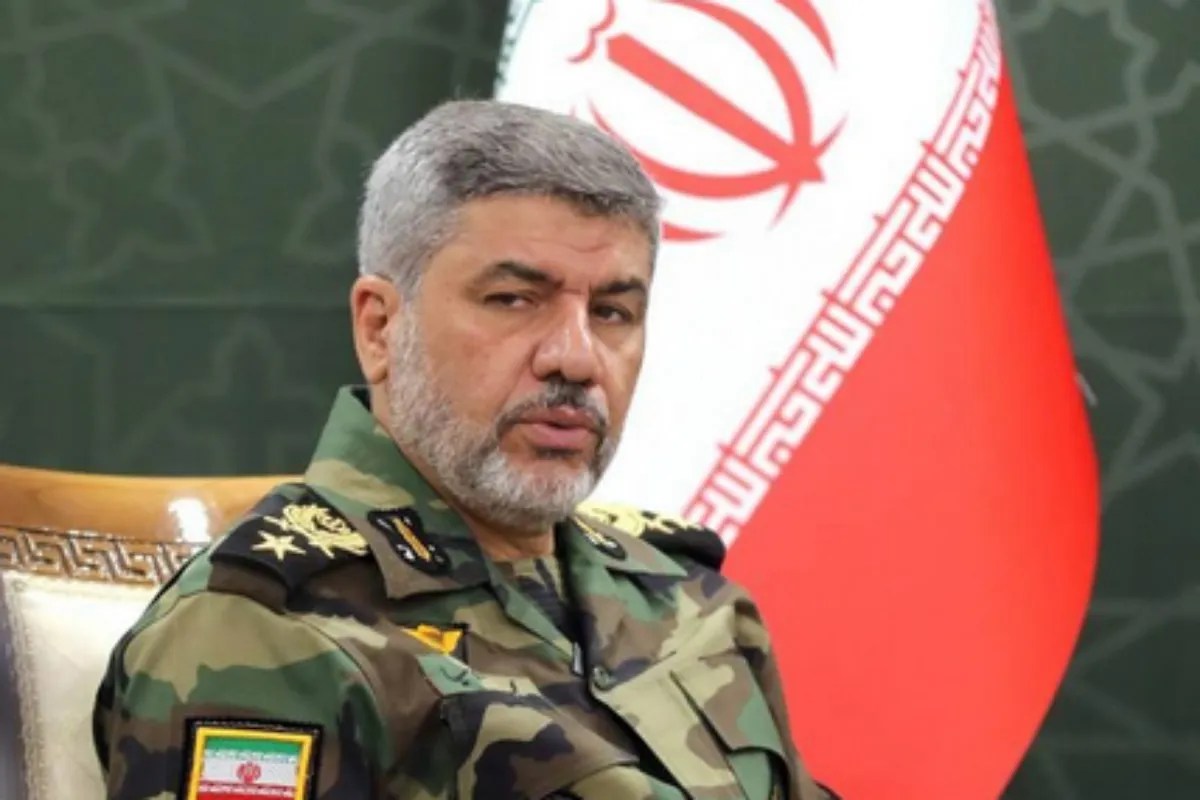
Iran’s air defense network is stronger today than it was in February 2026, according to Iranian Army spokesman Brigadier General Mohammad Akrami-Nia, yet the real story is not a neat restoration of old radar domes. Months of heavy conflict that erupted on February 28 stripped away fixed strategic assets, forcing Tehran to trade stationary prestige for dispersed mobile launchers, tighter coordination, and urgent foreign sourcing.
Anyone who has covered Middle Eastern defense long enough knows better than to take a wartime spokesperson’s briefing at face value. Military public affairs officers exist to shape morale and deter adversaries, not to hand over honest battle damage assessments. Still, dismissing Akrami-Nia’s claim out of hand misses a crucial shift in how Iranian air defense actually operates after taking punishment across the spring, summer, and autumn of 2026.
February 2026 was a turning point. Before strikes began on February 28, Iran’s defensive posture still rested heavily on recognizable nodes, legacy airframes, and fixed sensor sites that had already been probed and degraded in prior rounds of hostilities. Once massive air campaigns hit military targets, missile infrastructure, and air defense positions, surviving in the air or on the ground required a brutal reset.
What Actually Changed Since February
A spokesperson saying Iranian air defense is better than in February points to adaptation rather than a full-scale rewind to pre-war days. Fixed radars and high-value strategic batteries are inviting targets for suppression of enemy air defenses, because their coordinates are known and their electromagnetic signatures give them away the moment they light up.
Replacing a destroyed strategic battery is slow and expensive. Dispersing smaller, mobile surface-to-air missile launchers and man-portable air defense systems is faster, cheaper, and far harder to map from orbit or standoff aircraft.
Doctrine shifted out of necessity. When fixed nodes get hammered, survival depends on decentralized command, shoot-and-scoot movement, and keeping sensors off until the last possible moment. A smaller number of survivable shooters that actually fire and relocate can complicate an attacker’s flight path more than a large network whose command links are severed.
A mobile launcher that stays dark until engagement and moves before counter-battery fire arrives costs an air force planning time and risk, even when the missile itself lacks top-end range.
Consider a hypothetical scenario near an industrial or energy hub. Suppose a battery commander receives target cueing from a passive or mobile sensor rather than a giant fixed radar tower, fires a medium-range interceptor, and rolls off the road within minutes. Even if the intercept misses, the attacking pilot has to treat that sector as contested rather than cleared. That kind of friction is what Tehran means when it talks about improved readiness.
Hardware Reality Behind the Spokesman’s Claims
To judge whether Iranian air defense is genuinely more capable than it was in February, you have to separate indigenous systems, remaining legacy gear, and external promises. Iran has spent years building domestic systems such as the Bavar-373, Khordad-15, Mersad derivatives, and Arman to offset sanctions and outside supply bottlenecks.
Domestic production gives Tehran continuity. Indigenous missiles and launchers can be assembled inside the country even when foreign shipments stall or face interdiction. Yet homegrown systems still face tough questions around sensor fusion, electronic counter-countermeasures, and sheer battery density across a vast country of roughly 1.6 million square kilometers.
Russia remains the biggest wild card in the rebuild. Moscow previously delivered S-300PMU-2 systems to Iran in 2016 after years of delay, and those batteries suffered severe losses during strikes in 2024. By late 2026, reports pointed to renewed Iranian pushback and negotiations with Moscow over S-400 air defense systems and Su-35 fighter jets.
The Fighter Jet Deficit
Air defense is not just ground-based missiles. It is also interceptor aircraft patrolling the sky.
Iran’s manned fighter fleet has struggled for decades with aging American and Soviet-era airframes, parts shortages, and attrition. Even if Moscow delivers Su-35s—with some reporting pointing to potential delays stretching into 2027—a handful of jets cannot instantly overturn decades of underinvestment in manned air superiority.
Electronics and Sensor Survival
Modern air combat is won in the electromagnetic spectrum before a single missile leaves its canister. Radars that cannot resist jamming, decoy trickery, or anti-radiation weapons become liabilities fast.
When Tehran highlights fresh equipment and drone intercepts, defense analysts look closely at whether those gains come from better electronic warfare resilience or simply from fielding more short-range shooters and decoys. Shooting down unmanned aerial vehicles and loitering munitions requires different tracking profiles than engaging stealth or high-speed strike aircraft.
Closing the Regular Army and IRGC Seam
One of the least glamorous—and most consequential—factors in Iranian air defense is institutional plumbing. For years, observers have pointed to friction and overlapping lanes between Iran’s regular military and the Islamic Revolutionary Guard Corps.
When two armed branches guard overlapping airspace without tight data sharing, two bad things happen. Either a threat slips through the gap between them, or a friendly aircraft gets shot down by its own side.
Spokesperson statements following the spring fighting emphasized joint drills and tighter coordination between regular forces and the IRGC. Bridging bureaucratic divides does not make a radar see farther, nor does it add propellant to a missile motor. It does cut reaction times and reduce fratricide risk when warnings come in fast.
Why This Narrative Matters in Late 2026
Military claims rarely travel alone in Tehran. They arrive alongside diplomatic pressure, economic strain, maritime friction around the Strait of Hormuz, and shifting political calculations in Washington and Jerusalem.
If adversaries believe Iran’s skies are wide open, strike planners face lower perceived costs for deep raids. If planners believe mobile launchers, decoys, and layered short-range systems can still punish low-flying aircraft or drones, every sortie demands more suppression support, tanker fuel, and risk tolerance.
At the same time, claiming superiority over February is a double-edged sword. It sets a high bar for performance if hostilities flare again, and it invites scrutiny over how much of the improvement reflects genuine technical upgrades versus post-strike reconstitution.
Gray areas remain everywhere. Open-source imagery and official briefings rarely reveal exact interceptor reloads, real-world radar uptime under heavy jamming, or how many new batteries have actually reached frontline units rather than test ranges.
Watch the next major test over Iranian airspace—not to see if every missile hits, but to see how quickly batteries move after firing and whether fixed sites stay dark.