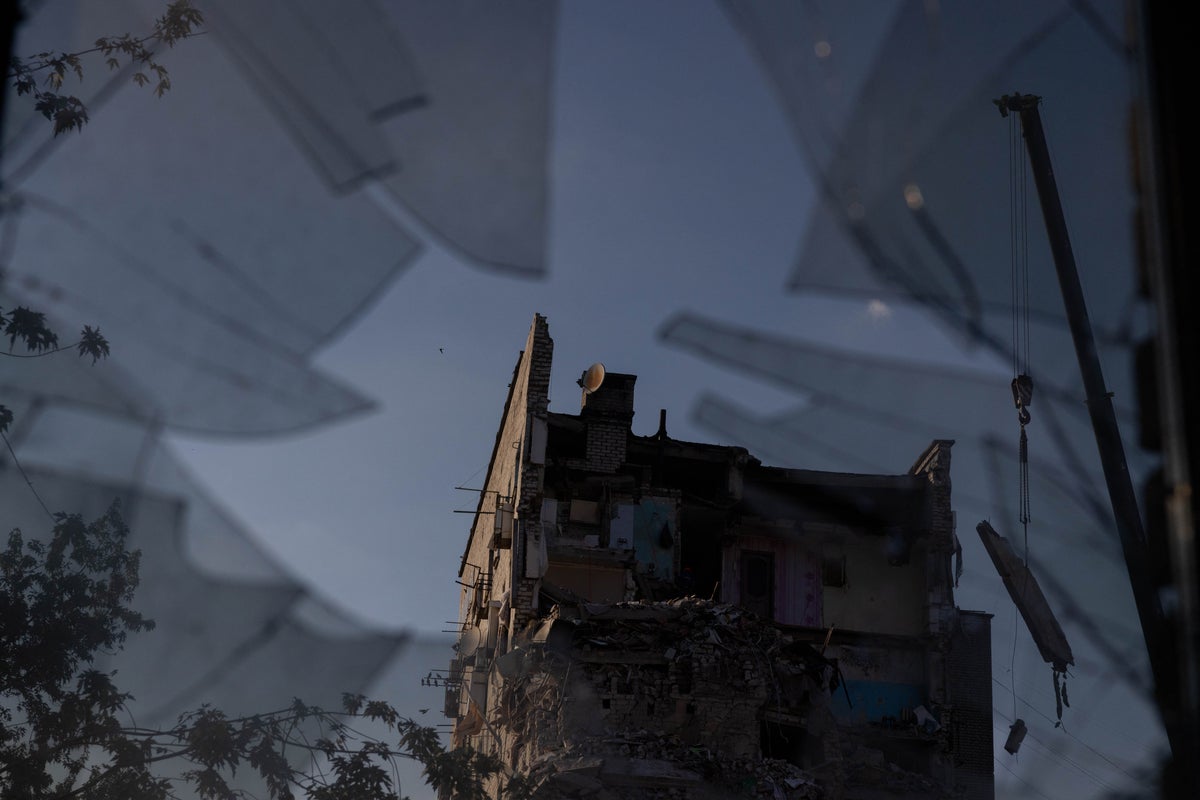
The overnight bombardment of Kyiv that left at least thirty civilians dead and more than ninety injured represents the deadliest single aerial assault on the Ukrainian capital this year. While headlines focus on the retaliatory rhetoric coming from both Moscow and Kyiv, the harsh reality on the ground points to a far more dangerous systemic collapse. Ukraine is running out of air defense interceptors, and its strategy of striking deep inside Russia is forcing a brutal numbers game that Kyiv cannot win without immediate western policy shifts.
For eleven hours, residents of Kyiv huddled in underground metro stations as 496 drones and 74 missiles rained down from multiple directions. The Ukrainian air force managed to intercept the vast majority of the incoming threats, but the sheer volume of ballistic projectiles overwhelmed local defenses. The devastation was widespread, cutting open a nine-story residential apartment block in the Darnytskyi district and destroying a major humanitarian warehouse containing two million dollars worth of Red Cross aid.
President Volodymyr Zelensky cut short an official visit to Ireland to return to a smoldering capital, openly blaming Western allies for failing to deliver promised defense systems.
The Math Behind the Broken Shield
The underlying crisis is not a lack of political will, but a simple manufacturing bottleneck. Ukraine has relied heavily on the American-made Patriot system to down Russia’s advanced ballistic missiles. However, domestic stockpiles of these interceptor missiles have reached critically low levels over the summer.
Russia has systematically exploited this shortage. By launching massive swarms of cheap, Iranian-designed attack drones alongside sophisticated ballistic missiles, Moscow forces Ukrainian commanders to make impossible choices. Do they fire a million-dollar interceptor at a low-cost drone to protect an electrical substation, or do they save it for a potential ballistic strike on a residential block?
The math favors the aggressor. Russia has successfully scaled its domestic production of long-range strike weapons, while Western production lines for interceptor missiles remain sluggish. Zelensky’s recent plea to Washington for licenses to manufacture Patriot missiles locally reveals how desperate the situation has become. Relying on foreign shipments that arrive months behind schedule is no longer a viable defensive strategy for Kyiv.
The Strategy of Internal Attrition
This latest escalation did not happen in a vacuum. It follows a deliberate and increasingly aggressive campaign by Ukraine to disrupt Russia's domestic economy. In recent weeks, Ukrainian long-range drones successfully struck major oil refineries deep within Russian territory, including facilities in Nizhny Novgorod and Krasnodar.
These strikes are designed to choke the Kremlin’s war financing by hitting the energy infrastructure that underpins the Russian export economy. The strategy has yielded visible results, causing fires at major refining hubs and forcing Moscow to reallocate its own air defense assets to safeguard industrial infrastructure inside Russia.
However, the Kremlin's response has been asymmetrical and ruthless. The Russian Defense Ministry openly labeled the massive assault on Kyiv as direct retaliation for these refinery strikes. Instead of engaging solely on the front lines, Moscow is using its missile stockpile to inflict maximum pain on civilian centers, betting that the political cost of domestic destruction will eventually force Kyiv to halt its deep-strike campaign.
The Friction of Broken Western Promises
The diplomatic fallout from the Kyiv strike is already intensifying. Ukrainian Foreign Minister Andrii Sybiha condemned the assault as a campaign of deliberate terror against women and children, using the tragedy to pressure European and American partners for immediate military aid.
The Western response follows a familiar pattern of rhetorical solidarity paired with logistical delay. While European leaders promise new waves of sanctions against Moscow, the physical hardware required to protect Ukrainian airspace remains tied up in bureaucratic approvals and defense industry backlogs.
The political reality in Washington complicates things further. With intense debates surrounding international spending and domestic production capacity, the physical supply of anti-ballistic systems is struggling to keep pace with global demand. Ukraine finds itself trapped in a geopolitical waiting room, where the cost of delay is measured in civilian lives and ruined infrastructure.
The assumption that Western industrial capacity would naturally overwhelm Russia's war economy has proven false. Moscow has successfully transitioned to a total war footing, utilizing illicit supply chains to secure microchips and foreign components for its missile factories. Meanwhile, Ukraine's defense completely depends on a western supply chain that operates at a peacetime pace.
Without a fundamental shift toward localized production and immediate technology transfers, the protective umbrella over Ukraine's major cities will continue to erode, leaving millions vulnerable to the next wave of coordinated strikes.
An 11-hour barrage of strikes on Kyiv provides crucial on-the-scene footage and expert analysis showing how these specific Russian projectiles broke through Ukrainian air defenses.