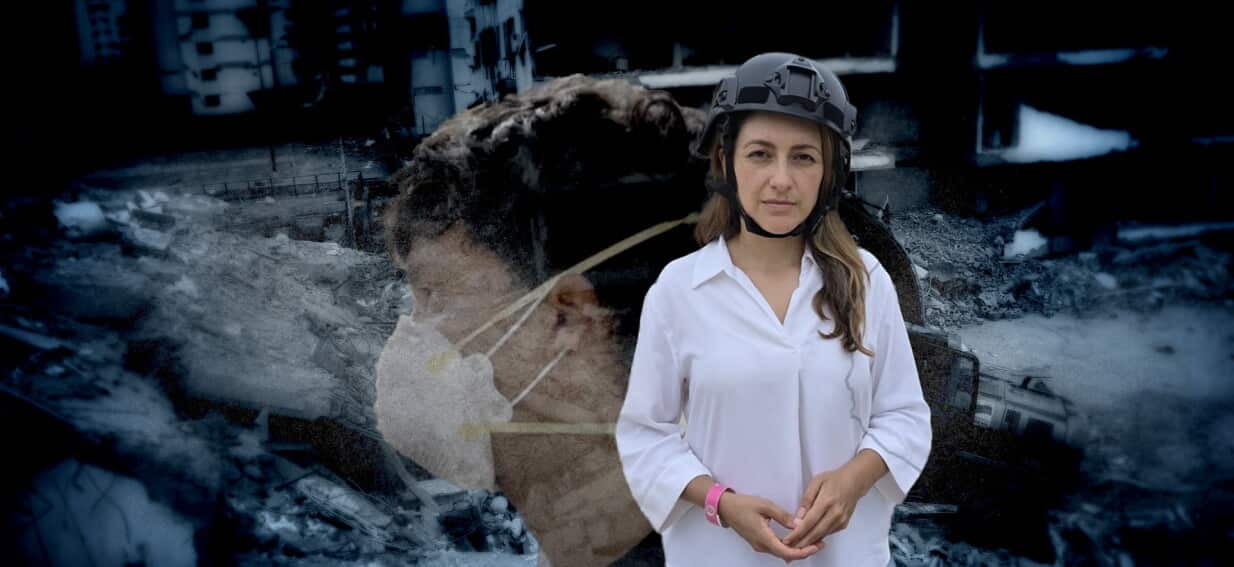
An Israeli drone strike on a civilian vehicle in the southern Lebanese village of Nabatieh Al-Fawqa killed four people on Monday, shattering a fragile, U.S.-brokered ceasefire and raising serious questions about the enforcement of the diplomatic framework meant to stabilize the region.
The strike, which occurred on July 6, 2026, targeted a Jeep Cherokee near the local Teachers’ Training College. The Lebanese Health Ministry identified the casualties as Esperanza Ghandour, the principal of the Youssef Shamoun Public School, her mother, a foreign domestic worker, and a Syrian laborer. Local sources and the state-run National News Agency confirmed the group was returning from evaluating war damage to Ghandour's family residence when the drone fired a guided missile into the vehicle.
The Israel Defense Forces confirmed the operation, stating the vehicle was struck because it was approaching an designated military "security zone" and posed a direct threat to forces operating in the area.
The Illusion of the Ten Kilometer Safe Zone
The attack in Nabatieh Al-Fawqa exposes a deep structural flaw in the bilateral truce finalized in late June. Under the current framework negotiated by Washington and Qatar, Israel maintains a temporary 10-kilometer security perimeter inside the Lebanese border. The arrangement was intended to shield northern Israeli communities while a phased withdrawal took place, allowing the Lebanese Armed Forces to assume control and implement disarmament protocols.
The reality on the ground has drifted sharply from the diplomatic text.
Residents returning to inspect properties or rebuild businesses find themselves navigating completely invisible, shifting boundaries. While the diplomatic agreement outlines a clear pathway toward a "Hezbollah-free zone," the precise geographic limitations remain highly contested. The Israeli military asserts its right to operational freedom within this buffer zone to neutralize potential threats. Conversely, Lebanese officials argue that continued surveillance flights, drone strikes, and systematic engineering demolitions in towns like Bint Jbeil and Kounine constitute a flat violation of national sovereignty.
This structural ambiguity creates a lethal environment for civilians attempting to resume normal life.
A Microcosm of Regional Gridlock
The deaths in Nabatieh occur against a broader backdrop of geopolitical exhaustion. The overall casualty figures provided by the Lebanese Health Ministry indicate that over 4,300 people have been killed since the regional spillover began on March 2. On the Israeli side, official numbers point to at least 36 fatalities, predominantly soldiers, highlighting the lopsided toll of the aerial campaign on Lebanese infrastructure.
For families in the south, the immediate consequence of these persistent precision strikes is psychological and economic paralysis.
- Commercial Flight: Shopkeepers who reopened storefronts following the June truce announcements have begun shuttering operations once again.
- Displacement Loops: Families report a continuous cycle of returning to the south only to flee back north within 48 hours due to localized drone activity.
- Local Resistance: Municipal councils within the proposed pilot zones, such as Froun, have explicitly rejected bilateral re-demarcation efforts, refusing to accept administrative status under a foreign military presence.
The diplomatic architecture relies heavily on an unwritten agreement between Washington and Tehran to keep the truce intact. Iran has pressured its regional allies to maintain a lowered profile to facilitate broader sanction and security talks, while the United States has consistently pressured Jerusalem to scale back high-profile operations in urban centers. However, a localized military command structure with broad authority to declare immediate threats means that tactical-level drone operators can effectively upend macro-level diplomacy with a single command decision.
The Accountability Gap
The core problem preventing the stabilization of the southern border is the total absence of a reliable, neutral verification mechanism. UNIFIL patrols remain restricted in their operational scope and have frequently found themselves caught in crossfire or targeted by warning bursts near newly established border positions.
Without an independent body to assess whether a civilian vehicle was actually demonstrating hostile intent or simply navigating a damaged road, both sides revert to familiar, unyielding narratives. The military apparatus claims defensive necessity; the local population sees a campaign designed to ensure the border region remains completely uninhabitable.
Until the technical communication channels opened by U.S. mediators can establish firm, transparent boundaries that apply to drone operators as clearly as they do to infantry units, the ceasefire will exist only on paper. For people like Esperanza Ghandour, the gap between diplomatic optimism in Washington and the reality of a guided missile in Nabatieh remains wider than ever.