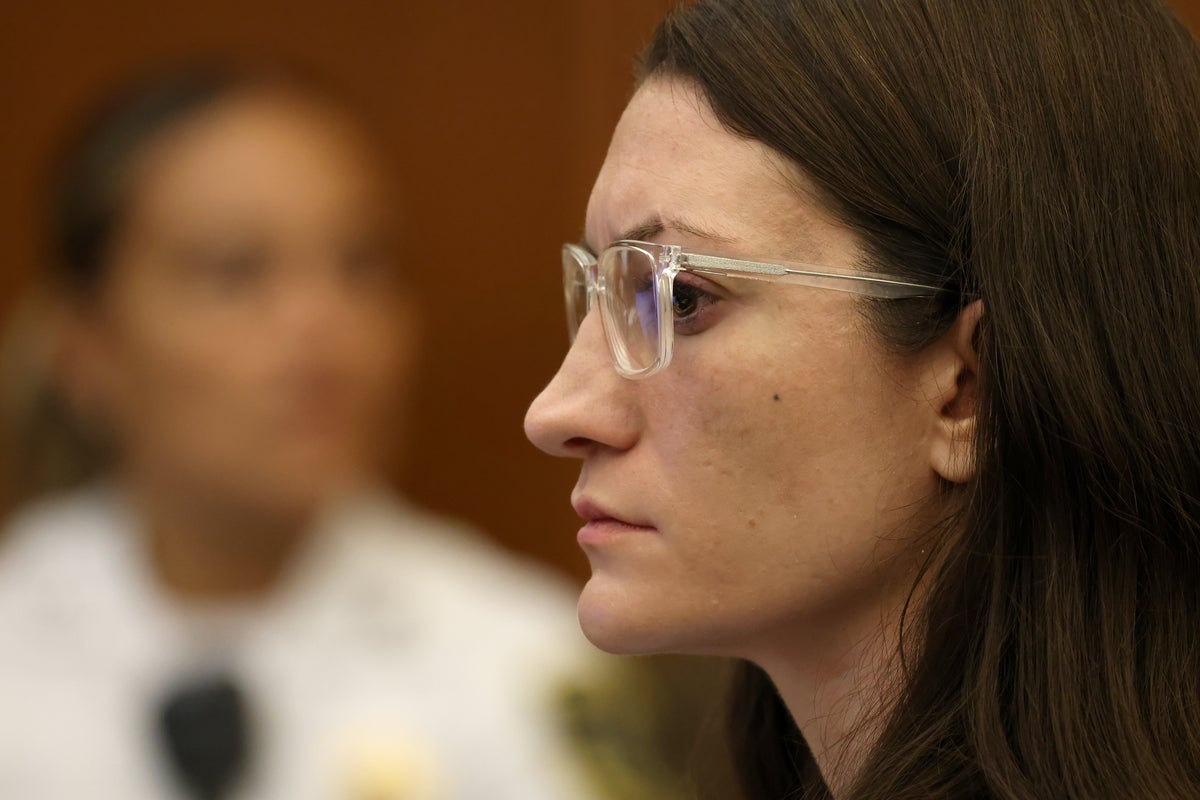
The courtroom inside Plymouth Superior Court sits in tense silence as jurors grapple with a harrowing question: When a mother experiencing severe psychiatric breakdown takes the lives of her children, where does medical failure end and criminal responsibility begin? The trial of Lindsay Clancy, the former labor and delivery nurse accused of strangling her three young children in January 2023, has thrust the legal system into the dark, misunderstood territory of postpartum psychosis. Defense attorneys do not dispute the physical acts. Instead, they argue that Clancy was suffering from a toxic combination of overprescribed medications, undiagnosed bipolar disorder, and an extreme mental health crisis that stripped her of her capacity to understand the wrongfulness of her actions.
The state presents a starkly different narrative. Prosecutors maintain that the actions were calculated and intentional, pointing to the timeline of events on the day of the killings when Clancy asked her then-husband, Patrick Clancy, to pick up takeout and medicine—an errand the prosecution characterizes as a deliberate ruse to clear the house. This fundamental clash between premeditated malice and catastrophic medical collapse forms the core of a trial that is capturing national attention.
Unpacking the Medication Timeline
At the heart of the defense strategy is a detailed, troubling timeline of psychiatric treatment. In the months leading up to the tragedy, Clancy sought help repeatedly as her mental health deteriorated following the birth of her youngest child. Defense counsel presented records showing a rapid succession of medication adjustments and high dosages prescribed within a brief window.
Medical experts and defense filings emphasize that severe postpartum psychiatric conditions can involve auditory and visual hallucinations, severe anxiety, and intrusive thoughts of harm. Rather than receiving stabilizing care, the defense argues, Clancy was placed on a regimen of psychiatric drugs that worsened her underlying, unrecognized bipolar condition.
This medical argument exposes a wider vulnerability in institutional healthcare settings. Expectant and postpartum mothers often navigate a fragmented system where overlapping symptoms of anxiety, depression, and hormonal upheaval are treated in isolation. When a patient presents with mounting distress, the standard clinical response frequently relies on sequential pharmaceutical adjustments rather than comprehensive inpatient stabilization. The defense's presentation of Clancy's medical log forces an uncomfortable examination of how modern psychiatry handles maternal mental health crises.
The Burden of Proving State of Mind
Under Massachusetts law, raising a lack of criminal responsibility defense shifts a heavy burden onto the prosecution. The state must prove beyond a reasonable doubt that the defendant was criminally responsible and not suffering from a debilitating mental illness that impaired their understanding at the exact time of the offense.
Legal analysts note that proving intent in cases involving severe psychiatric episodes requires dissecting minute actions. Prosecutors rely on evidence that Clancy communicated coherently, executed basic tasks like feeding her children, and sent her husband out of the house. Jurors walked through the Duxbury home, retracing the layout and visualizing the physical movements of that day to evaluate whether those actions reflect a cool, calculated plan or the erratic steps of a mind entirely disconnected from reality.
Conversely, the defense highlights the aftermath as proof of psychological decoupling. Following the deaths of five-year-old Cora, three-year-old Dawson, and eight-month-old Callan, Clancy jumped from a second-story window in an explicit attempt to end her own life, leaving her permanently paralyzed from the waist down. First responders detailed a chaotic scene where emergency interventions, including the administration of reversal agents like Narcan, underscored the severity of her physical collapse.
Broader Implications for the Justice System
The proceedings in Plymouth County resonate far beyond the specifics of a single family's tragedy. They highlight a recurring friction point in criminal courts where psychiatric science intersects with rigid legal definitions of sanity and intent. Juries are routinely asked to draw a clean line through messy, clinical realities where brain chemistry, pharmaceutical side effects, and severe trauma converge.
If the jury accepts that postpartum psychosis and overmedication compromised Clancy's capacity to recognize right from wrong, the verdict will mandate commitment to a state mental health facility rather than a prison sentence. A conviction for first-degree murder, however, carries a mandatory term of life without parole. As witness testimonies and expert evaluations wind forward, the courtroom remains focused on the precise boundary between accountability and illness, leaving the final determination in the hands of citizens asked to weigh the unquantifiable weight of a shattered mind.