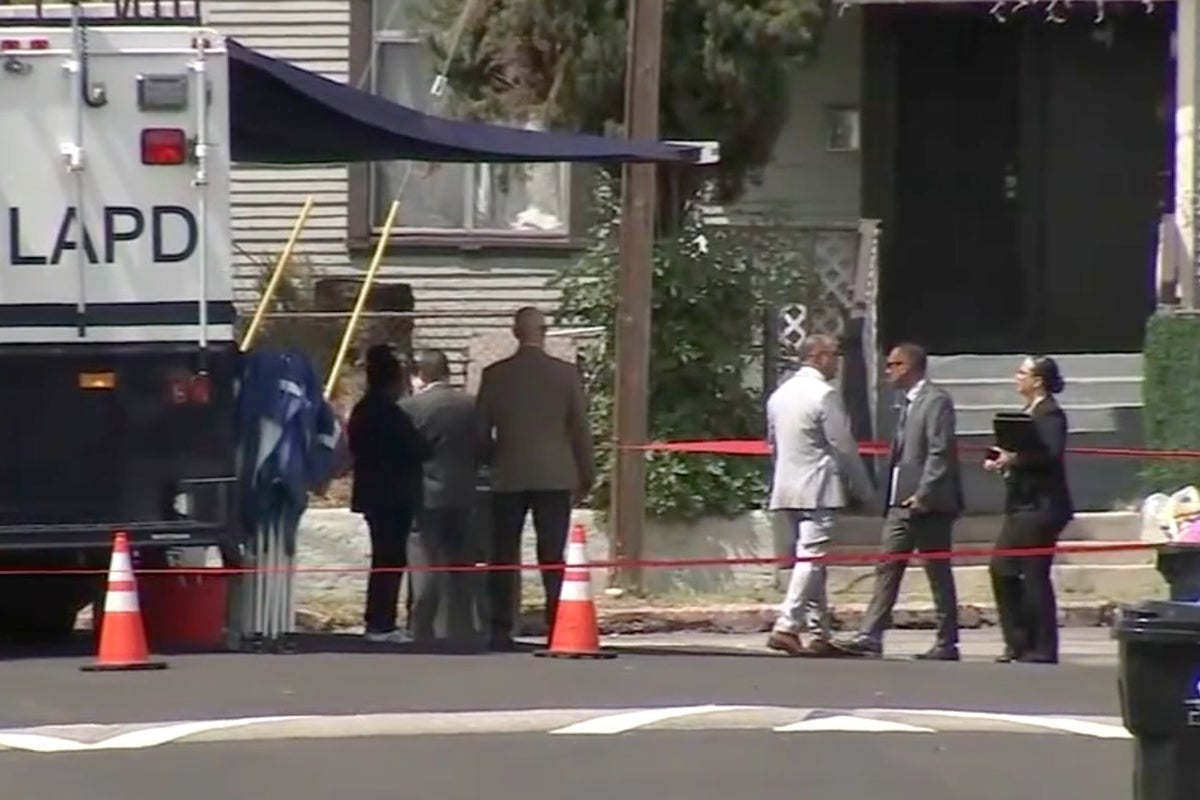
The radio traffic crackled with a flat, bureaucratic urgency. Officers were responding to a domestic disturbance call in a residential neighborhood, walking into a scenario that police academies across the country teach recruits to fear: an individual armed with an edged, unconventional weapon. Within moments of arrival, the encounter escalated from a verbal confrontation to lethal force. The man, advancing while wielding a long-handled tree trimmer, was shot dead by Los Angeles Police Department officers.
Every use of lethal force by law enforcement leaves a jagged scar across a community. Yet, beneath the immediate protests, the standardized departmental press conferences, and the predictable cycles of public outrage lies a deeper institutional failure. This tragedy is not an isolated anomaly. It serves as a stark symptom of how municipal emergency response systems routinely weaponize armed patrol officers against individuals experiencing acute behavioral health crises. When a community relies on traditional police deployment to manage psychiatric distress or domestic turmoil, the margin for error shrinks to zero.
The Anatomy of a Forced Escalation
Standard police training prioritizes control, containment, and officer safety above all else. When patrol units arrive at a scene where a person is agitated and holding any object capable of inflicting bodily harm, the tactical doctrine shifts immediately into a defensive posture. Distance is established. Commands are barked. Weapons are drawn.
The presence of a heavy steel-bladed tool like a tree trimmer changes the tactical calculus instantly in the minds of responding personnel. To an officer trained to view every potential weapon through the lens of survival, an advancing individual closing the gap with a bladed pole represents a lethal threat requiring an immediate countermeasure.
- Distance and Time: Tactical doctrine dictates that officers must maintain a reaction gap. When a suspect moves forward, that gap collapses, forcing split-second decisions.
- Improvised Weapons: Tools designed for landscaping or home maintenance do not carry the obvious visual markers of firearms, yet training equates their stopping potential with traditional deadly weapons.
- Sensory Overload: Adrenaline spikes, competing commands from multiple officers, and the unpredictability of the subject create an environment hostile to de-escalation.
This framework creates a tragic inevitability. If the primary tool available to first responders is a firearm, every problem begins to look like a target requiring ballistic suppression. The system forces officers into roles they were never meant to fill, substituting psychiatric triage with military-style containment.
The Mental Health Emergency Pipeline
Decades of municipal budget cuts, social service erosion, and the closure of state-funded psychiatric facilities have transformed local police departments into the default safety net for society's most vulnerable populations. Officers are now frontline psychiatric workers without the clinical training, medication access, or therapeutic environment required to handle severe mental breakdowns safely.
When family members call emergency dispatchers because a relative is acting erratically, destroying property, or threatening self-harm, they are rarely seeking an armed intervention. They want help. They want stabilization. They want safety. Instead, the dispatch algorithm routes patrol cars manned by officers equipped with handguns, tasers, and chemical agents.
The translation from a cry for medical assistance to a hostile tactical deployment happens long before the first cruiser arrives at the curb.
Consider the compounding pressures on the ground. A person locked in a psychotic episode or severe depressive spiral does not process authoritative commands the way a rational citizen does. Shouting conflicting orders to drop a tree trimmer often accelerates panic rather than inducing compliance. When the subject fails to obey commands due to cognitive impairment, officers interpret the inaction or advancement as defiance rather than distress, pushing the encounter closer to the edge of catastrophe.
Alternative Models and the Cost of Inaction
Other municipalities have experimented with civilian-led mobile crisis teams, pairing licensed mental health clinicians and specialized medics with police officers, or dispatching them entirely independently for non-violent behavioral health calls. Data from early pilot programs in various metropolitan areas suggest that diverting these calls reduces the frequency of physical force and connects individuals to long-term care rather than the criminal justice system or the morgue.
Yet, institutional inertia remains formidable. Police unions, municipal risk-management offices, and traditionalist commanders often resist structural overhauls, citing liability concerns and the inherent unpredictability of human behavior in the field.
The result is a stagnant status quo. Every time an officer pulls the trigger in these circumstances, investigators meticulously parse body-worn camera footage, internal review boards deliberate on policy compliance, and civil attorneys file wrongful death lawsuits against the city. Millions of dollars change hands in settlements. But the core operational model remains untouched.
As long as armed patrol units remain the primary responders to domestic disputes involving improvised tools or psychiatric crises, the body count will continue to rise. The tragedy on the pavement involving a tree trimmer is not merely a failure of individual tactical execution. It is the predictable outcome of a broken emergency response architecture that refuses to evolve beyond the barrel of a gun.