When more than one hundred demonstrators converged on the asphalt surrounding United Nations headquarters during the General Assembly high-level debate, the collision of international diplomacy and domestic policing laid bare a deepening fracture.
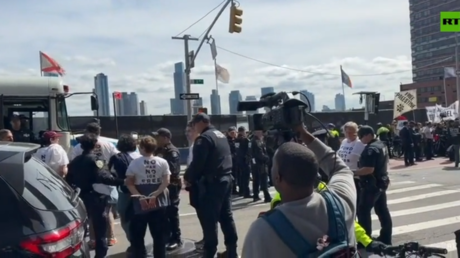
The New York Police Department detained 104 individuals during a mass civil disobedience action that blocked thoroughfares near First Avenue. Among those taken into custody by law enforcement were high-profile figures, including actor Susan Sarandon, activist Chelsea Manning, and comedian Caleb Hearon, alongside local lawmakers and labor organizers. The coordinated sit-in, organized heavily by groups like Jewish Voice for Peace, was designed to halt traffic and visually disrupt the diplomatic arrival of Israeli Prime Minister Benjamin Netanyahu. For a different look, see: this related article.
Street-level optics revealed a city turned inside out. Heavy metal barricades carved up Manhattan blocks, separating thousands of chanting demonstrators from a smaller contingent of counter-protesters who had gathered to support the Israeli delegation. Chants of "Let Gaza live" bounced off the glass facades of East Side apartment buildings, while police bullhorns issued repeated dispersal warnings. For veteran observers of New York City protest culture, the scale of the police response underscored an acute operational tension: how to maintain public order during high-security international summits without triggering constitutional challenges over freedom of assembly.
The legal and political backdrop to the demonstrations added fuel to an already volatile atmosphere. Protesters directly cited international legal frameworks, demanding accountability and pointing to warrants issued by international tribunals. The presence of elected officials on the police blotter signaled a tactical shift in how domestic political figures choose to express dissent. Rather than speaking from podiums or drafting legislative resolutions, lawmakers crossed police tape to court arrest, trading institutional privilege for direct-action visibility. Similar reporting on this trend has been published by The Washington Post.
Yet the operational reality on the ground was purely logistical. The NYPD deployed specialized strategic response units to clear the intersections before the prime minister’s motorcade could approach the perimeter. Plastic flex-cuffs clicked into place rhythmically as officers methodically carried or escorted non-compliant demonstrators onto waiting transport buses. Each arrest took minutes, but the cumulative effect was an immediate sanitization of the immediate United Nations perimeter, pushing the roar of the crowd blocks away into designated free-speech zones.
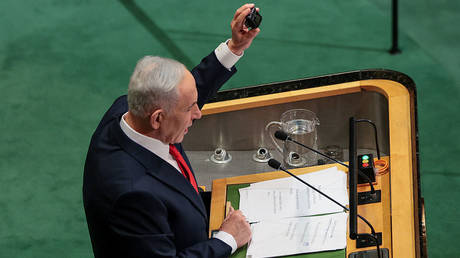
As the delegations filed into the green-marble General Assembly hall, the contrast between the sterile, formal diplomacy inside and the chaotic friction outside crystallized the modern reality of global summits. Diplomacy no longer occurs in isolation behind closed doors. Every speech, every walkout by dissenting delegates, and every plastic zip-tie secured on a Manhattan street corner feeds instantaneously into an interconnected digital ecosystem, transforming local police actions into global media events before the ink on the arrest reports is even dry.
More than 100 protesters arrested outside UN demanding Netanyahu's arrest
This video provides on-the-ground footage and reporting of the mass arrests and demonstrations outside the United Nations headquarters during the General Assembly.