A fatal shooting during a dispute at a Midtown Manhattan subway station exposes the structural cracks in New York's transit safety apparatus, where confined underground spaces turn everyday friction into lethal encounters. When a routine police-reported altercation ends in gunfire beneath Midtown, it forces an uncomfortable reckoning over how transit policing, station architecture, and broader urban conflicts collide.
I have covered New York City beat policing, transit bureaucracies, and municipal budgets for more than twenty years. Crime headlines tend to arrive in neat, isolated boxes. A man is shot on a platform or mezzanine, officials hold a briefing, and the debate instantly snaps into two predictable camps: demand more uniformed officers, or blame deeper social dysfunction. Neither camp alone explains what happens inside a subterranean chokepoint when tempers flare and a firearm appears.
Why Disputes Escalate Underground
Subway stations are not ordinary city streets. They are compressed corridors with limited sightlines, echoing acoustics, stairwells that funnel crowds together, and platforms where escape routes are narrow or nonexistent.
On a wide avenue above ground, two people arguing can step apart, cross traffic, or duck into a storefront. Underground, proximity is forced. A shoulder bump near a turnstile, a lingering glare on a crowded platform, or a cramped car door creates immediate spatial pressure. When a verbal argument starts in an enclosed space, de-escalation has to compete with noise, delay, and the physical inability to simply walk away.
Consider a hypothetical example of how friction compounds below street level. Suppose two commuters clash near a mezzanine stairwell during a service delay. A crowd gathers to watch or pass through, blocking the exits while trains rumble overhead, drowning out voices and raising adrenaline. If one person is carrying an illegal weapon, a dispute that might have fizzled out on a quiet sidewalk can turn fatal in seconds. That dynamic does not require an extraordinary level of malice; it only requires high density, poor visibility, and zero breathing room.
- Chokepoint geometry: Narrow platforms, turnstile banks, and single-stair exits trap bystanders and limit movement during sudden emergencies.
- Delayed intervention: Signal dead zones, multi-level layouts, and train intervals mean help often arrives after the critical moment has passed.
- Bystander compression: Commuters trying to catch a train or exit the system frequently remain close to an active confrontation longer than they would on an open block.
The Policing Paradox Below Street Level
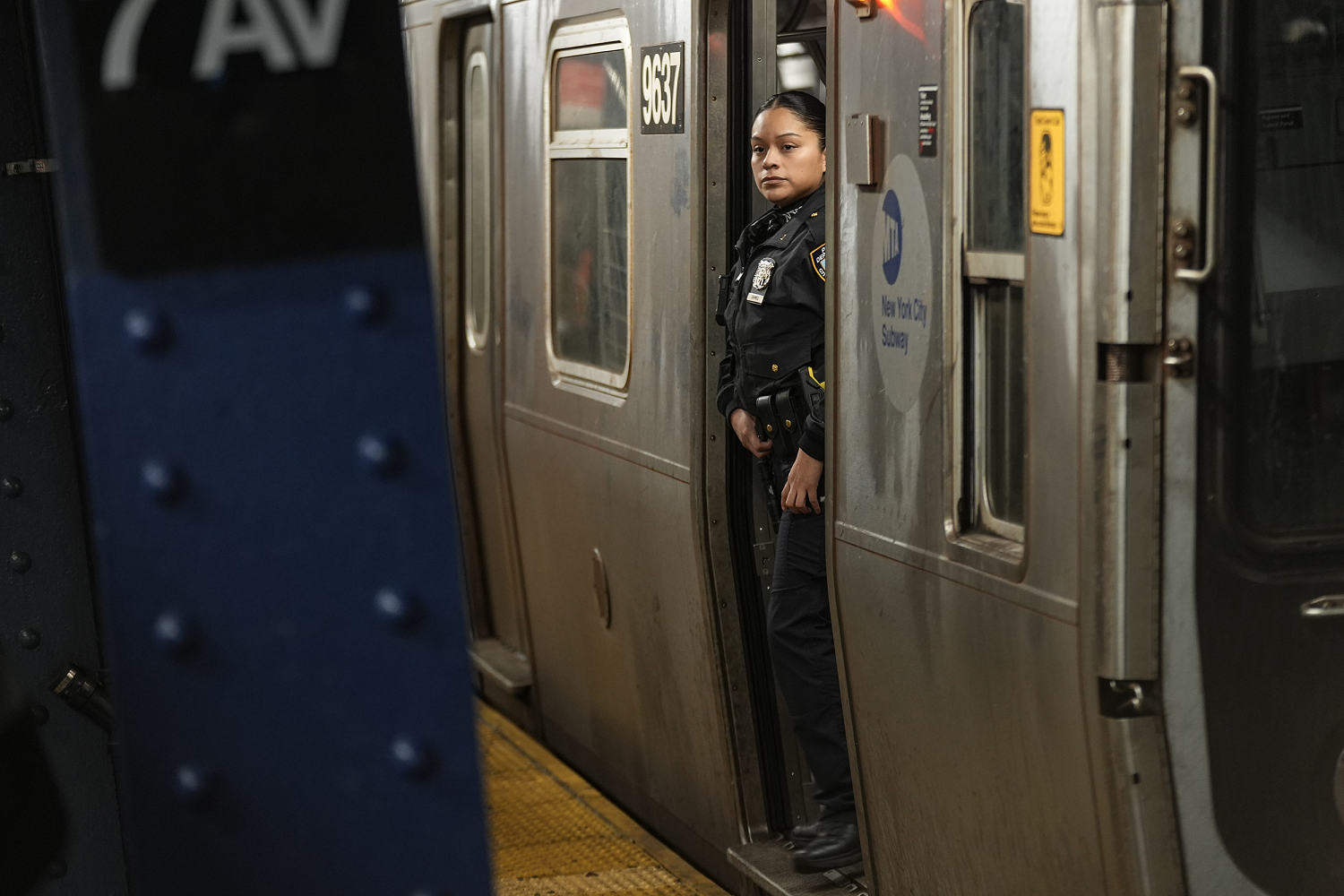
Every time violence strikes a Midtown Manhattan subway station, the reflex is to count badges. More patrols, more bag checks, more station coverage. Anyone who has watched transit policing across multiple administrations knows the appeal of visible authority. Uniforms project order in a chaotic environment.
Yet policing a multi-hundred-station network with hundreds of miles of track presents a math problem no commissioner has fully solved. Officers cannot stand on every platform or ride every train car simultaneously. Even when deployment increases in high-traffic Midtown hubs, offenders adapt to gaps in timing and geography, while officers split their attention between fare enforcement, mental health calls, quality-of-life complaints, and violent crime.
There is also a tension between deterrence and containment. A heavy police presence can discourage opportunistic offenses and reassure riders heading to work or theater districts. At the same time, rapid-response enforcement often reacts to incidents already in progress rather than preventing an interpersonal dispute from turning deadly in the first place.
Heavy station patrols project immediate authority, yet a sprawling underground network still leaves blind spots between platforms, mezzanines, and moving trains.
Critics of aggressive enforcement argue that saturating stations with officers can heighten tension among riders who already feel stressed or scrutinized. Supporters counter that without visible consequences and swift response, unlawful weapons and volatile behavior go unchecked. In practice, both arguments point to the same limitation: law enforcement is a blunt instrument for resolving sudden human conflicts in tight spaces.
Midtown as a Pressure Cooker
Midtown Manhattan occupies a unique place in the city's transit map. It is a convergence zone where commuters from across the boroughs and surrounding regions transfer between lines, tourists navigate unfamiliar signage, late-night riders pass through entertainment corridors, and people in crisis gravitate toward warm, brightly lit, heavily trafficked public spaces.
That mix gives Midtown stations a distinct rhythm. During rush hour, sheer volume is the dominant factor. Thousands of people move along fixed paths on tight schedules, turning minor delays or misunderstandings into flashpoints. During off-peak hours, lower foot traffic can change the atmosphere entirely, making isolated corners of platforms or transfer passages feel less forgiving when a confrontation breaks out.
When police report that a man was fatally shot during a dispute in this environment, the phrase "during a dispute" carries heavy weight. It signals that the violence grew out of an interpersonal clash rather than an abstract, random strike from nowhere. Yet in a high-density transit hub, a personal argument rarely stays private. Strangers are drawn into the orbit of the conflict, cameras capture fragments of the aftermath, and a single tragedy disrupts service and safety perceptions across an entire corridor.
| Operational Factor | Above-Ground Street | Subterranean Station Hub | Impact During a Dispute |
|---|---|---|---|
| Exit and spacing options | Wide sidewalks, multiple directions | Stairs, turnstiles, narrow platforms | Harder to disengage or create distance |
| Acoustic and visual clarity | Open sightlines, ambient street noise | Echoing tiles, pillars, train rumble | Miscommunication and startle responses rise |
| Emergency access | Direct vehicle and foot approaches | Multi-level navigation required | Response times depend on exact station layout |
| Crowd density swings | Gradual shifts by block and hour | Sharp spikes tied to train arrivals | Bystanders cluster near active flashpoints |
What Official Accounts Leave Unanswered
Police statements after a fatal subway shooting follow a familiar arc. Officials confirm the victim's status, outline the preliminary sequence of a dispute, note whether a suspect is sought or in custody, and emphasize that an investigation is ongoing.
That initial restraint is necessary. Early facts are often incomplete, witness accounts conflict, and investigators must piece together surveillance footage, physical evidence, and timeline details before drawing firm conclusions. Rushing to label a motive or assign blame before the evidence holds up only muddies accountability.
Still, routine briefings often leave out the systemic questions riders care about most. How did a firearm enter the system in the first place? Were warning signs or prior escalations visible before the fatal shot was fired? How well did station communication, camera coverage, and emergency coordination function in the minutes immediately following the gunfire?
Over decades of covering municipal agencies, I have learned that the most revealing details rarely emerge at the first podium appearance. They surface later in procurement records, camera maintenance logs, deployment audits, and slow-moving court filings. By the time those details arrive, public attention has usually moved on to the next story.
Blind Spots in Transit Safety Policy
Transit safety debates frequently get stuck on single fixes. One side pushes for stricter penalties and expanded stop-and-search or screening measures. Another emphasizes mental health outreach, housing stability, and root-cause social investment.
The gray area is where real policy lives. Neither enforcement nor social services can fix a subway platform on its own. Expanding social outreach without credible rules and rapid response leaves vulnerable riders and staff exposed to volatile behavior. Relying solely on enforcement without addressing underlying instability, untreated distress, or conflict resolution cycles back to the same emergencies year after year.
Technology is another area where expectations often outrun reality. Surveillance cameras, turnstile sensors, and emergency call points help investigators and responders, yet cameras record events rather than stop a bullet mid-flight. Even upgraded lighting and clearer signage improve orientation and visibility, but they cannot eliminate human hostility when two people decide to escalate an argument.
- Equipment vs. execution: A camera network only helps if feeds are clear, accessible, and properly maintained across every level of a complex station.
- Short-term calm vs. long-term prevention: Immediate arrests address the immediate act, while underlying social and behavioral pressures continue outside the fare gates.
- Data vs. context: Raw incident counts tell part of the story, while location details, time of day, and conflict triggers explain how risk actually behaves.
The Cost to Commuters and the System
A fatal shooting inside a Midtown Manhattan subway station ripples far beyond the immediate crime scene. Trains bypass stops or run with delays while detectives process evidence. Commuters alter routes, stand closer to edges or walls depending on what feels safer, and carry a quiet edge of vigilance on rides they used to take on autopilot.
For transit workers, station agents, and frontline responders, the stakes are personal and daily. They work inside the same underground corridors hour after hour, absorbing the stress of service disruptions and emergencies alike. When violence breaks out in a system meant to keep millions of people moving efficiently, the psychological toll spreads quietly across everyone who relies on it.
Public trust in mass transit is fragile because the subway is an everyday contract. Riders accept crowded cars, occasional delays, and underground noise in exchange for affordable, reliable mobility and a baseline expectation of physical safety. When a dispute ends in gunfire at a central Midtown hub, that bargain feels strained.
Fixing a problem like this does not start with a slogan or a press conference. Start by mapping every high-friction chokepoint in busy Midtown stations—narrow stair landings, congested transfer corridors, and dim platform pockets—and auditing camera coverage, emergency sightlines, and rapid-response positioning at each one.