Every October, the ritual plays out with clockwork predictability. The world's literary press gathers in hushed anticipation, professional bookmakers take speculative wagers, and a permanent secretary of the Swedish Academy steps up to a podium in Stockholm to announce the latest recipient of the Nobel Prize in Literature. The media cycle treats the event like a high-stakes sporting match or an international political summit. Yet beneath the veneer of global prestige lies an institution grappling with an archaic mandate, centuries of Eurocentric blind spots, and the Sisyphean task of assigning absolute monetary value to art.
When Alfred Nobel drafted his final will in 1895, he stipulated that his fortune should reward those who had "conferred the greatest benefit on humankind" and produced "in the field of literature the most outstanding work in an ideal direction." That single Swedish word—idealisk—has haunted the Swedish Academy for more than a century. Translators and committee members have argued endlessly over whether it implies high moral tone, romantic idealism, or stylistic perfection. This linguistic ambiguity transformed the prize from a straightforward literary honor into a persistent ideological battleground.
Critics frequently point out that the earliest decades of the award were bogged down by conservative gatekeeping. Major literary pioneers of the late 19th and early 20th centuries were bypassed in favor of forgotten Scandinavian playwrights and Victorian moralists. Leo Tolstoy, Henrik Ibsen, and Émile Zola were famously snubbed, setting a precedent that commercial popularity or radical stylistic innovation did not guarantee recognition from the Stockholm old guard. The Academy preferred safe, establishment figures, creating an early credibility gap from which the institution has spent decades trying to recover.
The selection mechanism itself remains opaque by design. Nominations are restricted to a select caste of university professors, members of national literary academies, previous laureates, and members of the Swedish Academy. The complete archives are locked away for fifty years. This shroud of secrecy protects the committee from direct lobbying, but it also insulates them from accountability. When public backlash erupts over a controversial choice or an egregious omission, the Academy offers virtually no defense beyond the finality of the announcement.
In recent years, the institution has attempted to course-correct its historical geographic and demographic imbalances. Scandals, including a devastating internal governance crisis that forced the postponement of the 2018 prize, compelled the Academy to overhaul its voting procedures and expand its global perspective. The conscious effort to diversify the laureate list away from predominantly Western, male novelists has opened the doors to writers working in translation, regional genres, and experimental forms.
Yet, expanding the canon introduces its own systemic pressures. The prize now carries a cash award of 12 million Swedish kronor, roughly equivalent to 1.2 million US dollars. For an independent press author or a poet working outside major commercial pipelines, this windfall changes everything overnight. Overnight, backlist titles are rushed back onto printing presses, translation rights are auctioned globally, and an obscure intellectual is thrust onto the international lecture circuit.
This brings us to the core contradiction of the Stockholm prize. Literature is fundamentally subjective, yet the Nobel machinery demands objective canonization. No committee of eighteen individuals, no matter how well-read, can genuinely arbitrate the pinnacle of global letters across dozens of languages and cultural traditions. The exercise is inherently political, shaped by prevailing geopolitical winds, translation availability, and the lobbying weight of national cultural institutes.
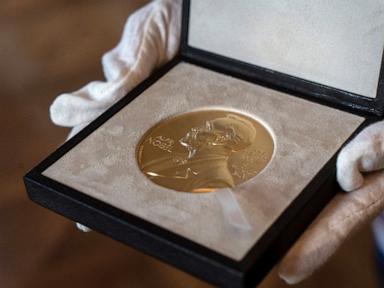
When the dust settles on the October announcement and the gold medal is handed out during the December ceremony in Stockholm, the literary world returns to its normal state of fragmented chaos. Writers keep writing in obscurity, publishers chase margins, and readers argue over who was left off the list. The prize survives not because it is infallible, but because the modern literary marketplace desperately needs a shared altar. Stockholm remains the place where books are briefly treated as matters of state, even if the state has no idea how to measure their true worth.


