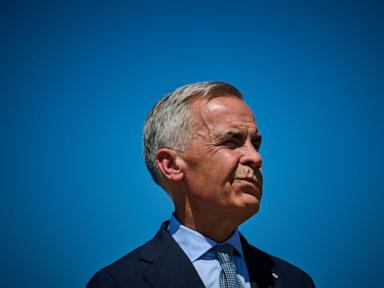
Canadian Prime Minister Mark Carney recently stepped up to microphones and called the ongoing bilateral trade negotiations with the United States exactly what they have become: nasty. This blunt assessment followed a public broadside from Washington, where President Donald Trump targeted Ottawa's governance and threatened a crushing wall of fifty percent tariffs on Canadian imports.
For months, observers have watched the deterioration of commercial relations between two historic allies. Beneath the rhetorical posturing lies a structural economic clash. Tariffs are taxes on imported goods. When Washington imposes duties on steel, aluminum, and automobiles, the economic burden does not mysteriously vanish. Companies absorb the pain or push those elevated costs down to American consumers.
Data from industrial sectors reveals the immediate toll of these protectionist measures. Existing American levies on Canadian aluminum have already triggered a fifty-eight percent price spike for domestic manufacturers stateside. When raw input costs surge by more than half, downstream fabrication plants find themselves squeezed between fixed contract pricing and inflated material expenses.
The Political Calculus Behind the Border Conflict
Why are these negotiations deteriorating so rapidly now? The answer lies in overlapping political timelines. With American midterm elections looming on the horizon, voter frustration regarding inflation and the cost of living remains a volatile variable. White House strategists frequently use aggressive trade posturing to signal protectionist intent to domestic manufacturing unions.
Ottawa faces its own domestic pressures. Carney cannot afford to appear compliant under economic coercion. When a smaller economy shares an open border with a global superpower, standing firm becomes a matter of political survival. Canadian leadership understands that yielding to unilateral ultimatums sets a dangerous long-term precedent.
Retaliation has become the default mechanism for both sides. While Washington points fingers at Canadian provincial restrictions on American alcohol sales, Ottawa defends its countermeasures as proportional responses to unprovoked federal duties. This tit-for-tat escalation creates a poisonous environment for cross-border supply chains that took decades to optimize.
The Illusion of Reshoring
The core premise driving Washington's tariff strategy is that import taxes will miraculously force manufacturing plants to relocate back to United States soil. Decades of economic history suggest otherwise. Modern supply chains are intricate webs of specialized components, talent pools, and logistics networks. You cannot simply legislate a complex industrial ecosystem into existence overnight through punitive taxation.
Consider the automotive sector as a hypothetical example. A single vehicle crosses the international border multiple times during its assembly process, with parts crossing back and forth between Ontario and Michigan. Imposing heavy tariffs at each border checkpoint acts as a self-inflicted tax on domestic assembly plants. The result is not an industrial renaissance, but margin erosion and higher sticker prices for showrooms.
The Human and Social Fallout
Beyond balance sheets and trade deficits, the hostility is altering social dynamics. Repeated suggestions from Washington that Canada should become the fifty-first state have moved past the realm of political humor. For many Canadians, these remarks cross a line into disrespectful territory.
Tourism numbers tell the story clearly. Cross-border travel has cooled significantly as ordinary citizens register their displeasure through canceled vacations and boycotts. Cultural friction between neighbors who share the world's longest undefended border creates a deep reservoir of civic resentment that will take years to drain.
As negotiators shuttle between Ottawa and Washington attempting to avert the mid-August deadline for expanded duties, the path forward remains narrow. Economic integration built over generations is being tested by short-term political expediency. The cost of this friction will ultimately be paid by the workers and consumers both administrations claim to protect.
Inside the US-Canada Tariff War
This video explores the underlying economic pressures and the real-world impact of the ongoing trade dispute between Washington and Ottawa.