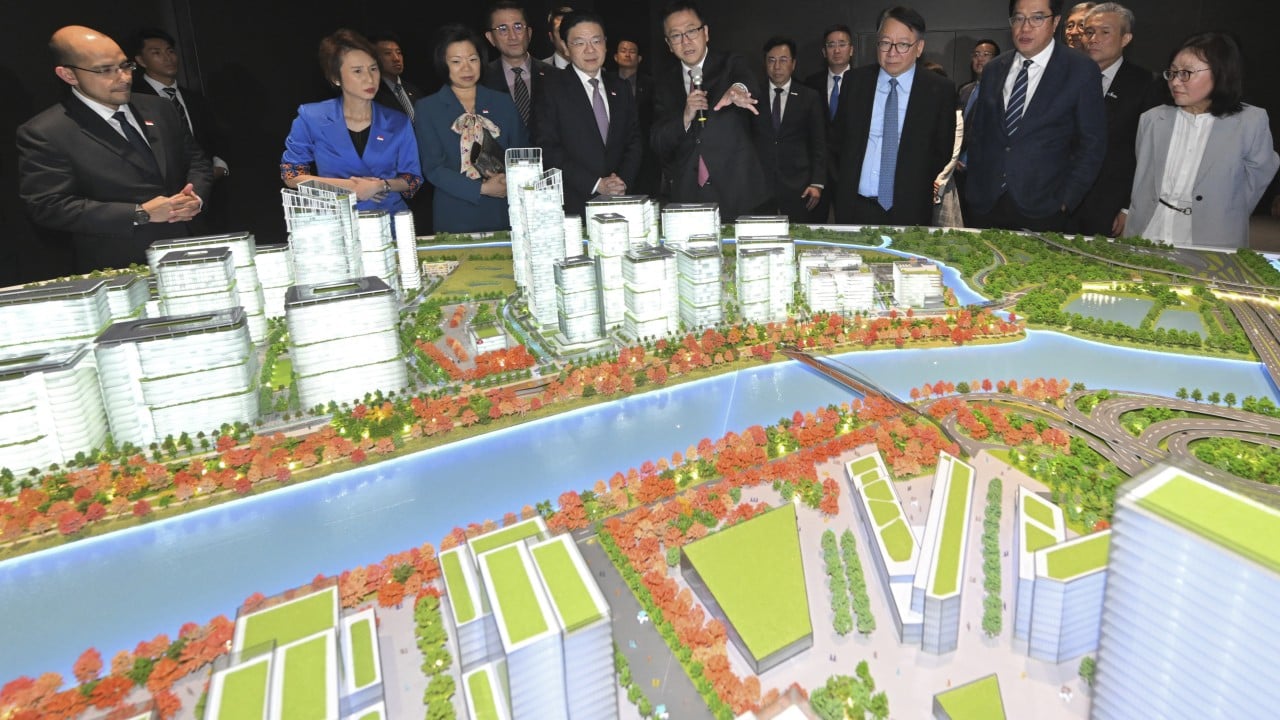
Singapore corporations are not rushing to pour capital into Hong Kong's sprawling Northern Metropolis, despite recent high-level diplomatic invitations urging ASEAN enterprises to seize the multi-billion-dollar development. While official rhetoric paints a picture of eager regional synergy, reality on the ground tells a much more measured, skeptical story. Corporate boards in Southeast Asia evaluate cross-border expansions through cold financial metrics rather than diplomatic goodwill. When regional executives look at a 30,000-hectare mega-project scheduled to unfold over decades, they see immense structural complexity, intense land competition, and a heavy regulatory overhang that demands severe scrutiny.
The fundamental disconnect lies between government ambition and corporate risk appetite. Hong Kong leadership continues to pitch the massive zone as a primary gateway to the broader Greater Bay Area, promising future technology hubs, advanced manufacturing zones, and cross-border transport corridors. Yet, Singaporean firms, historically disciplined in regional asset allocation, face a crowded field of mainland Chinese conglomerates that already dominate early land tenders and infrastructure consortia. For an outside corporation accustomed to clear, predictable yields in Southeast Asian markets, navigating an untested frontier zone with shifting economic blueprints presents a formidable barrier. Meanwhile, you can read similar stories here: The Espresso Clock Is Ticking in Paris.
The Anatomy of a Cross-Border Pitch
Official forums in recent months have amplified the narrative that Southeast Asian capital views the northern territory as a natural extension of regional diversification. Trade statistics frequently highlight the deep economic ties between ASEAN and Hong Kong, noting hundreds of billions in bilateral trade. Diplomats argue that Singaporean expertise in logistics, infrastructure financing, and institutional structuring positions local firms to profit from the border-adjacent transformation.
However, this diplomatic optimism overlooks structural realities. Singaporean enterprises—ranging from major real estate developers to specialized supply chain operators—operate under strict fiduciary standards. Committing capital to an embryonic urban zone requires clear visibility on return timelines. Most domestic projects in Singapore or established ventures in Indonesia and Vietnam offer shorter payback periods with lower regulatory friction. The Northern Metropolis, by contrast, is a long-horizon play whose foundational transport links and commercial ecosystems will not fully mature until well into the next decade. To explore the bigger picture, check out the excellent analysis by Investopedia.
Consider a hypothetical mid-sized Singaporean logistics firm evaluating a warehousing facility in the new development zone. To justify the capital expenditure, the executive board must calculate land acquisition costs against local zoning laws, labor availability, and cross-border customs integration with Shenzhen. Right now, those variables remain fluid. Construction phases overlap, zoning adjustments occur frequently, and the sheer scale of competing state-backed enterprises creates an uneven playing field for foreign commercial entities.
Structural Hurdles for Foreign Entrants
Entering a mega-development controlled heavily by mainland consortiums and local municipal direction requires more than just financial firepower. It demands intimate knowledge of localized administrative networks.
- Land Tender Dynamics: Recent land parcel awards have gone overwhelmingly to massive syndicates comprising mainland property giants and state-linked Chinese entities. These groups possess deep balance sheets and long-term tolerance for deferred yields that typical Singaporean publicly listed companies cannot easily match under shareholder pressure.
- Talent and Labor Constraints: While Hong Kong has rolled out aggressive immigration schemes to attract professionals, the northern frontier competes directly with Shenzhen's established high-tech districts for elite engineering and R&D talent. Singapore firms often find it more cost-effective to anchor their regional technology operations in established Southeast Asian hubs like Jakarta or Kuala Lumpur.
- Regulatory Compliance Costs: Operating simultaneously under Hong Kong's common law framework and aligning with broader regional economic integration introduces layers of compliance overhead. Corporate legal teams must spend months untangling jurisdictional overlaps before breaking ground on any physical asset.
The Strategy Shift Required for Real Engagement
If authorities truly want to convert diplomatic invitations into concrete capital inflows from Southeast Asia, the engagement playbook must evolve past high-profile summits. Corporate decision-makers require targeted incentives that mitigate early-stage construction risk. Without structured risk-sharing mechanisms or preferential entry slots for foreign joint ventures, capital will remain parked in safer, more transparent jurisdictions.
Singaporean firms respect scale, efficiency, and structural clarity. Until the blueprints for the northern frontier translate into functioning, de-risked commercial districts with proven tenant demand, corporate boardrooms across the Lion City will continue to listen politely to diplomatic overtures while keeping their checkbooks firmly closed.