Paris Saint-Germain successfully defended their UEFA Champions League title with a dramatic 4-3 penalty shootout victory over Arsenal in Budapest, yet the historic triumph on the pitch has been immediately eclipsed by widespread civil unrest across France.
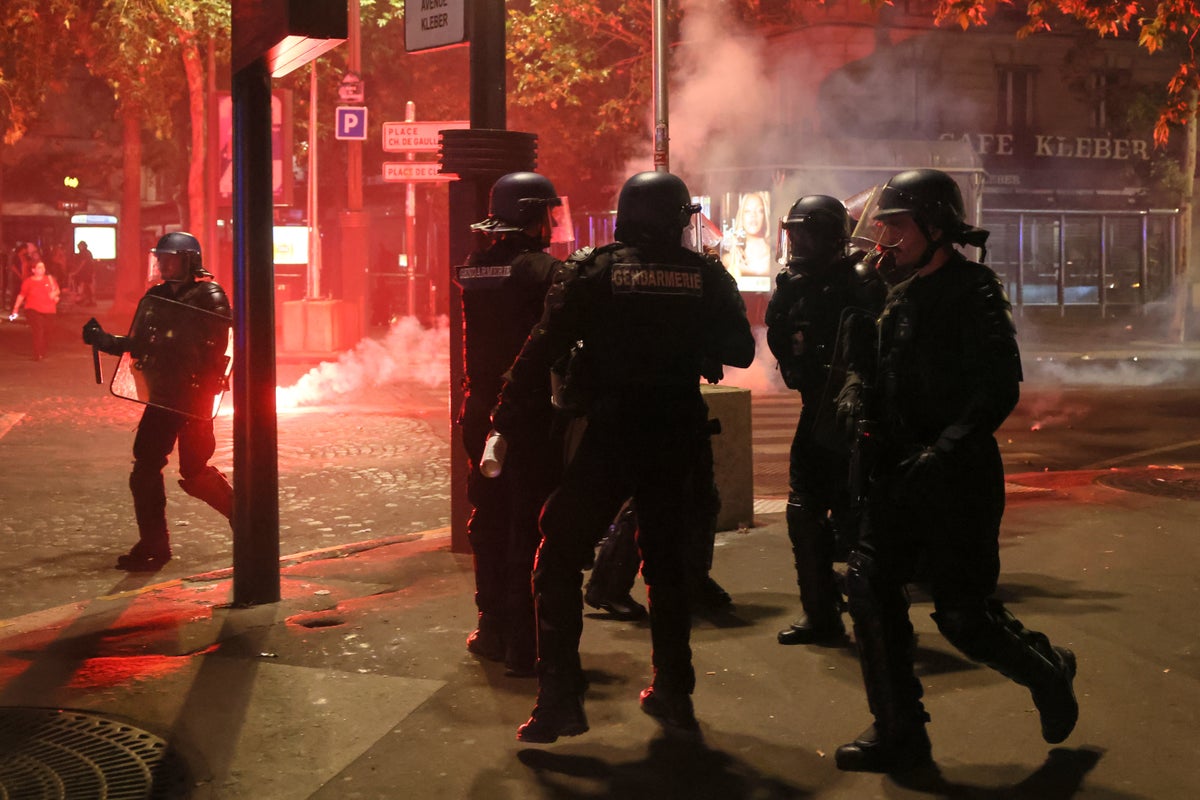
While manager Luis Enrique celebrated a consecutive European crown at the Puskás Aréna following a tense 1-1 draw, French authorities were overwhelmed by volatile crowds back home. Interior Minister Laurent Nuñez confirmed that police made 780 arrests nationwide, representing a massive one-third increase in violence compared to the club’s maiden Champions League victory the previous year. One person died in a motorcycle accident during the chaos, and another remains in critical condition after a stabbing near the Champs-Élysées.
The juxtaposition of sporting immortality and urban warfare exposes a fracturing reality for French football. For a club backed by Qatari state wealth, continental dominance was supposed to buy cultural prestige. Instead, it has laid bare a profound disconnect between the institution and the volatile social environment in which it operates.
The Illusion of Control
The victory in Budapest was billed as a masterclass in modern sporting execution. Despite falling behind to a sixth-minute strike from Arsenal’s Kai Havertz, PSG maintained their composure. They dominated possession, eventually leveling the match via an Ousmane Dembélé penalty after Khvicha Kvaratskhelia was brought down in the box. When Arsenal defender Gabriel Magalhães blasted his decisive spot-kick over the bar in the shootout, the sporting narrative seemed complete.
But as gold confetti rained down in Hungary, tear gas filled the air in Paris.
More than 40,000 fans filled the Parc des Princes to watch the broadcast, while thousands more swarmed the 16th arrondissement and the Champs-Élysées. The subsequent deployment of 22,000 police officers across the country was not enough to prevent widespread property destruction, looted storefronts, and targeted attacks on law enforcement. The scale of the rioting suggests that these gatherings are no longer mere celebrations. They have morphed into flashpoints for broader societal grievances, using football as a convenient catalyst.
Politicians wasted no time exploiting the fallout. While President Emmanuel Macron quickly issued praise on social media, proclaiming that a new star shines over Paris, his domestic rivals seized on the structural failure of public order. Far-right leader Marine Le Pen pointedly withheld congratulations, choosing instead to focus entirely on the predictable trail of arson and broken glass left in the wake of the match. The club has become a political football, caught between state-sponsored branding and raw domestic anger.
The High Cost of the New Era
On paper, this current iteration of PSG is vastly different from the top-heavy, superstar-laden rosters of the past. The strategy has shifted away from purchasing aging, individualistic icons toward building an elite, collective unit.
Squad Profile and Financial Efficiency
| Metric | Detail |
|---|---|
| Average Squad Age | 24 years, 221 days |
| Historical Milestone | Third-youngest winners in Champions League history |
| Annual Wage Bill | €551 million |
| Total Club Revenue (2024-25) | €837 million |
| Expected UEFA Payout (2025-26) | €146 million |
Luis Enrique has managed to forge a disciplined squad that operates as a cohesive unit. Players like Vitinha, Désiré Doué, and Bradley Barcola provide a high-pressing energy that the old guard simply could not deliver.
Yet, the underlying financial mechanisms remain intensely corporate and detached from the local fan base. This final was a direct proxy war between Gulf sovereign wealth and American private capital, with PSG’s Qatar Sports Investments ownership square against Stan Kroenke’s Arsenal. The €146 million windfall from this European campaign will comfortably protect PSG from UEFA’s stringent financial sustainability regulations, compensating for the catastrophic collapse of domestic French television rights.
Football finance expert Kieron O'Connor notes that the club’s true genius lies in its ability to monetize Paris as a global lifestyle brand. The lifestyle apparel lines, the high-end merchandise, and the sleek marketing campaigns are designed for consumers in New York, Tokyo, and Doha. The actual youth living in the banlieues of Paris see a hyper-commercialized entity that represents global luxury rather than local community.
The Structural Disconnect
This commercial success creates an ideological vacuum. When a football club becomes an elite global luxury brand, it alienates the very working-class communities that historically formed the bedrock of football fandom. The celebrations turn violent precisely because the crowd contains a volatile mix of genuine supporters and disenfranchised youth who view the club's corporate success with an undercurrent of resentment.
"The club has successfully decoupled its financial health from the local French economy," says O'Connor. "By focusing on global brand equity, they are insulated from domestic television revenue drops, but they are increasingly exposed to domestic social instability."
The tactical reality on the pitch mirrored this grinding, industrial friction. Arsenal’s deep defensive block limited PSG to long periods of sterile possession. Mikel Arteta’s side recorded just 24.7% possession—the lowest mark in a Champions League final since data tracking began in 2004. It was ugly, resilient, and highly organized. PSG struggled to break it down, relying on a clumsy challenge from Arsenal's Cristhian Mosquera to salvage the game.
The match was not an exhibition of beautiful football; it was a war of attrition won on a psychological lottery.
No Easy Way Forward
French football authorities now face an existential dilemma that cannot be solved by a tactical adjustment or a summer transfer window. Winning Europe's ultimate prize back-to-back should be the pinnacle of domestic sporting pride. Instead, every major trophy secured by the capital club now triggers a state of emergency for municipal police forces.
The financial model dictates that PSG must continue to scale globally to sustain its €551 million wage bill. To stop pushing the boundaries of luxury branding would mean falling behind the elite clubs of the Premier League. Yet, the more the club elevates its international prestige, the wider the chasm grows between the corporate entity inside the boardroom and the volatile reality on the streets of Paris.
The trophies will continue to pile up in the cabinet at the Parc des Princes, but the cost of protecting them is becoming unsustainable.