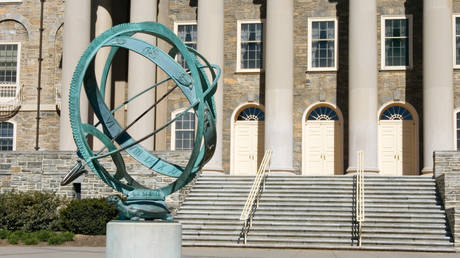
Fourteen people are facing serious criminal charges following a sprawling grand jury investigation into a drug network operating out of Penn State University fraternities. Pennsylvania Attorney General Dave Sunday and local law enforcement announced the takedown, exposing how a high-volume cocaine ring utilized campus houses as distribution hubs.
Investigators claim the operation ran heavily through the Delta Upsilon and Sigma Chi fraternity houses during 2023 and 2024. If you think campus drug dealing is just a couple of roommates selling small bags of weed, scale up your imagination. This was a structured enterprise moving kilos.
The Supply Chain and the Players
At the center of the indictment are two main suppliers: Agostino Abbatiello and Thomas Michael Robinson. According to the state attorney general's office, these individuals coordinated regular drug runs from New York and Philadelphia straight to State College.
Once the product arrived on or near campus, it needed processing. That is where the fraternity infrastructure came into play. The raw cocaine was brought to the Delta Upsilon and Sigma Chi houses, where members cut, weighed, and packaged it into smaller quantities for retail sale.
Out of the 14 defendants named in the sweep, 13 were students or recent students at Penn State. The lone exception was a student's father, Paul Robinson, who is accused of trying to hide evidence and obstruct the investigation by moving a safe stuffed with drugs and cash.
When Hazing Meets Drug Trafficking
The most disturbing detail to emerge from the grand jury presentment involves how the group handled labor. Cutting and bagging a schedule-two narcotic is messy work, so the older members outsourced it.
State officials revealed that fraternity pledges were routinely roped into cutting and packaging the cocaine. For these incoming recruits, handling illegal narcotics functioned as an unconventional and dangerous form of hazing or indoctrination.
You join a fraternity looking for brotherhood or networking, and you end up cutting coke on a kitchen table to prove your loyalty. It crosses the line from garden-variety college delinquency straight into organized felony crime.
The Charges and Institutional Fallout
The legal fallout is severe. Abbatiello, Robinson, and a few other key figures face heavy felony charges including corrupt organizations, criminal conspiracy, and dealing in proceeds of unlawful activity. Several other students face misdemeanor drug possession and paraphernalia charges.
The university reacted swiftly to the news. Penn State slapped Delta Upsilon with an interim suspension. Meanwhile, Sigma Chi operates unrecognised by the university anyway, highlighting a persistent grey market of off-campus student housing operating entirely outside institutional oversight.
Law enforcement tracked payments using a mix of hard cash and digital peer-to-peer payment apps, making the financial trail easier for forensic accountants to untangle. Investigators utilized confidential informants who bought nearly 74 grams of cocaine directly from Robinson during the probe, proving that local drug networks often hide in plain sight right next to lecture halls.
If you are tracking campus safety trends, this case proves that underground economies at major universities have evolved far past amateur hour. Protect your circles, keep your distance from high-risk environments, and remember that institutional oversight rarely catches everything before a grand jury has to step in.