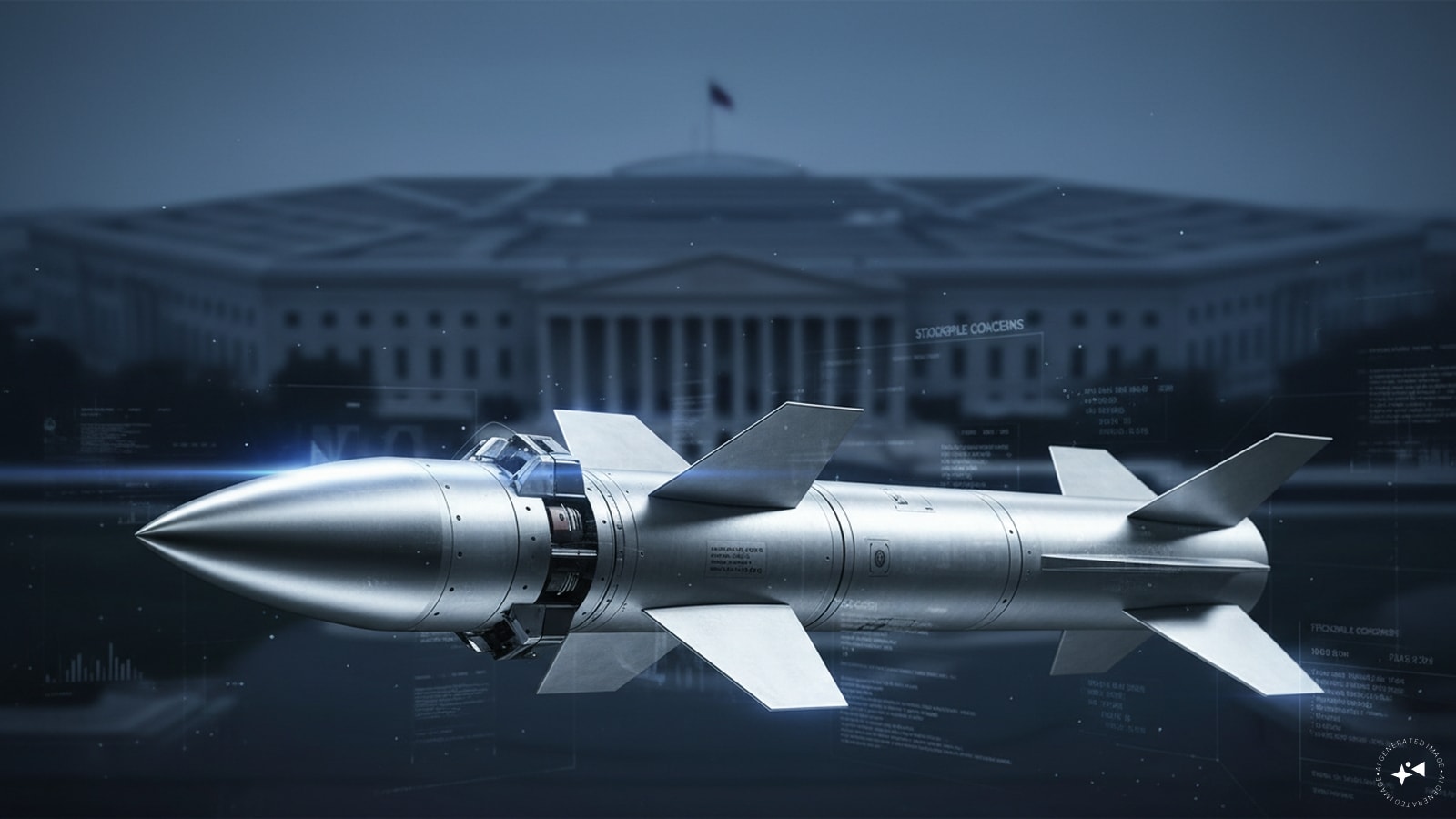
The Department of Defense recently finalized a staggering $20.7 billion multi-year agreement with RTX subsidiary Raytheon to manufacture Advanced Medium-Range Air-to-Air Missiles. This massive funding push aims to replenish dangerously depleted stockpiles and scale annual production past historic baselines. For anyone who has tracked military procurement for more than a week, the announcement reads less like a strategic triumph and more like an emergency admission of failure.
Decades of lean manufacturing, single-source vulnerabilities, and supply chain fragility have brought the Western military apparatus to a dangerous precipice. When a single contract for a proven weapon system equals the annual GDP of a small nation, it forces a hard look at why the defense industrial base was allowed to atrophy to the point of structural crisis. Recently making waves in related news: The Final Seconds Inside Flight 1073.
The Anatomy of a Stockpile Emergency
Missiles do not materialize overnight. Every Advanced Medium-Range Air-to-Air Missile requires a delicate choreography of microelectronics, solid rocket motors, guidance sections, and precision-machined titanium structures. For years, the Pentagon operated under a just-in-time procurement model borrowed from commercial automotive supply chains.
That philosophy works wonderfully when building sedans during peacetime. It fails catastrophically when applied to high-end munitions consumed at high rates in modern proxy conflicts and international deterrence efforts. Further details regarding the matter are covered by NPR.
Production lines had slowed down to comfortable, low-rate initial manufacturing speeds. Suppliers closed shop or consolidated. Skilled line workers retired or transitioned to other sectors. When geopolitical realities shifted and consumption outpaced output, the department discovered a terrifying truth. The shelves were practically bare, and the factories lacked the physical capacity to spin up quickly.
The $20.7 billion deal represents an effort to buy time and industrial capacity that should have been cultivated continuously over the past fifteen years.
Why Throwing Billions at the Problem Is Not Enough
Money solves many things, but it cannot instantly rewrite the laws of industrial physics. Writing a multi-year check to Raytheon locks in demand through the next decade, signaling to sub-tier suppliers that they can safely invest in factory floors and tooling. Yet, the bottleneck has never been exclusively about capital allocation.
Consider the specialized workforce required to build radar guidance systems and rocket propellants. These are not skills learned in a weekend workshop. They demand rigorous engineering discipline, certified technicians, and stringent quality assurance checks where a single micro-fracture in a casing means a catastrophic failure downrange.
Furthermore, the defense sector faces a severe scarcity of raw materials and specialized chemical precursors for solid rocket propulsion. When two major defense primes dominate the market, supply chain blockages at a single lower-tier component vendor can stall the entire assembly line. A twenty-billion-dollar contract cannot manufacture specialized chemical components if the industrial base for those precursors was outsourced or dismantled years prior.
The Global Ripple Effect
This massive production ramp-up is not solely for domestic stockpiles. Foreign military sales are deeply intertwined with the deal. International partners flying American-made fighters require steady allocations of these weapons to maintain credible regional deterrence.
When allied inventories drop, diplomatic leverage shifts. European and Asian partners watching their own stockpiles dwindle have exerted quiet yet intense pressure on Washington to clear export backlogs. By bundling domestic replenishment with international commitments under a single massive umbrella agreement, the Pentagon is attempting to create economies of scale that can satisfy multiple fronts simultaneously.
Still, prioritization remains a messy political reality. If production yields fall short of targets due to unexpected supply chain disruptions, difficult choices will inevitably emerge between supplying domestic wings and fulfilling allied contracts.
The Long Road to True Industrial Resilience
Treating this contract as a permanent fix would be a grave mistake. A multi-year procurement schedule is merely a bandage over systemic structural flaws in how military hardware is commissioned, tested, and built. True resilience requires structural diversification, maintaining warm production lines even during peacetime lulls, and enforcing rigorous oversight of Tier 2 and Tier 3 suppliers who shoulder the actual weight of manufacturing.
The real test of this historic agreement will not be measured by the headline dollar amount signed in Washington or Tucson. It will be measured by whether the missiles arrive on time, whether production bottlenecks at the sub-tier level are permanently resolved, and whether the defense industrial apparatus has finally learned that security cannot be bought on short notice.
The check has cleared. The factories are running overtime. The inventory deficit, however, will take years to erase.