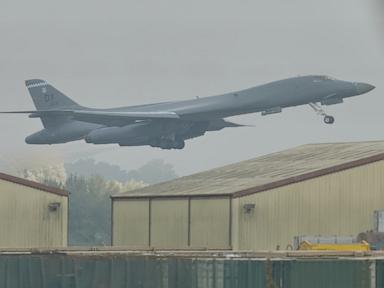
A string of perimeter breaches, mysterious drone swarms, and high-profile arrests across United States-run Royal Air Force stations in England has laid bare the fragile reality of modern military installation defense. When a British man was arrested and subsequently bailed following a security incident at a strategic military hub, mainstream wire services treated it as a routine police blotter item. They missed the forest for the trees. This was never just about one individual breaching a fence. It represents a systemic vulnerability that foreign intelligence services and hostile non-state actors are actively probing.
The anatomy of these security failures points to an uncomfortable truth. Traditional base defense relies heavily on perimeter deterrence, static guard towers, and reactive local constabulary support. That playbook belongs in the last century. Today, hostile actors utilize cheap commercial reconnaissance technology, cyber-probing, and localized sabotage cells to test response times and operational protocols. When multiple incidents occur in rapid succession—ranging from unauthorized drone activity over RAF Lakenheath to emergency aircraft relocations at RAF Mildenhall driven by credible external threats—the illusion of impenetrable sovereign enclaves evaporates entirely.
Decades ago, these bases operated as distant logistical backwaters, far removed from immediate geopolitical friction points. Those days are gone. The return of great power competition has turned rural English countryside lanes into front-line intelligence gathering zones. Hostile operatives do not need to scale fences with Hollywood-style gadgets when they can map security response postures from public roads or deploy autonomous systems just outside restricted airspace. The legal frameworks governing British airspace and counter-drone measures have struggled to keep pace with the operational tempo of modern threats, leaving base commanders in a bureaucratic limbo where shooting down an unauthorized drone often involves more red tape than tactical logic.
Consider the ripple effects across transatlantic defense logistics. When Washington has to scramble assets and elevate Force Protection Conditions to high alert levels—such as moving critical refueling tankers and strategic bombers out of striking range—the cost isn't just financial. It disrupts theater-wide readiness. Adversaries understand this dynamic completely. They do not need to successfully strike a hanger to achieve their objective; forcing a perpetual state of hyper-vigilance and resource drain is victory enough. Every security breach forces a defensive posture adjustment, tying down manpower and straining host-nation counterterrorism resources that are already stretched thin.
The local policing response, while professional, highlights the friction inherent in joint-jurisdiction operations. British counterterrorism police handle the arrests, yet the facilities themselves house sensitive American strategic assets. Navigating the legal threshold between domestic criminal trespass and state-sponsored espionage under updated national security legislation remains an evolving challenge. Prosecutors must balance the absolute necessity of open transparency in a democratic society against the imperative of protecting classified military methods and intelligence sources. Too often, this tension results in opaque judicial proceedings and brief statements about suspects being released on bail, leaving the public entirely in the dark regarding the true magnitude of the danger.
Fixing this structural rot requires more than patching holes in chain-link fences or adding another layer of razor wire. Military planners must pivot toward active, multi-layered electronic counter-measures and integrated airspace denial systems that function seamlessly alongside local civil authorities. Until the alliance closes the gap between legacy perimeter defense and modern asymmetric threats, these rural English airbases will remain prime targets in an invisible war