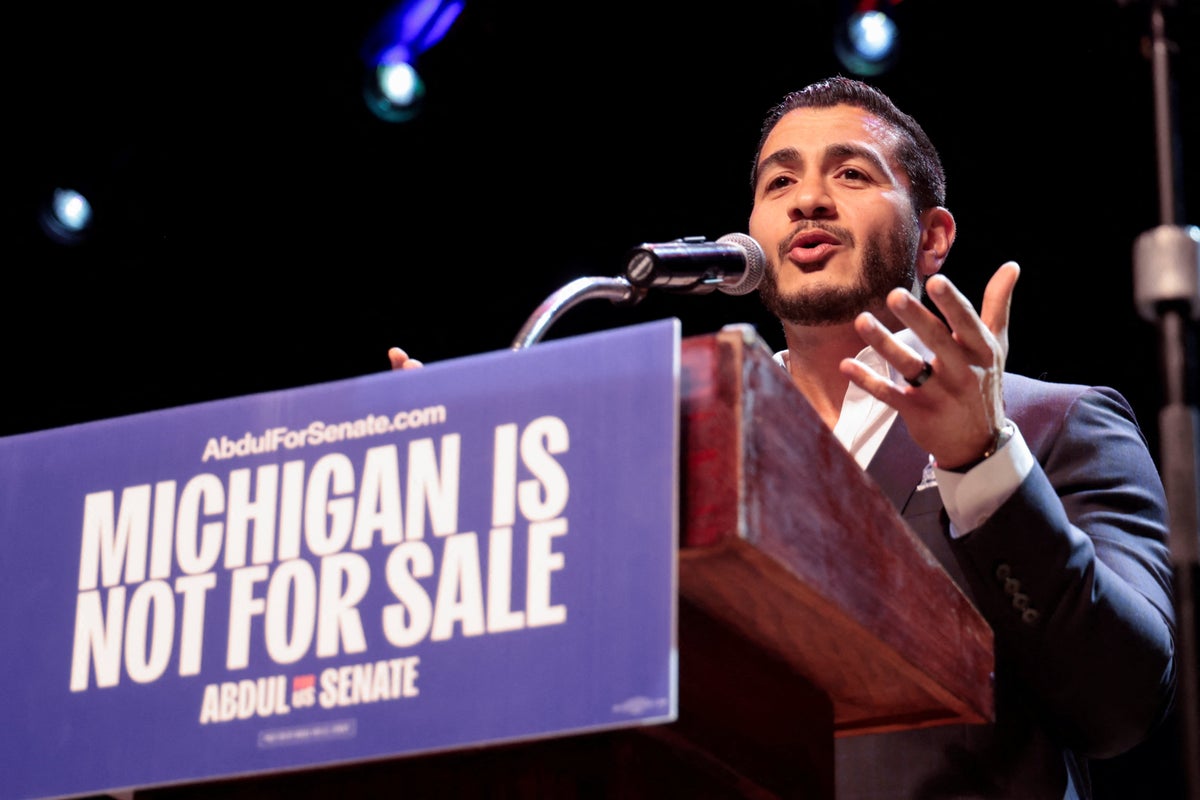
The ballot counters in Detroit were still staring at spreadsheets when the true weight of Tuesday night finally dropped. Across crucial legislative contests and a marquee Senate showdown in Michigan, progressive candidates delivered an undeniable shockwave to the political establishment. Headlines will declare it a split decision, a night where the left secured high-profile wins yet failed to sweep the board clean. That assessment misses the deeper structural earthquake. What happened on Tuesday was not a series of isolated victories, but a systemic rejection of the high-dollar playbook that has governed party politics for a generation.
Consider the numbers coming out of Michigan's Senate primary. Abdul El-Sayed, running on an unvarnished populist platform that included Medicare for All and fierce campaign finance reform, squared off against U.S. Representative Haley Stevens. Stevens carried the full institutional weight of the Washington apparatus, backed by tens of millions of dollars in outside spending. Political action committees, including massive outlays from groups like the American Israel Public Affairs Committee, flooded the airwaves to protect the moderate incumbent. By any conventional metric of modern campaigning, El-Sayed should have been buried under an avalanche of media saturation.
He won anyway.
The narrow margin—secured after a nail-biting count that dragged into Wednesday morning—reveals a party torn down the middle, yet it signals something much more dangerous for party bosses. When voters pull the lever for a candidate who explicitly rejects corporate money despite a seventy-million-dollar spending barrage against them, the traditional relationship between donor class approval and electoral viability fractures. El-Sayed’s victory, alongside progressive House wins by figures like William Lawrence and Donavan McKinney in Michigan battlegrounds, demonstrates that the left's organizing machinery has matured far beyond localized college-town strongholds.
Yet, treating Tuesday as an unmitigated progressive triumph ignores the fierce counter-currents operating beneath the surface. In various other legislative battlegrounds across the map, pragmatic and moderate candidates held their ground or pushed back against progressive challengers, proving that the center of the party retains deep, stubborn roots among older and more risk-averse primary electorates. The establishment did not get routed everywhere. They adapted, fought tooth and nail, and in several districts, successfully framed the left’s policy ambitions as a general election liability.
This tension exposes the central strategic crisis facing Democrats as they look toward November. The party’s moderate wing continues to warn that uncompromising ideological purity hands ammunition to opponents in crucial swing districts. They argue that survival in a polarized landscape requires broad-tent pragmatism, a willingness to work alongside corporate stakeholders, and candidates who project institutional safety above all else. Conversely, the progressive base argues with mounting empirical backing that triangulation and cautious moderation fail to inspire the very working-class voters required to build a durable majority.
When millions of dollars in attack ads fail to suppress a grassroots surge, the old rules of political gravity stop working. Voters in industrial heartlands are not looking for incremental adjustments to an economic order they perceive as fundamentally rigged. They are responding to structural critiques, even when those critiques terrify party strategists sitting in Washington conference rooms.
The morning after brought the inevitable calls for unity. Defeated incumbents issued statements offering support, and nominees stood side-by-side to emphasize that the broader threat in the general election supersedes primary wounds. But papering over these deep ideological fractures with boilerplate rhetoric will not resolve them. Tuesday proved that the battle for the soul of the party is no longer an intellectual exercise fought in policy journals or convention floor debates. It is an active, bruising civil war being waged precinct by precinct, and the old guard no longer commands the undisputed loyalty it once assumed was its birthright.