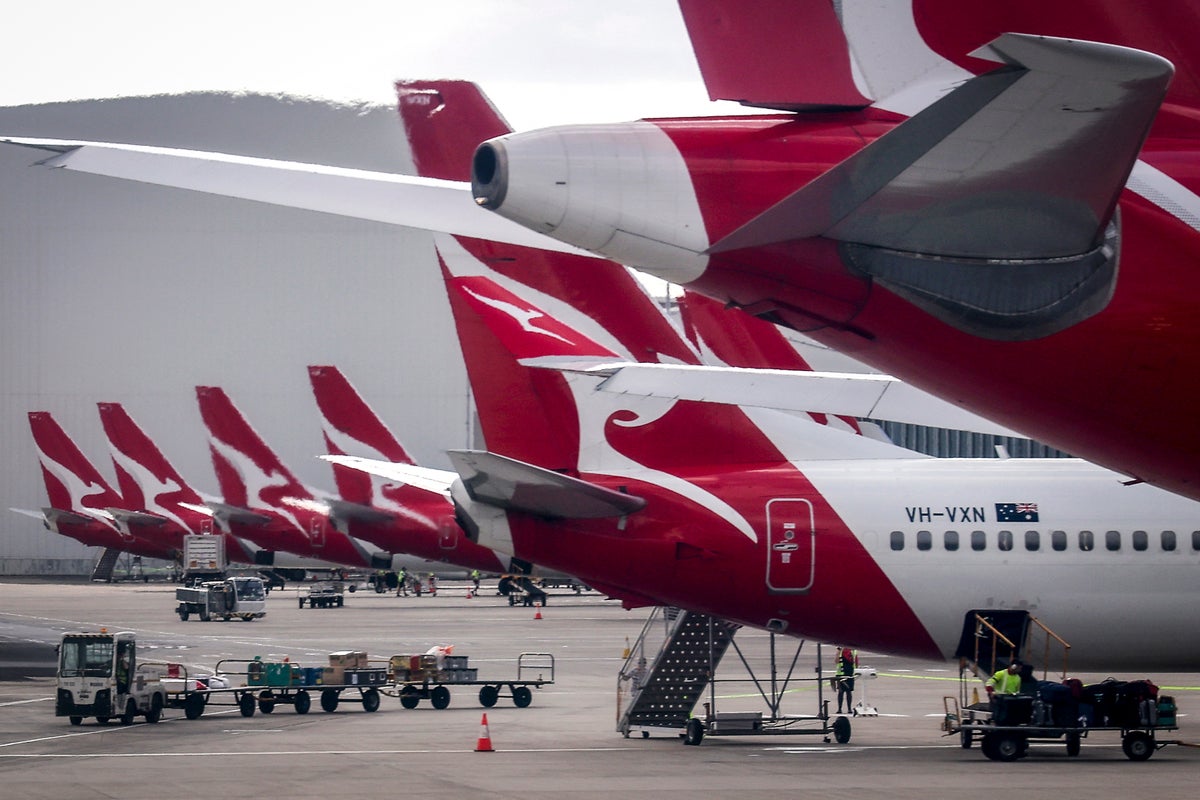
The corporate playbook for managing multi-billion-dollar airlines relies on a simple, ruthless equation: extract maximum operational flexibility from front-line workers while keeping headline labor costs flat. When Qantas Airways ground services personnel overwhelmingly voted in favor of industrial action, securing a staggering 97% mandate through the Transport Workers’ Union, it exposed a fracture line that executive leadership has spent years trying to pave over with public relations campaigns. This is not merely a routine industrial dispute over wage indexes. It is the culmination of a structural restructuring strategy engineered during the pandemic era that systematically divided a unified workforce into tiered economic classes, leaving thousands of baggage handlers, freight operators, and regional support staff behind while corporate profits surged and board members approved generous internal remuneration packages.
To understand why thousands of Qantas Ground Services workers reached a breaking point, one must look closely at the architecture of modern aviation subsidiaries. Years ago, under previous executive stewardship, the airline established specialized subsidiary arms designed to isolate costs from the mainline carrier. Workers under these subsidiary structures perform identical or parallel operational duties—managing cargo for Qantas Freight or servicing regional Q-Link flights—yet they do so under separate enterprise agreements that offer inferior hourly rates, fewer full-time conversions, and minimal career progression. Over successive years of inflation and cost-of-living pressure, these artificial corporate boundaries translated into severe real-term pay cuts for the people physically loading aircraft bellies and managing tarmac logistics in stifling summer heat.
The timing of the strike ballot laid bare the profound disconnect between the executive suite and the tarmac. Just days before the vote results were finalized, Qantas reported its annual financial results, showcasing multi-billion-dollar underlying profits alongside warnings that ticket prices might need to rise to offset external cost pressures like regional fuel volatility. Union leadership seized on the glaring optics of the financial statements, pointing out that while the airline reported robust earnings and the board secured significant internal pay increases, the workforce keeping the freight and regional networks operational was expected to accept sub-inflationary compensation packages. For an organization that spent millions defending unlawful mass outsourcing practices in federal courts—a legal defeat that resulted in massive financial penalties for illegal contractor replacements—the persistence of low-cost subsidiary models signals that executive strategy has pivoted toward containment rather than reconciliation.
Management's immediate response has relied on the standard crisis management manual. A spokesperson for the airline insisted that ongoing discussions through Australia’s Fair Work Commission remain constructive and emphasized that the carrier has developed comprehensive contingency plans to insulate passengers from disruption. Yet these corporate assurances ring hollow to employees who have spent years navigating wage freezes followed by modest, rigid annual increases that fail to match the real cost of living in major Australian metropolitan hubs. The core demand from the workforce is not simply a percentage bump on a paysheet; it is structural remediation. Workers are calling for an end to the multi-tiered employment system, demanding that scattered work groups be folded back under a unified corporate banner rather than being pitted against one another through competitive outsourcing models.
Safety concerns have further intensified the friction on the ground. Health and safety representatives operating within New South Wales recently served the airline with multiple provisional improvement notices following reported incidents and structural safety evaluations at major freight hubs, pointing to acute pressures under lean staffing models. When operational throughput is prioritized above adequate rest periods and safe staffing ratios, the margin for error on a busy tarmac narrows dangerously. Ground operations are high-velocity, high-hazard environments where fatigue management is just as critical as it is for the pilots sitting on the flight deck. Treating ground handling as an easily replaceable commodity ignores the specialized technical expertise required to turn around heavy commercial aircraft safely within tight turnaround windows.
As both sides head back to the Fair Work Commission for heavily scrutinized conciliation talks, the broader implications for the Australian travel market loom large. If negotiations collapse and protected industrial action proceeds, travelers accustomed to post-pandemic schedule reliability could face sudden disruptions across regional and freight networks. More importantly, the outcome of this dispute will establish a vital precedent for how legacy carriers treat outsourced and subsidiary labor in an era of persistent inflation and high travel demand. Qantas can continue to lean on legal maneuvering and contingency logistics to keep planes moving in the short term, but patching over a resentful, financially squeezed workforce is a strategy with an expiration date.