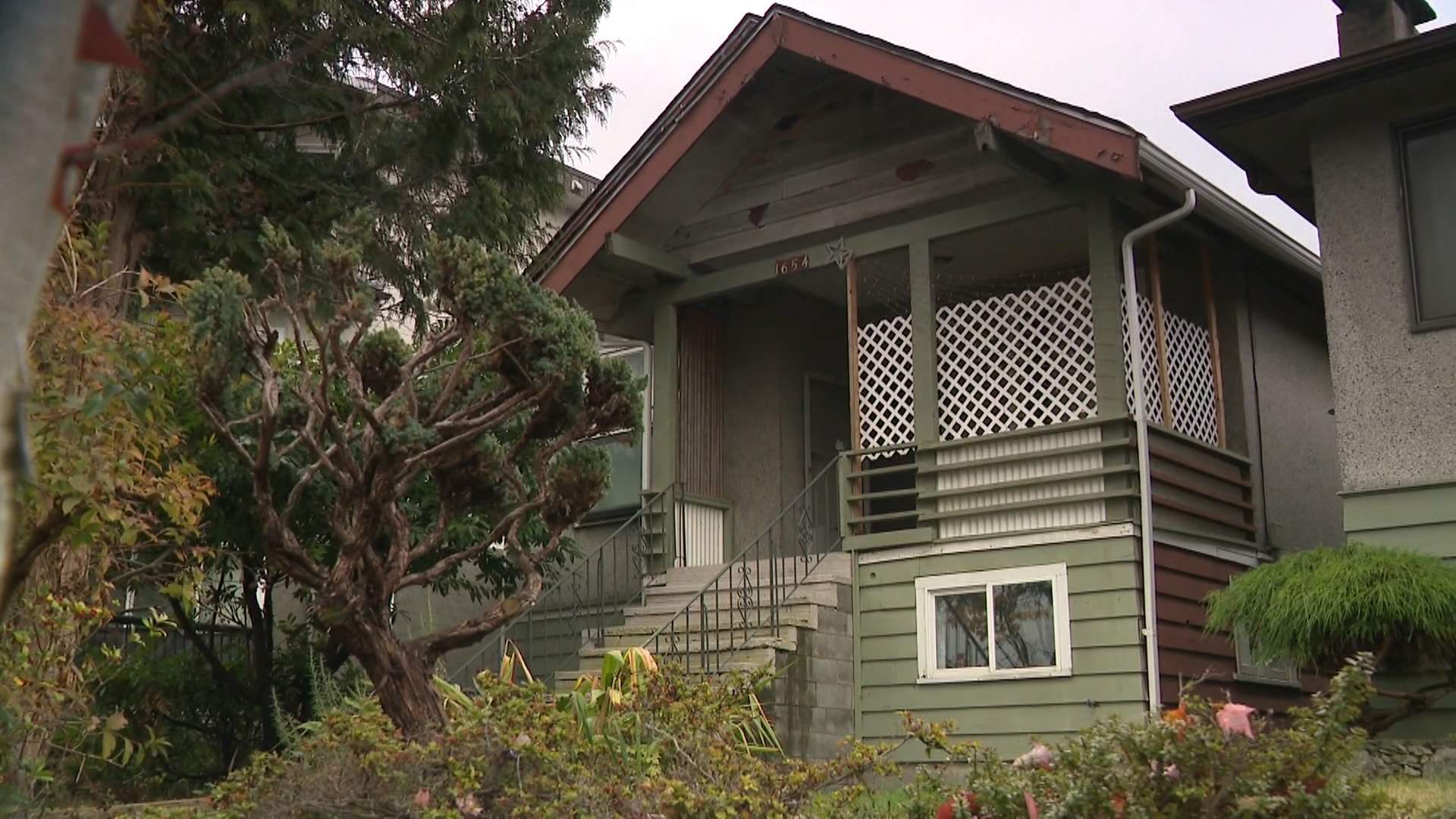
Dozens of Palestinians in Jericho were recently forced out of their homes after Israeli settlers moved in and claimed eight residential properties, marking a sharp escalation in how land control is being contested in the Jordan Valley. While initial headlines treated the incident as a sudden, isolated flare-up, the reality on the ground points to something far more methodical. The seizure of these eight homes sits at the intersection of obscure property law, military zoning rules, and a decades-long struggle over who controls the eastern edge of the West Bank.
To understand how eight families can lose their homes in a matter of hours without a conventional military invasion, you have to look past the immediate confrontation and examine the machinery operating behind it. Meanwhile, you can explore related events here: Stop Calling That Texas Victory a Fluke When It Actually Proved Redistricting Is Broken.
The Anatomy of a Property Seizure
Most outside observers imagine land seizures in the West Bank as loud, chaotic events involving bulldozers and armed clashes. Sometimes they are. Increasingly, however, the most permanent shifts in demographic control happen through paperwork, private security contractors, and legal ambiguities left over from three different governing empires.
In Jericho and its surrounding agricultural outskirts, land ownership records are a patchwork of Ottoman-era deeds, British Mandate surveys, Jordanian state registries, and post-1967 Israeli military orders. This bureaucratic tangle creates gray zones that well-funded settler organizations have spent years learning how to exploit. To see the bigger picture, check out the recent analysis by TIME.
When a group moves into eight homes simultaneously, it is rarely a spontaneous act. These operations typically follow months of quiet research in land registries, the acquisition of disputed or partial ownership claims, and coordination with private security firms. By the time residents realize their roofs are being occupied, the newcomers have already changed the locks, installed surveillance cameras, and positioned themselves as plaintiffs in a civil dispute rather than trespassers in a criminal one.
That distinction matters enormously. Once a property takeover is framed as an ongoing civil ownership dispute, Israeli police and military forces deployed to the area routinely treat it as a matter for the courts. Instead of evicting the people who just arrived, security forces often establish a buffer zone to "keep the peace"—effectively locking the original Palestinian residents out while litigation drags on for years.
Why Jericho Matters More Than the Headlines Suggest
Jericho is often viewed internationally as one of the quieter cities in the occupied territories. Located near the Dead Sea and the Jordanian border, it was the first city handed over to Palestinian Authority administrative control under the Oslo Accords in 1994. For decades, its relative calm made it a symbol of what limited Palestinian self-rule could look like.
That reputation masks a harsh geographic reality.
Under the Oslo framework, Jericho itself was designated as Area A, meaning the Palestinian Authority holds nominal civil and security control. Yet the city does not exist in a vacuum. It is completely surrounded by Area C—the roughly 60 percent of the West Bank where Israel retains full military and civil authority, including control over planning, zoning, and land registration.
The Strategic Value of the Jordan Valley
Jericho sits at the southern gateway of the Jordan Valley, a fertile, sparsely populated corridor that accounts for nearly a third of the West Bank. Control over this strip carries massive strategic weight for several reasons:
- Border isolation: Whoever controls the Jordan Valley controls the entire eastern perimeter of the West Bank, cutting off any future Palestinian state from a direct, unmonitored border with Jordan.
- Water and agriculture: Despite its arid climate, the region sits atop vital underground aquifers and spring systems, including Ein as-Sultan in Jericho, which have sustained intensive farming for millennia.
- Urban containment: By establishing footholds around the edges of Area A enclaves like Jericho, settler outposts can restrict urban expansion, turning cities into isolated islands unable to grow naturally.
When eight homes change hands on the margins of Jericho, the immediate human cost falls on the dozens of displaced residents—parents, children, and elderly relatives suddenly left without shelter or personal belongings. The broader strategic effect is the tightening of a geographic ring around one of the West Bank's most important urban centers.
How Legal Mechanisms Replace Bulldozers
To appreciate the sophistication of modern land takeovers, consider how the legal framework operates in practice. Suppose—as a hypothetical example—a family has lived in a house on the outskirts of Jericho since the 1970s under a long-term lease issued by Jordanian authorities prior to 1967, or on land whose original title was never formally settled during the British Mandate.
In a standard legal system, half a century of continuous, unchallenged residence creates overwhelming property rights. In the occupied West Bank, however, two parallel legal tracks exist side by side. Palestinian residents are subject to Israeli military law and local civil courts with strictly limited jurisdiction, while Israeli citizens living in the same territory are governed by Israeli domestic civil law.
This dual system creates structural asymmetries that play out repeatedly in property disputes:
- The Custodian of Absentee Property: Following the 1967 war, Israel placed land belonging to Palestinians who fled or were outside the territory at the time under the control of a state custodian. While Palestinians cannot reclaim pre-1948 properties inside Israel under similar absentee laws, Israeli organizations regularly use pre-1967 Jewish ownership claims to demand the eviction of Palestinian families in East Jerusalem and parts of the West Bank.
- Freeze on Palestinian Land Registration: In 1968, Israeli military authorities halted the formal land settlement and title registration process for Palestinians in the West Bank. Without modern, undisputed title deeds, families rely on tax receipts, Ottoman-era certificates, or oral testimony—evidence that can be challenged in court by well-financed legal teams.
- Retroactive Authorization: Even when settlers occupy structures or land without prior government permits, political pressure frequently leads authorities to freeze demolition orders or initiate retroactive legalization procedures, turning an unauthorized takeover into a recognized foothold.
For the dozens of Palestinians displaced in Jericho, fighting this machinery requires hiring specialized lawyers, translating archival documents from Turkish or Arabic into Hebrew, and paying exorbitant court fees—all while living out of suitcases in relatives' homes.
The Security Vacuum and the Limits of Palestinian Authority Control
A recurring question from observers following the Jericho displacements is straightforward: where were the Palestinian security forces?
The answer exposes the core weakness of the post-Oslo governance model. While the Palestinian Authority maintains police stations inside central Jericho, its personnel are strictly prohibited from operating in Area C and face severe operational limits even in the transitional zones bordering Area A.
If Palestinian police attempt to intervene in a confrontation involving Israeli citizens, they risk direct armed engagement with the Israel Defense Forces, which hold overriding security jurisdiction across the entire West Bank. In practice, Palestinian officers are forced to stand down whenever Israeli settlers and soldiers arrive on a scene.
This dynamic leaves local residents caught between two authorities. The Palestinian Authority lacks the legal jurisdiction and military capacity to protect them from Israeli citizens, while the Israeli military prioritizes the physical protection of Israeli nationals—even when those nationals have just entered Palestinian homes without a court eviction order.
The Counter-Argument From Settler Organizations
Groups that orchestrate or support these property takeovers reject the characterization of their actions as illegal seizures. From their perspective, they are reclaiming historical heritage, asserting the right of Jews to live anywhere in the biblical Land of Israel, and enforcing property rights they claim were unlawfully stripped away during the Jordanian administration between 1948 and 1967.
Proponents argue that if private land was purchased by Jewish individuals or trusts prior to 1948, subsequent decades of Palestinian residency do not erase that underlying title. They also contend that a stronger Israeli civilian presence in the Jordan Valley is essential for national security, serving as a buffer against smuggling and militant infiltration across the Jordanian border.
Critics, including Israeli human rights organizations and international legal scholars, counter that applying property restitution selectively—allowing Jewish claims from before 1948 while barring Palestinian claims from the exact same era—violates basic principles of equal treatment under the law. Furthermore, under the Fourth Geneva Convention, an occupying power is prohibited from transferring its civilian population into the territory it occupies, a standard affirmed repeatedly by the United Nations Security Council and the International Court of Justice.
The Quiet Economics of Displacement
Beyond ideology and geopolitics, the takeover of eight homes in Jericho highlights an often-overlooked economic reality. Every displaced family loses far more than four walls and a roof.
In rural and semi-urban parts of the Jordan Valley, homes are tightly integrated into household livelihoods. Backyards hold citrus trees, vegetable plots, water cisterns, and storage sheds for agricultural tools. Losing access to a home often means losing an entire season's harvest, livestock, and equipment accumulated over decades.
Meanwhile, the cost of replacing housing in Jericho has climbed steadily. Because Area C restrictions prevent the municipality from expanding outward into surrounding open land, real estate inside the shrinking boundaries of Area A has become artificially scarce and expensive. Working-class families pushed out of peripheral neighborhoods rarely have the capital to buy or rent comparable space in the city center.
The result is a slow, grinding form of economic attrition. Families are forced into overcrowded apartments, dependent on emergency aid from local charities or international agencies whose budgets are already stretched thin by crises across the region.
Why Small Takeovers Signal Larger Shifts
History in the West Bank shows that major demographic transformations rarely begin with massive master plans announced at press conferences. They begin with small, tested footholds—a cluster of caravans on a hilltop, a fenced-off spring, or eight residential homes quietly occupied on the edge of an ancient city.
Once a foothold is established, infrastructure follows. A temporary security detail becomes a permanent military post. A dirt track gets paved for patrol vehicles. Water and electricity lines are connected to ensure the safety of the new residents. Within five years, what began as a contested eviction of a few dozen people becomes an entrenched neighborhood that diplomats treat as an irreversible "fact on the ground."
In Jericho, the eight seized homes represent a critical test case of whether this model can be applied directly against the margins of an Area A city long considered insulated from settlement expansion. If those takeovers remain unchallenged in court and unreversed by political intervention, they will serve as a blueprint for dozens of similar operations across the Jordan Valley.
For the families standing outside their former front doors with keys that no longer turn the locks, the geopolitical implications are secondary to a much simpler reality: the legal system meant to adjudicate their rights only begins to move after their lives have already been dismantled.