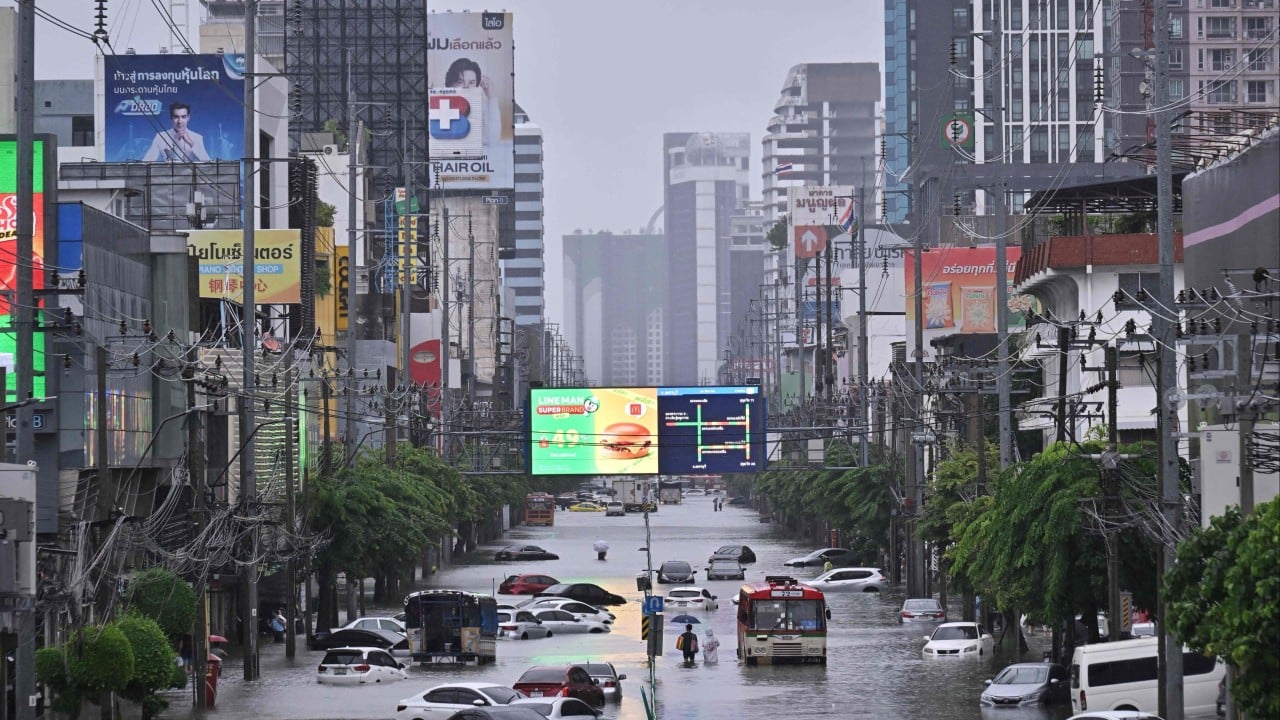
Crisis exposes the fragile underbelly of regional infrastructure and cross-border financial systems. When natural disasters strike metropolitan hubs like Bangkok, or when high-stakes currency fraud surfaces in regional financial centers, the public narrative usually fixates on the immediate shock. Yet, the real story lies in the cascading secondary systems that fail under pressure. Emergency logistics collapse, bureaucratic relief systems become targets for coordinated identity fraud, and transnational financial operations weaponize legal loopholes. Understanding these vulnerabilities requires looking past the superficial headlines to examine the structural decay beneath.
The Mechanics of Urban Disaster Vulnerability
Urban centers built on low-lying deltas face a compounding math problem. When prolonged monsoon rains overwhelm drainage canals, water does not merely accumulate; it paralyzes economic arteries. Municipal authorities confronting severe inundation are forced to declare disaster zones as hundreds of thousands of households find themselves displaced or isolated.
However, the physical water is only half the battle. The digital and administrative response structures often prove equally fragile. Recent emergency declarations in Bangkok laid bare how quickly relief mechanisms can be overwhelmed. When cash distribution and compensation funds are mobilized to assist affected populations, bad actors immediately probe for administrative blind spots. Investigators recently uncovered sophisticated identity fraud rings where applicants manipulated residential registrations to siphon compensation funds meant for displaced families.
This phenomenon reveals a harsh reality about crisis management. Speed often contradicts security. Governments trying to disburse emergency funds rapidly to citizens queuing outside municipal offices inadvertently create windows of opportunity for organized fraud networks. The vulnerability is systemic: public agencies lack integrated biometric verification to cross-reference claims in real time, leaving emergency budgets exposed to exploitation precisely when state resources are stretched to their absolute limit.
Transnational Fraud and the Myth of Secure Capital
While municipal authorities grapple with disaster relief integrity, financial crime hubs operate on an entirely different plane across Southeast Asia. The arrest of high-net-worth individuals involved in passing counterfeit high-denomination notes—such as the case involving an Indonesian businessman ensnared in a forged currency scheme at a regional casino—highlights the dark side of cross-border capital movement.
In these legal battles, defense attorneys frequently argue that their clients were duped intermediaries rather than intentional counterfeiters. This defense points to a wider truth about modern financial crime. Sophisticated syndicates rarely rely on crude counterfeiting; instead, they embed forged instruments into legitimate liquidity streams, exploiting the speed of high-value transactions. Casinos, private wealth managers, and informal exchange houses often prioritize liquidity velocity over exhaustive provenance checks, creating an environment where fake or illicitly sourced funds can travel multiple hops before detection occurs.
The intersection of these two crises—disaster relief exploitation on the ground and high-value currency fraud in financial centers—demonstrates that modern economic security is only as strong as its most neglected node. Whether it is a local municipal office distributing flood relief or an international gaming floor accepting high-value bearer instruments, institutional gatekeepers face identical pressures. They must balance the demand for operational speed against the imperative of rigorous verification. Until structural reforms bridge these gaps, regional crises will continue to serve as stress tests that institutional architecture routinely fails.