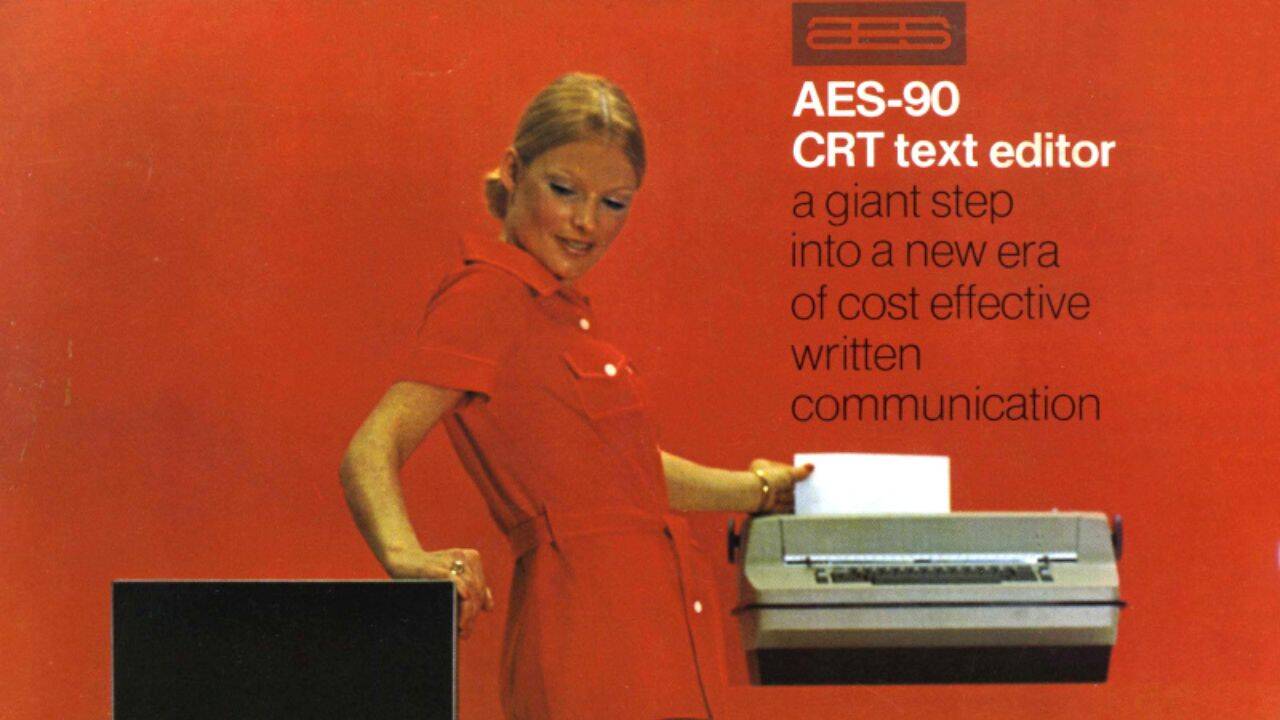
Old hardware has a funny way of surviving long after everyone forgets why it mattered. Take the rare AES Alphaplus 12. This piece of Canadian computing history spent nearly 45 years tucked away in an Edmonton barn, sitting quietly inside its original shipping crate until researchers finally cracked it open.
Most tech history focuses on Silicon Valley garage startups or corporate titans like IBM and Apple. But the edges of the early personal computing boom hide stranger, more regional stories. This barn find gives us a direct window into Canada's domestic tech ambitions during an era when office automation was wild west territory.
What Was the AES Alphaplus 12
Back in the late 1970s and early 1980s, AES Data was a major player in the word-processing space. Based in Montreal, the company grew fast, eventually competing head-to-head with international giants. They built dedicated text-processing hardware long before standard desktop PCs took over offices everywhere.
The Alphaplus 12 model itself remained something of an ghost in the archives. Documentation is scarce, specifications are murky, and surviving units in the wild are exceptionally hard to find. That obscurity is precisely why a sealed unit turning up in Alberta caused genuine excitement among hardware preservationists.
The machine originally had ties to the Northern Alberta Institute of Technology (NAIT) before vanishing into private agricultural storage. For four decades and a half, it gathered dust while the rest of the tech world transitioned through three generations of internet evolution.
The Journey to Carleton University
Instead of sitting on a private shelf or ending up in a scrap metal pile, the system made its way to Carleton University's School of Computer Science. Carleton hosts a respected Vintage Computing Collection, making it an ideal home for an artifact requiring delicate handling and historical context.
When the university announced a live public unboxing event, retro computing enthusiasts tuned in to see what condition the internal components were in after enduring decades of prairie temperature swings inside a barn. Sealed shipping boxes from that era are time capsules. They protect components from humidity and curious hands, but they also trap moisture and degrade rubber belts or power supplies over decades.
Opening the box wasn't just about showing off old circuit boards. It offered a chance to map out proprietary components, check memory configurations, and document keyboard layouts that disappeared from the market decades ago.
Why Vintage Hardware Preservation Matters Now
You might wonder why anyone cares about a forgotten word processor from a Canadian institution. Modern machines render these systems obsolete a million times over. Yet, digital archaeology is about more than nostalgia.
Early hardware design choices reveal how engineers solved massive constraints with minimal computing power. When you look at machines like the AES Alphaplus 12, you see physical manifestations of an era when local companies tried to build sovereign tech industries from scratch. Companies like AES didn't just build office tools; they trained a generation of Canadian software developers, engineers, and technicians.
Barn finds remind us how fragile early digital heritage really is. A single structural leak in an Edmonton outbuilding could have wiped out one of the few remaining examples of this hardware. Preserving these devices ensures future programmers understand the physical evolution of the tools they use every day.
If you stumble across old tech equipment tucked away in a basement or an outbuilding, don't just toss it out. Reach out to local university computer science departments or museum archives. You might be sitting on a missing piece of technological history.