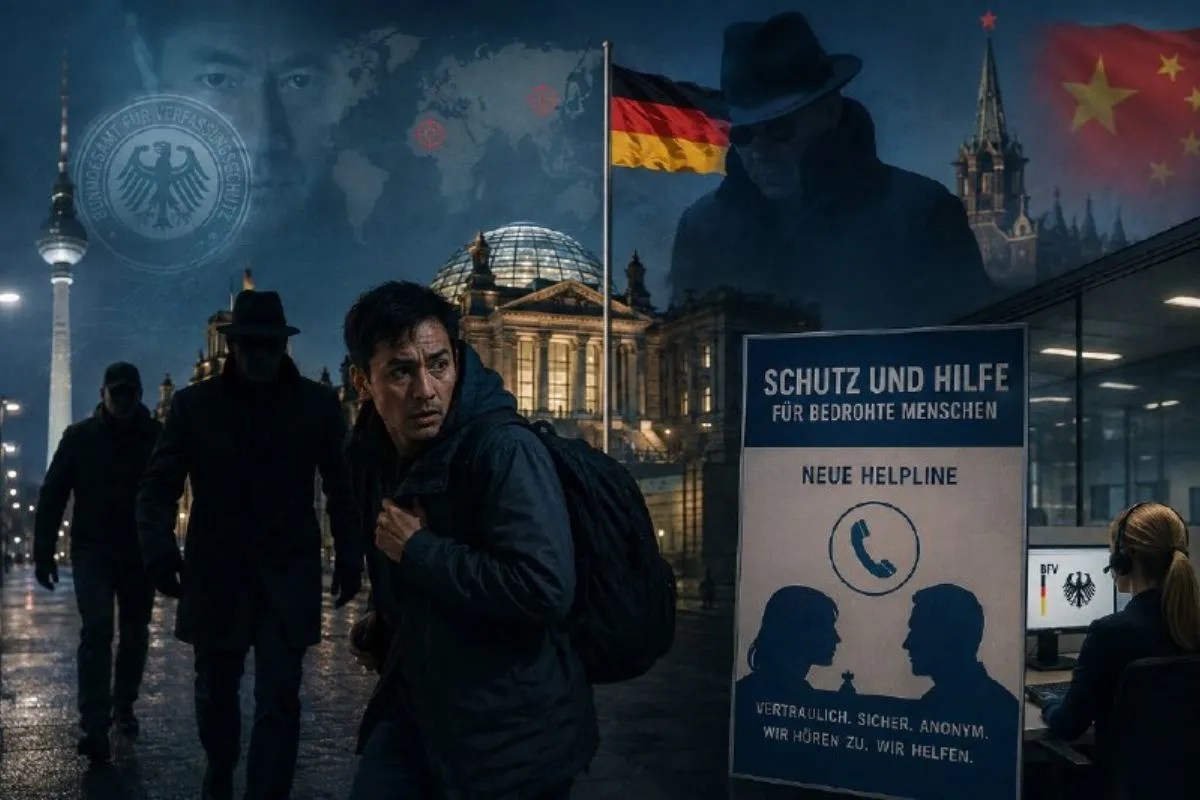
Exiled dissidents, independent journalists, and activists living within German borders are facing an escalating campaign of transnational repression, surveillance, and physical intimidation orchestrated by foreign intelligence operatives from authoritarian states like Russia, China, and Iran. In response to this expanding shadow war, Germany's domestic intelligence agency, the Federal Office for the Protection of the Constitution (BfV), has rolled out a dedicated helpline and a comprehensive 16-page advisory brochure to protect vulnerable exiles.
Berlin's new initiative is an admission of a sobering reality. Traditional European asylum policies assumed that once a political refugee crossed Western borders, the long arm of their persecutors would stop. That assumption is dead. Foreign agents routinely operate inside European capitals, treating democratic territory as a hunting ground. Meanwhile, you can explore related stories here: The Anatomy of Imperial Aggression Why Multilateral Containment Fails Without Structural Leverage.
The Mechanics of Transnational Stalking
State-sponsored intimidation rarely starts with a kidnapping plot. It begins with digital footprints, quiet surveillance, and psychological wear-and-tear designed to isolate the target.
Exiled critics find their encrypted communications compromised. Their relatives back home receive unexpected visits from state security officers. Local communities in German cities, supposedly safe havens, harbor informers who report on protest attendance and daily movements. To see the bigger picture, check out the detailed article by TIME.
This environment creates constant paranoia. For years, victims had nowhere to turn that felt safe. Local police departments often lacked the specialized counter-intelligence training required to connect a local act of harassment to a foreign state apparatus.
The BfV's new outreach program aims to bridge that institutional gap. By establishing a direct reporting line, domestic intelligence hopes to map out foreign operative networks that treat European soil as an extension of their domestic security zones.
Expanding the Spy Agencies' Toolkit
The timing of this defensive push coincides with a major legislative shift in Berlin. German authorities are moving to grant both the BfV and the foreign intelligence service, the BND, significantly broader powers.
For decades, post-war German legal frameworks placed strict firewalls around intelligence agencies to prevent domestic overreach. Those restrictions are buckling under the weight of modern hybrid warfare. Proposed legal reforms would allow intelligence operatives to execute targeted communication hacks, disrupt hostile cyber operations, and actively counter foreign adversaries before an attack materializes.
Critics worry about civil liberties. Giving domestic spies offensive cyber tools and broader surveillance mandates opens doors that are difficult to close. Yet security officials argue that passive defense is no longer viable against adversaries who respect neither borders nor international norms.
The Limits of State Protection
A helpline and a brochure will not stop a determined state actor. Intelligence agencies face an asymmetric challenge. An authoritarian regime can deploy infinite resources, diplomatic passports, and proxy networks to track a single exiled journalist or human rights lawyer.
Furthermore, many exiles harbor a deep, culturally conditioned distrust of security services. Asking refugees from nations with brutal police states to voluntarily call a government intelligence hotline requires an immense leap of faith. Convincing them that their data will remain secure and that the agency actually possesses the capability to shield them from retaliation is an uphill battle.
Berlin is betting that transparency and direct engagement will build that necessary trust. The alternative is conceding European streets to foreign hit squads and intelligence handlers. As the front lines of global authoritarianism shift inward, the success of Germany's new defense strategy will determine whether European sanctuary remains a reality or becomes an empty promise.