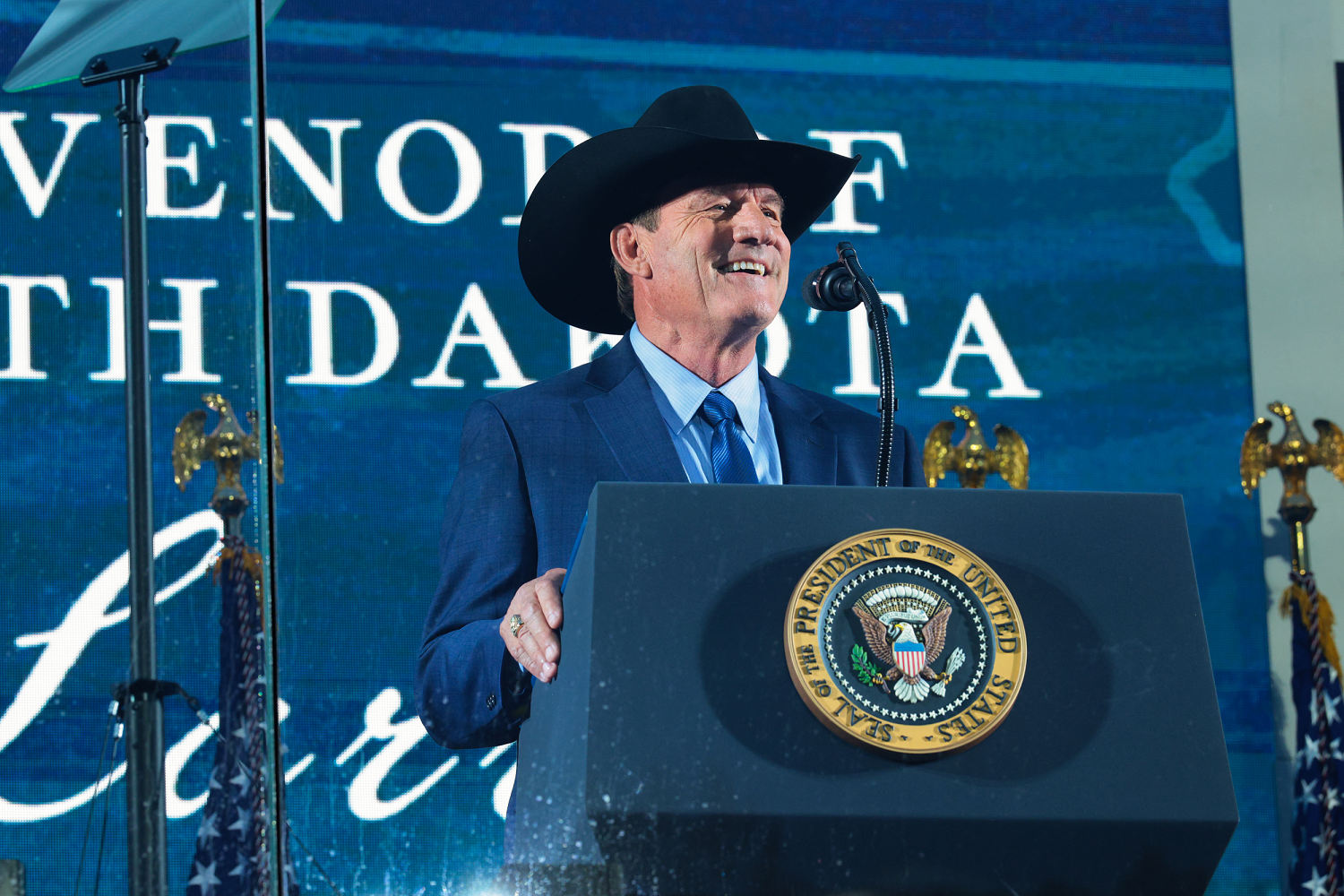
South Dakota Governor Larry Rhoden decisively secured his place at the top of the Republican ticket by crushing businessman Toby Doeden in the state's historic primary runoff. Incumbent Larry Rhoden turned a harrowing second-place finish in the June 2 primary into a commanding 72 to 28 percent blowout in the July runoff. This contest answered a critical question about modern conservative politics. Can an establishment executive survive a well-funded populist insurgent who campaigns on anti-establishment fervor and dramatic tax promises?
The answer is a resounding yes, provided the institutional candidate can consolidate the fractured base of a four-way primary.
To understand how Rhoden orchestrated this massive political turnaround, you have to examine the mechanics of South Dakota's unique electoral math.
The Anatomy of a Primary Shock
The initial June primary was nothing short of chaotic. South Dakota law requires a candidate to clear a 35 percent threshold to win a primary outright. When four prominent Republicans split the vote, nobody came close. Doeden grabbed 31 percent, Rhoden limped in at 25 percent, Representative Dusty Johnson pulled 23 percent, and House Speaker Jon Hansen took 21 percent.
For a sitting governor who assumed office in January 2025 after former Governor Kristi Noem departed for the Department of Homeland Security, finishing behind a political newcomer was a flashing red light.
Doeden capitalized on public frustrations over property taxes. He pumped millions of dollars of his own wealth into the race, painting himself as an outsider ready to dismantle a corrupt political establishment. He promised aggressive property tax elimination. He railed against state projects like the proposed $650 million replacement for the state penitentiary, labeling it a luxury for criminals.
The strategy worked brilliantly for a primary electorate seeking an ideological grenade thrower. It put Rhoden on the defensive.
Consolidation and the Practical Majority
Runoffs behave differently than crowded multi-candidate primaries. Momentum shifts from baseline enthusiasm to institutional consolidation.
When Johnson and Hansen failed to advance, their collective block of center-right and legislative-minded voters faced a binary choice. They could back Doeden's outsider insurgency or stick with Rhoden's decades of institutional knowledge as a rancher, state senator, and lieutenant governor.
The party establishment made its calculated choice. Major legislative leaders and mainstream conservatives recognized that governing requires a working knowledge of state budgets, administrative agencies, and rural coalitions. Voters who valued practical, steady governance rallied behind Rhoden.
Lt. Governor Tony Venhuizen crystallized the sentiment of Rhoden's base cleanly. Many South Dakotans did not feel the state needed radical saving. They looked at low crime rates, respectable economic indicators, and traditional values, concluding that the state was fundamentally on the right track.
Doeden failed to expand his footprint outside his initial core of fervent supporters. By the time ballots were counted in the runoff, Rhoden's coalition of practical conservatives and pragmatic rural voters overwhelmed the insurgent wave.
The Broader Lesson for Political Insurgents
Outsider campaigns built primarily on personal wealth and sweeping populist promises face a steep cliff when forced into head-to-head combat.
Campaign rhetoric about eliminating entire revenue streams like property taxes sounds incredible on a rally stage. Yet, voters sitting in rural counties and growing municipal centers eventually demand details on how schools, roads, and emergency services will stay funded. Rhoden's approach offered local flexibility through county-level decision-making on tax structures, appealing to voters who prefer cautious management over dramatic fiscal disruption.
Furthermore, refusing to debate or ignoring the nuts-and-bolts mechanics of coalition building catches up to candidates who try to skip the dues-paying years of public service. Rhoden stayed grounded in his identity as a working rancher and veteran legislator. That quiet authenticity resonated more with weary voters than expensive television ads warning of systemic collapse.
South Dakota has not elected a Democratic governor since the late 1970s. With the Republican nomination secured, Rhoden shifts toward the general election against former state senator Dan Ahlers. The primary battle tested the durability of traditional executive experience against populist cash. Experience won.