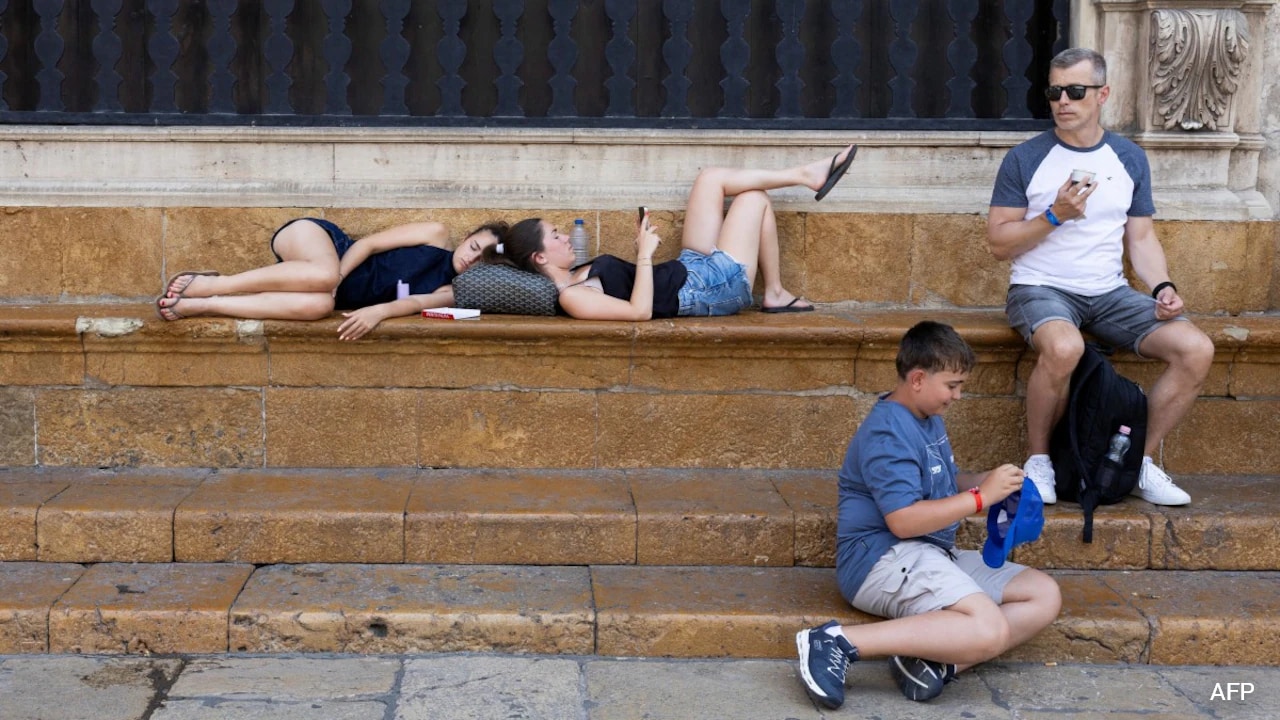
Spain’s Ministry of Health quietly confirmed a grim milestone on July 1, 2026, revealing that 1,029 people died from extreme heat in June. This marks the deadliest June since the country established its daily mortality monitoring system, driven by a brutal late-month heatwave that pushed temperatures past 40 degrees Celsius. While public attention focuses on scorched plains in the south, the true crisis lies in a systemic public health failure that caught Spain's cooler northern provinces completely unprepared, exposing a fatal gap between meteorological warnings and actual human survival.
The official figure of 1,029 fatalities is more than a statistic. It represents a 153 percent spike compared to June of last year. To understand how a modern European nation with a sophisticated public health infrastructure suffers a mass casualty event before the official arrival of midsummer, one must look past the thermometer and examine the structural, geographical, and physiological failures that converged over five devastating days in late June.
The Hidden Math of Heat Mortality
Public perception of heat death usually involves a dramatic, isolated event. Someone collapses from heatstroke on a sun-baked street.
The reality tracked by the Carlos III Health Institute is far more insidious.
The 1,029 deaths were recorded by the Daily Mortality Monitoring System, known as MoMo. This system does not wait for a medical examiner to check a box marked "heatstroke" on a death certificate. Instead, it uses statistical modeling to compare observed deaths across the population against expected historical baselines during periods of extreme temperature anomalies.
When the mercury spikes, deaths from cardiovascular disease, chronic respiratory illnesses, and renal failure surge. The heat acts as a silent accelerator. It places an intolerable stress test on bodies already compromised by age or illness.
During the peak of the wave on June 23, approximately 35.7 million people, roughly 73 percent of Spain’s population, were placed under official health risks due to ambient temperatures. The MoMo system captures the fallout when those risks materialize into organ failure behind closed apartment doors. It is an algorithmic alarm system, but by the time the data is published, the systemic failure has already occurred.
The Northern Acclimatization Trap
The geographic distribution of June’s fatalities shatters the traditional narrative of Spanish climate vulnerability.
For decades, regions like Andalusia and Extremadura in the south have been the face of Iberian heat, accustomed to summers that routinely breach 42 degrees Celsius. Yet, when the late June heatwave struck, Andalusia recorded 72 deaths. Extremadura recorded just seven.
In stark contrast, Catalonia registered 218 heat-associated deaths. The Basque Country, sitting on the usually temperate northern coast, recorded 147.
This inversion highlights a phenomenon experts call the acclimatization trap. In Seville or Córdoba, infrastructure is built to repel heat. Thick walls, traditional shutters, widespread residential air conditioning, and a cultural rhythm that halts public life during peak afternoon hours serve as a defensive shield.
In Bilbao, San Sebastián, and Barcelona, the built environment does the exact opposite. Architecture in northern Spain is historically designed to trap heat, maximizing solar gain during cool, damp winters. When an exceptional air mass from North Africa blankets these regions, these homes turn into thermal batteries.
Furthermore, the local populations lack physiological adaptation. A sudden jump to 38 degrees Celsius in a northern city where the average June maximum is closer to 24 degrees causes immediate, severe circulatory stress. The local health systems, unaccustomed to managing large-scale hyperthermia emergencies in early summer, find themselves overwhelmed before regional governments can trigger emergency protocols.
The Lethal Power of Tropical Nights
Meteorologists at the Spanish State Meteorological Agency, AEMET, noted that June 2026 broke 168 records for the highest minimum temperatures. This statistic holds the key to the high mortality rate.
The human body can tolerate extraordinary daytime heat if it is granted a period of recovery. When the sun sets, the internal biological thermostat relies on ambient temperatures dropping below 20 degrees Celsius to lower the core body temperature and reduce the heart rate.
During this heatwave, large swathes of Spain experienced what meteorologists term equatorial or tropical nights, where temperatures never fell below 25 degrees Celsius.
Without nocturnal relief, the cardiovascular system remains under continuous strain. The heart must pump blood at a frantic pace to the skin's surface to dissipate heat through sweat. For an elderly individual with pre-existing hypertension or mild heart failure, twenty-four hours of unbroken circulatory exertion is frequently fatal.
The data confirms this demographic vulnerability. Out of the 1,029 victims, 1,022 were over the age of 65. Within that cohort, 720 individuals were over the age of 85. The crisis is not killing the young and active; it is selectively weeding out the most fragile citizens in communities that lack the cooling infrastructure to save them.
The Fiction of Municipal Warning Systems
Spain operates a specialized system called Meteosalud, which calculates temperature thresholds tailored to specific postal codes rather than broad provinces. In theory, this should trigger localized public health interventions.
In practice, the system fails to bridge the gap between digital alerts and isolated human beings.
A municipal alert sent to a smartphone or broadcast on regional television does nothing for an 88-year-old woman living alone in a fourth-floor apartment in Barcelona without a working elevator or air conditioning. She may not use social media, her mobility may be limited, and her cognitive awareness of dehydration risks may be dulled by mild dementia.
The current strategy relies heavily on passive communication. Citizens are told to drink water, stay indoors, and avoid strenuous exercise. This advice is useless for outdoor laborers, municipal street cleaners, and agricultural workers who face the choice between heat exposure and lost wages. While Spain technically passed legislation banning certain outdoor tasks during red weather alerts, enforcement remains spotty, and gig-economy workers fall entirely through the regulatory cracks.
True intervention requires active, door-to-door community infrastructure. It requires social workers equipped with portable cooling devices, mandatory registries of vulnerable individuals, and the forced conversion of public buildings into air-conditioned sanctuaries accessible 24 hours a day during anomalies.
The Long Summer Ahead
The 1,029 deaths in June cannot be viewed as an isolated anomaly. AEMET data shows that the thirteen warmest Junes since national records began in 1961 have all occurred in the 21st century. Half of all June heatwaves recorded since 1975 have taken place within the last decade.
Summer is expanding, swallowing the shoulder months of May and June. The period of high mortality that used to be confined to late July and August now begins before schools close for the summer holidays.
Relying on seasonal emergency plans that launch in July is an obsolete policy framework. The mortality data from June 2026 proves that the climate has shifted faster than the bureaucracy. If regional governments continue to treat early-season heatwaves as unexpected surprises rather than predictable structural events, the death tolls will continue to escalate across the northern Mediterranean basin.
Municipalities must immediately redesign urban spaces to combat the urban heat island effect, mandate the installation of heat-reflective roofing material, and treat indoor temperature management as a fundamental human right akin to clean water or winter heating. The cost of retrofitting old neighborhoods is substantial, but the cost of inaction is already being measured in thousands of preventable graves.