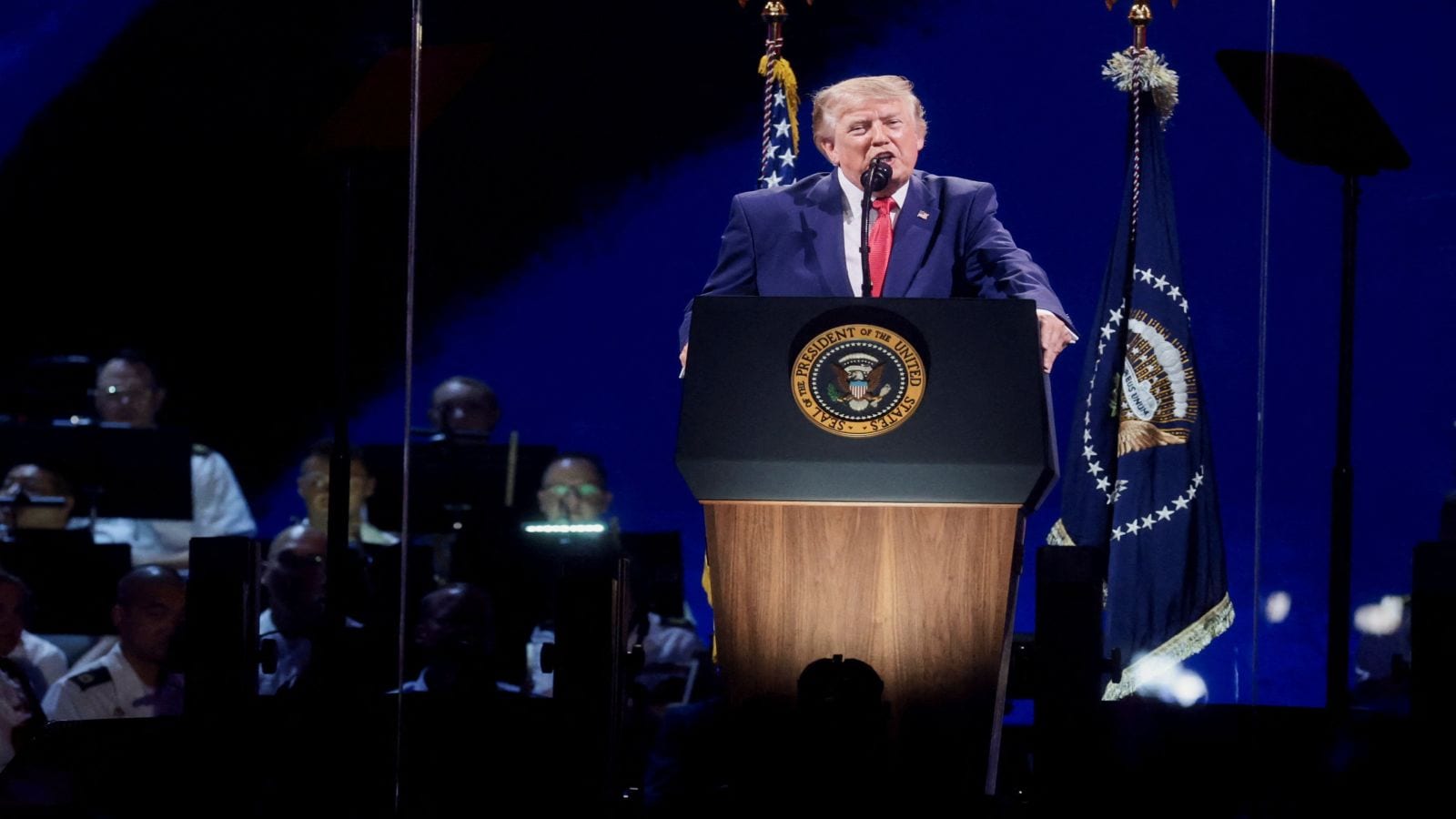
President Donald Trump recently declared that the United States maintains "total control" over the strategic Strait of Hormuz, labeling the American naval enforcement action a "wall of steel" that leaves Tehran powerless. Behind the public pronouncements on social media and the posturing of total dominance, reality on the ground tells a vastly more complex story of commercial paralysis, soaring geopolitical risk, and a critical maritime chokepoint caught in the crossfire of an active military conflict.
Daily tracking data reveals a starkly different metric from Washington's sweeping claims. While the White House insists that commercial traffic flows under American guardianship, daily vessel counts through the vital passage have plummeted to historic lows, with numbers dipping into single digits on certain days compared to a pre-war baseline of roughly 130 ships daily. This isn't control in any traditional maritime sense. It is an armed stalemate. The passage remains a high-threat zone where shipowners, insurers, and multinational energy corporations calculate that the physical risk of transit outweighs any economic benefit.
The Anatomy of a Chokepoint
Geographical vulnerability defines the crisis. The Strait of Hormuz is barely 21 miles wide at its narrowest point, with inbound and outbound shipping lanes squeezed into two-mile-wide corridors that pass directly through Omani territorial waters. This bottleneck handles roughly a fifth of the world's petroleum and liquefied natural gas trade.
When the conflict erupted, the initial shockwave demonstrated how quickly global supply chains can fracture. Tehran moved swiftly to restrict movement, while the United States countered by re-imposing a stringent naval blockade designed to suffocate Iranian oil revenues. What followed was a fundamental breakdown in the architecture of free navigation.
Military analysts tracking the theater point out that holding a chokepoint open against asymmetric threats is vastly different from controlling the territory outright. The Islamic Revolutionary Guard Corps has shifted toward a more aggressive regional posture, utilizing dispersed coastal defense batteries, fast attack craft, and aerial drones. Even if conventional naval supremacy favors the United States, commercial vessels refuse to run the gauntlet without absolute security guarantees that no navy can permanently guarantee in a war zone.
Economic Fallout Beyond the Headlines
The fallout extends far past diplomatic briefings. Insurance premiums for tankers operating anywhere near the Persian Gulf have spiked to prohibitive levels, fundamentally altering shipping economics. Major energy traders are forced to re-route cargoes where possible or absorb astronomical costs that inevitably ripple down into consumer fuel prices globally.
Washington's assertions of ownership over the strait are designed to project absolute strength and reassure jittery markets, but the market response tells a story of acute skepticism. Crude prices react violently to every exchange of rhetoric precisely because traders know that a "wall of steel" does not equal an open highway. Military escorts and redirected commercial vessels can mitigate risk, but they cannot eliminate the persistent threat of anti-ship ordnance or sea mines deployed in the murky waters of the Gulf.
As backchannel talks remain stalled and both sides trade demands for war reparations and policy rollbacks, the diplomatic path forward looks vanishingly narrow. Tehran insists that conditions must be met before traffic resumes normal operations, while Washington vows to maintain its economic and military pressure cooker. The strait remains legally contested, physically hazardous, and functionally shut to the steady pulse of international commerce that once sustained global energy markets.