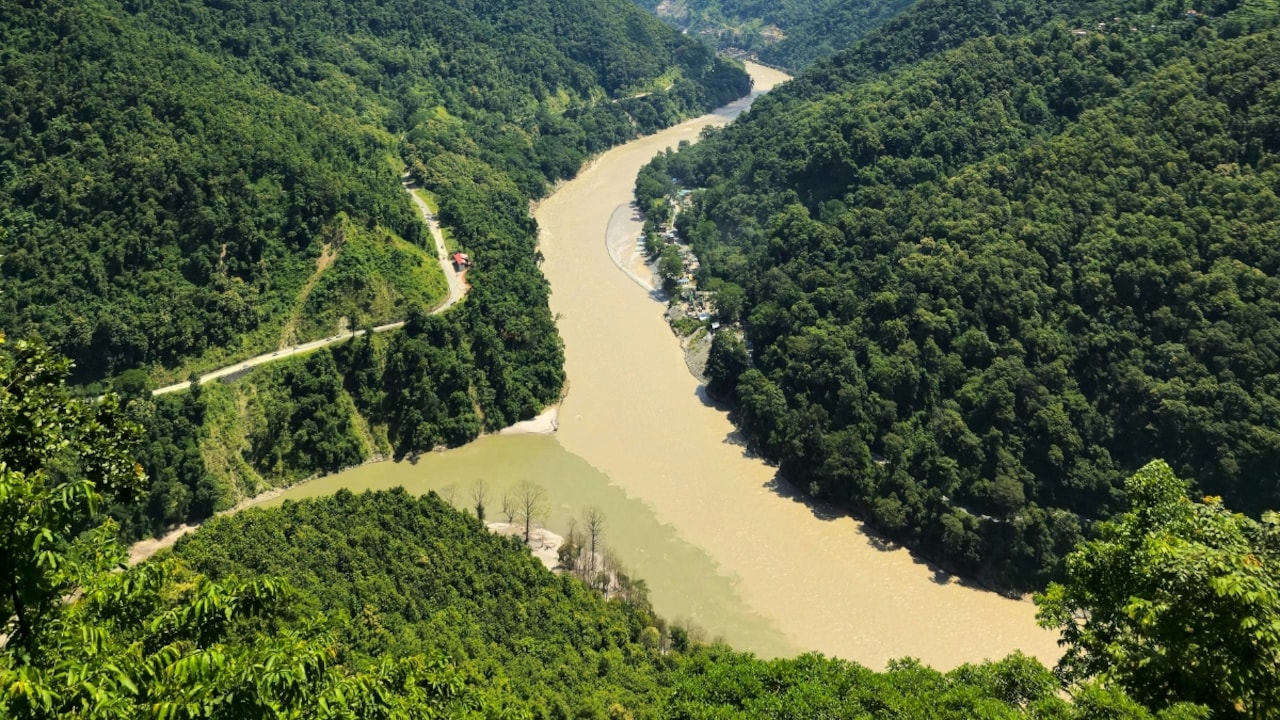
The official diplomatic position coming out of Dhaka is that nobody should be worried about the Teesta River Comprehensive Management and Restoration Project. When Dr. Zahed Ur Rahman, the Information and Broadcasting Adviser to Prime Minister Tarique Rahman, stepped up to the podium recently to declare that "no country should have concerns" over Bangladesh’s decision to execute a multi-billion-dollar river-training scheme with Chinese backing, he was deploying standard sovereignty rhetoric to mask an escalating geopolitical standoff. Dhaka views the project as a critical humanitarian intervention for a northern region devastated by seasonal cycles of drought and flash floods. Yet, this is not merely a domestic infrastructure project; it is a direct challenge to the delicate security architecture governing South Asia. By inviting Chinese state engineering firms to reshape a river that originates in the Himalayas and cuts through India before reaching Bangladesh, the new administration in Dhaka is transforming a water-management crisis into an active strategic vulnerability for New Delhi.
The core of the dispute rests on geography and unresolved historical grievances. For over a decade, successive governments in Dhaka have pleaded with India for a formal water-sharing treaty for the Teesta River, only to watch negotiations stall repeatedly due to internal political opposition within the Indian state of West Bengal. Frustrated by decades of empty promises and facing an agricultural crisis in its northern districts, Bangladesh has shifted its strategy from waiting on New Delhi to executing an independent, downstream engineering solution. The project involves massive dredging, riverbank stabilization, and the construction of reservoirs to store water during the monsoon for use during the dry season. The catch is that China has the capital, the technology, and the immediate willingness to build it, putting Chinese engineers directly on India's doorstep.
The Sovereign Gambit in Dhaka
Dhaka is changing the rules of engagement. Under the newly established leadership of Prime Minister Tarique Rahman, the administration is deliberately moving away from what it characterizes as the submissive foreign policy of the previous regime. The official stance is unyielding. Bangladesh intends to exercise its rights as an independent state to build whatever it requires within its own borders to protect its citizens from environmental ruin.
The humanitarian justification is undeniably real. Every year, millions of people living along the Teesta basin face catastrophic riverbank erosion during the monsoon season, followed by severe, bone-dry droughts that decimate the region's agricultural output. When the waters recede, farming becomes impossible, driving mass migration and economic despair. The planned Teesta Mega Project aims to fix this by deepening the river channel and managing water flow through advanced engineering.
Chinese Ambassador Yao Wen made it clear that Beijing is ready to deploy its highest level of technological support for river management the moment Dhaka gives the final green light. This partnership has moved swiftly from a preliminary memorandum of understanding to high-level government-to-government negotiations. To the casual observer, it looks like a pragmatic developing nation securing infrastructure aid from the world's leading builder of mega-dams. To the intelligence community in New Delhi, however, it looks like a structural trap designed to exploit India’s inability to manage its immediate neighborhood.
The Ghost of the Siliguri Corridor
To comprehend why India is deeply alarmed by Chinese heavy machinery operating in northern Bangladesh, one must look at a map. The Teesta River flows just south of the Siliguri Corridor, a narrow strip of Indian territory popularly known as the "Chicken’s Neck." This land corridor, measuring just 22 kilometers at its narrowest point, is the sole terrestrial artery connecting mainland India with its eight northeastern states.
It is an existential chokepoint. In any conventional military conflict between India and China, the Siliguri Corridor would be Beijing's primary target. If a hostile force successfully severs this thin corridor, the entire northeastern region of India becomes physically isolated from the rest of the country. This geographical vulnerability shapes India's defensive doctrine.
+-------------------------------------------------+
|               CHINESE TIBET                     |
+-------------------------------------------------+
                        |
                        v
+------------------+         +--------------------+
|  SIKKIM (INDIA)  |         |   BHUTAN           |
+------------------+         +--------------------+
        |                             |
        v                             v
+-------------------------------------------------+
|     SILIGURI CORRIDOR ("Chicken's Neck")         |
|  (22 km wide vital terrestrial link)            |
+-------------------------------------------------+
                        |
                        v
+-------------------------------------------------+
|           NORTHERN BANGLADESH                   |
|       (Site of Proposed Teesta Mega Project)     |
+-------------------------------------------------+
The introduction of thousands of Chinese state-affiliated workers, engineers, and surveyors into northern Bangladesh places a foreign security presence within striking distance of this chokepoint. Security analysts note that modern river management requires extensive topographical surveying, hydrological mapping, and the installation of monitoring systems. In the digital age, the line between civil engineering data and military intelligence is practically nonexistent. The deep-channel dredging and heavy embankment reinforcement required for the project will fundamentally alter the physical terrain of the basin, potentially creating obstacles or pathways that could influence military mobility in a future crisis.
Beijing's Hydrological Chokepoint
China’s interest in the Teesta is not driven by pure altruism. By inserting itself into the hydro-politics of the subcontinent, Beijing acquires a profound lever of influence over both Dhaka and New Delhi. This is part of a broader, systemic pattern of using transboundary water systems to project power across Asia.
Beijing already controls the upstream flows of several major Asian rivers, including the Brahmaputra and the Mekong, using an extensive network of dams to regulate water access as political leverage. By financing and building the downstream management systems of the Teesta, China creates a situation where it understands the internal hydrology of the region better than either of the nations that actually share the river.
This creates a dual dependency. Bangladesh becomes dependent on Chinese technical expertise and financial structures to maintain its primary water-management system. India finds itself sandwiched between Chinese control mechanisms upstream in Tibet and Chinese-engineered infrastructure downstream in Bangladesh. It is a masterclass in asymmetric encirclement, achieved not through naval deployment, but through concrete and steel.
The Price of Unresolved Waters
The ultimate tragedy of the Teesta dispute is that it was entirely preventable. India’s inability to sign a water-sharing agreement with Bangladesh over the last fifteen years created the political vacuum that China is now exploiting. In 2011, a comprehensive treaty was ready for signatures, but it was scuttled at the eleventh hour by local political resistance inside India, where state leaders argued that sharing more water would jeopardize their own domestic agricultural needs.
That failure carried a heavy strategic cost. By prioritizing short-term regional politics over long-term bilateral diplomacy, India signaled to Bangladesh that its survival needs were secondary to internal Indian political maneuvers. The new government in Dhaka has run out of patience. They are no longer willing to sacrifice their northern agricultural economy for the sake of maintaining a exclusive diplomatic relationship with New Delhi.
The official response from India's Ministry of External Affairs remains carefully measured, noting that development assistance works on a mutually agreed roadmap and that New Delhi will factor all related developments into its overall approach. But behind the diplomatic boilerplate, there is deep unease. India recently attempted to counter Beijing by offering its own alternative funding package for the Teesta management project, but Dhaka has shown little interest in an offer that comes from the very country that refuses to grant them a fair share of the upstream water.
The New Reality of Subcontinental Power
The Teesta Mega Project is a clear warning sign of a shifting balance of power in South Asia. Dhaka's insistence that its neighbors have no cause for alarm ignores the fundamental reality of modern geopolitics, where infrastructure is statecraft by other means. A nation cannot invite the primary strategic rival of its closest neighbor to build a massive infrastructure project near a critical military chokepoint and expect the move to be treated as a simple public welfare initiative.
The Tarique Rahman administration is playing a dangerous game of balancing superpowers. While they assert their sovereignty to justify the Chinese partnership, they are simultaneously attempting to maintain commercial and security ties with India. This strategy assumes that both Beijing and New Delhi will play by Dhaka's rules, an assumption that historical precedent rarely supports. When small states try to leverage great power rivalries to their own advantage, they often find that the infrastructure they built to guarantee their independence becomes the very mechanism used to compromise it.
The diplomatic deadlock has broken, but not in the direction India wanted. Bangladesh is moving forward, China is writing the checks, and the physical reality of the subcontinent's borders is changing permanently. India is discovering that when you refuse to share water with your neighbors, someone else will come along to manage the river for them.