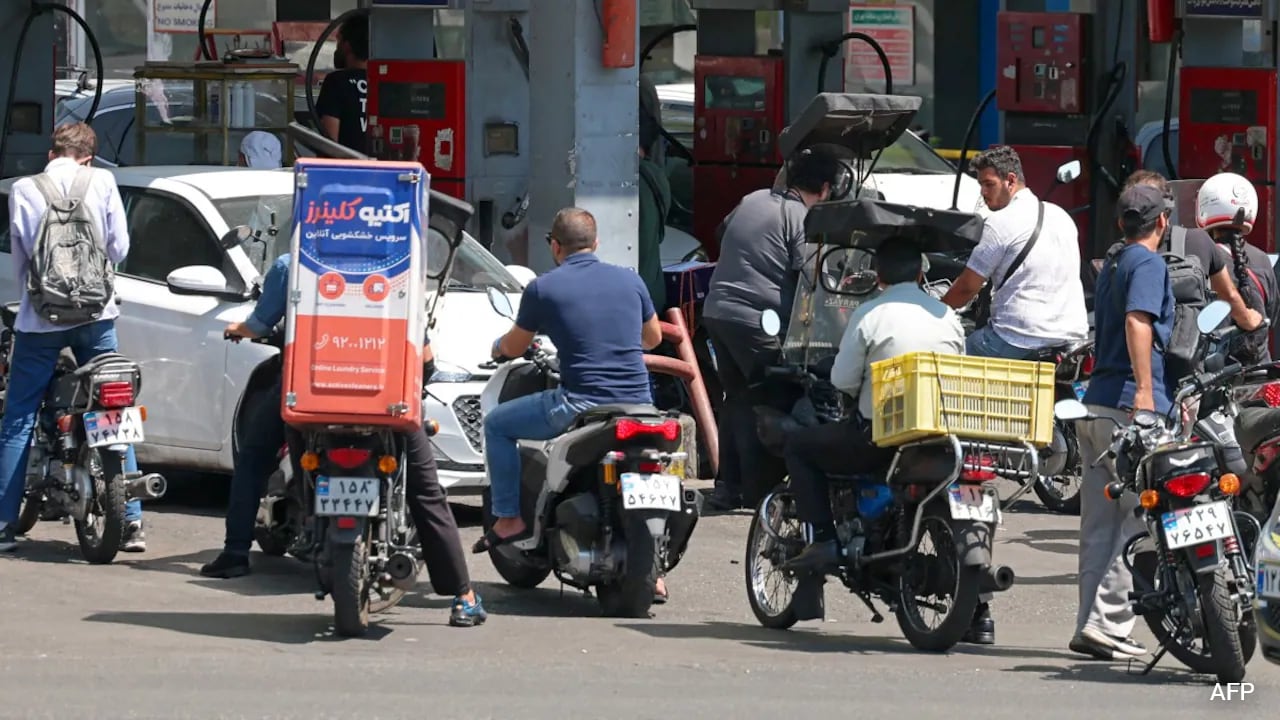
Exhausted drivers wrap around Tehran's concrete block corners for kilometers, their engines idling in a grim ritual of endurance. Long petrol queues have choked the Iranian capital following Washington's latest sweeping financial blockades, exposing a fragile domestic architecture long masked by state rhetoric. This is not merely another chapter in the decades-long standoff between Washington and Tehran. This is a structural breaking point where external economic warfare meets an unsustainable domestic subsidy regime, creating localized chaos that no amount of official spin can completely hide.
To understand why thousands of motorists spend hours waiting for a twenty-liter fuel ration, one must look past the immediate theater of international diplomacy. The surface narrative points directly to the White House and the Treasury Department's newly minted secondary restrictions targeting energy logistics and financial networks. Yet the chronic blockages at the pump are symptoms of a deeper, home-grown malaise. Iran remains a major hydrocarbon producer, yet its domestic refining and distribution networks buckle under the weight of hyper-cheap pricing. When fuel costs fractions of a cent per liter, consumption skyrockets, smuggling becomes a lucrative underground industry, and the state budget bleeds out quietly behind closed doors in official ministries.
The Mechanics of Economic Asphyxiation
Washington calls its strategy economic asphyxiation. The mechanics are straightforward on paper, though messy in practice. By tightening the net around shipping, digital assets, and third-party intermediaries across the Persian Gulf and East Asia, the United States aims to sever every remaining financial lifeline. Six months of military stalemate in the wider regional conflict have pushed both sides away from direct combat and toward fiscal strangulation.
When the Treasury Department expands secondary penalties against entities in places like Hong Kong, China, and the United Arab Emirates, the ripple effects hit Tehran's import pipelines instantly. Spare parts for aging refineries become nearly impossible to source through official channels. Refineries operating on outdated technology suffer unexpected shutdowns.
The distribution network stutters. But international sanctions alone do not explain why eastern and southern Tehran experience dry pumps while state distributors insist that overall supply volume remains technically stable. The real driver is human behavior born of chronic anxiety. Rumors spread through messaging apps faster than tankers can move down the highway. Motorists rush to fill tanks that are barely quarter-empty, terrified that tomorrow's decrees will bring higher prices or locked gates. Panic buying transforms a manageable logistical lag into a full-blown municipal emergency.
The Subsidy Trap and the Price of Popularity
Iranian authorities face an intractable policy dilemma. For decades, heavily subsidized gasoline has functioned as an unwritten social contract between the state and a population battered by inflation. Selling fuel at roughly one cent per liter drains billions from government coffers that desperately need capital for infrastructure, health, and public salaries.
President Masoud Pezeshkian's administration has openly questioned the arithmetic of buying refined products at international rates only to distribute them domestically for pennies. Yet raising prices at the pump acts as an immediate barometer for broader economic pain. Every past attempt to reform the subsidy structure has triggered explosive public dissent.
Leaders remember the unrest of previous years vividly. Consequently, they hesitate. They absorb the fiscal losses until external shocks—like a sudden tightening of US enforcement—force a localized rationing crunch. The government increases total daily gasoline allocations to the capital to record levels, pushing millions of extra liters onto the asphalt, yet the lines only grow longer. The system is consuming itself from the inside.
The Regional Shockwave
The fallout extends far beyond Iran's borders. Neighboring economies that rely on cross-border energy flows find themselves squeezed between compliance demands from Western regulators and the practical reality of regional trade. In Iraq, parliamentary finance committees have warned that tightening financial rules around Iranian energy imports could hit Baghdad harder than Tehran. Iraqi markets depend heavily on Iranian gas and consumer goods. When Washington draws a rigid line, nations caught in the geographic middle discover that neutrality is an expensive luxury.
Meanwhile, citizens in Tehran shoulder the human cost. Realtors, shopkeepers, and delivery drivers express a weary resignation. They have navigated four decades of economic isolation. They know how to barter, hoard, and adapt. Yet the convergence of a stalled regional war, persistent inflation, and the daily humiliation of the petrol queue wears down even the most resilient social fabric.
The pumps may begin flowing normally once the immediate wave of panic recedes and distribution schedules catch up with demand. The fundamental contradiction, however, remains entirely unresolved. A state cannot permanently subsidize fuel at fractions of its real value while isolated from global capital markets without eventually facing a day of reckoning at the neighborhood filling station.